
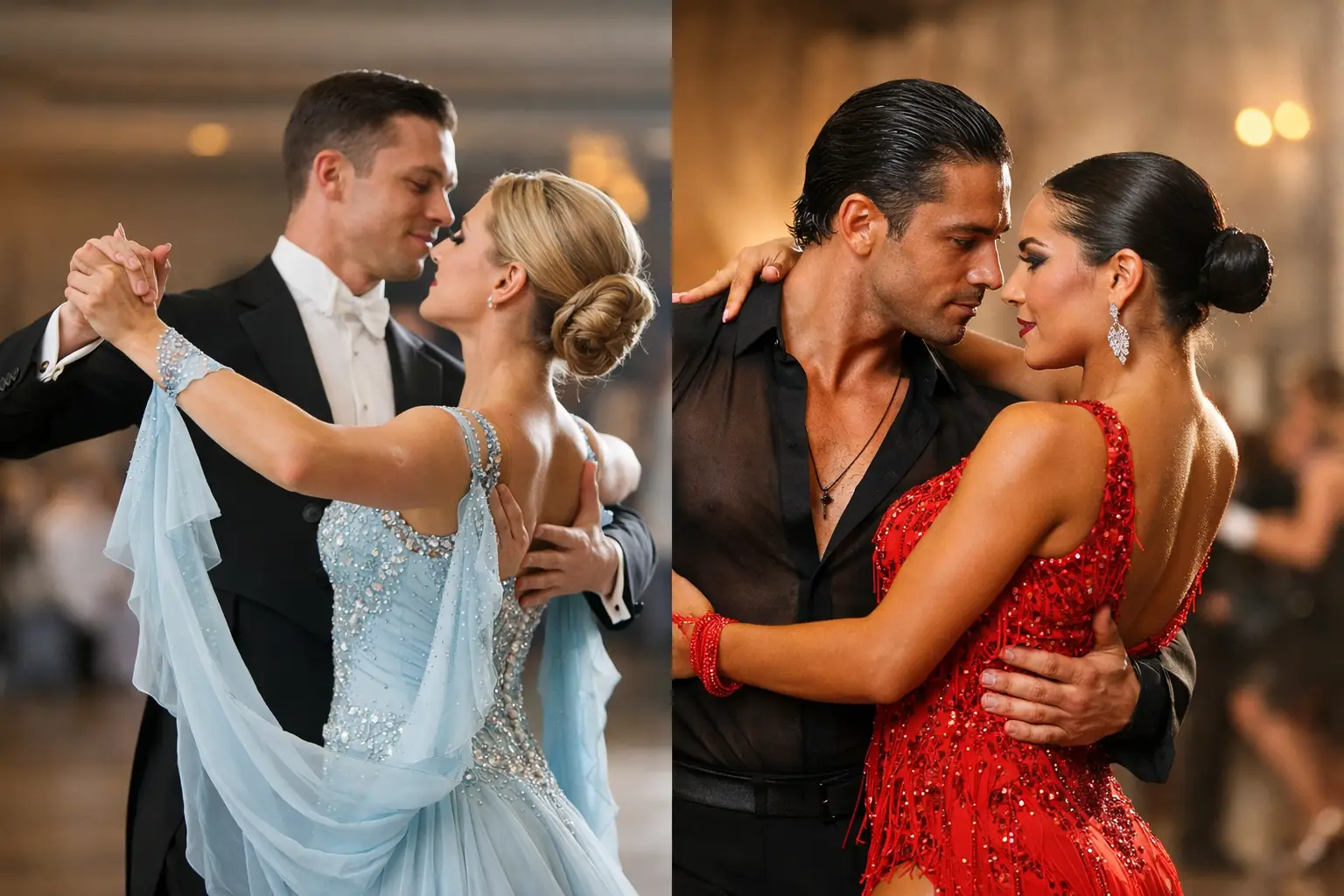
The first few counts tell the story. One dance may have you gliding across the floor with a partner in a smooth, elegant frame. The next may put a bright rhythm in your feet and a little extra sparkle in your hips. Ballroom versus Latin dancing is not a contest over which style is better. It is about finding the music, movement, and social experience that makes you want to come back for another song.
For new dancers, both styles offer a terrific way to meet people, get moving, and feel more at home at weddings, parties, clubs, and community dance events. You do not need fancy shoes, prior experience, or even a partner to begin. You just need a willingness to try a few steps and laugh when the timing gets away from you.
Ballroom Versus Latin Dancing at a Glance
The broadest difference is the feeling of the movement. Ballroom dances are often smooth, traveling, and connected to a steady line of dance around the room. Latin dances tend to be more rhythmic, compact, and expressive, with a stronger focus on body action and changing weight from foot to foot.
Think of ballroom as the graceful sweep across the dance floor. Think of Latin as the rhythmic conversation happening between you, your partner, and the music. That is a useful starting point, but there is plenty of variety within both families. A playful swing-out does not feel like a slow foxtrot, and an energetic cha-cha has a completely different personality from a romantic rumba.
Neither category is automatically easier. The better first choice depends on what kind of music motivates you, how you like to move, and where you hope to use your dancing.
What Counts as Ballroom Dancing?
Ballroom is often used as an umbrella term for partner dancing, but in a narrower sense, it usually refers to the smooth dances. Waltz, foxtrot, tango, Viennese waltz, and quickstep are common examples. These dances generally travel around the floor in a counterclockwise direction, sharing space with other couples as they go.
The look and feel
Ballroom dancing often has a polished, floating quality. Partners maintain a more consistent frame, meaning their arms and upper bodies create a reliable connection that helps them move as one unit. The leader suggests direction and timing through that connection, while the follower responds with their own active movement. It is teamwork, not tug-of-war.
Waltz is a classic place to feel this. Its rise and fall creates a gentle, rolling motion that suits many romantic songs. Foxtrot is smoother and more relaxed, making it a favorite for big-band and classic vocal music. Tango is sharper, more dramatic, and packed with purposeful pauses. Each one has its own flavor, but all reward posture, connection, and good floor awareness.
Where ballroom shines socially
If you picture yourself gliding through a wedding dance, enjoying an elegant fundraiser, or feeling confident when a slower song comes on, ballroom is a wonderful fit. Its traveling patterns are especially satisfying in larger rooms where you have space to move.
The trade-off is that smooth dances can feel more challenging in a crowded club or a small kitchen-floor party. They also ask beginners to pay attention to line of dance and the couples around them. The good news? You do not need to look formal to dance ballroom. The goal in a social class is comfortable movement, clear leading and following, and a good time.
What Counts as Latin Dancing?
Latin dancing includes styles such as cha-cha, rumba, samba, jive, and paso doble in the traditional ballroom world. In social dance settings, people may also use “Latin” more broadly to include salsa, bachata, merengue, and other rhythm-driven partner dances. The exact label matters less than the experience: lively music, grounded steps, and plenty of personality.
The look and feel
Latin dances often stay closer to one spot on the floor, even when partners turn and trade places. The knees soften, the weight changes are more noticeable, and the rhythm often lives in the hips and feet. That does not mean you need to force hip motion or arrive with natural rhythm. Those details develop as you learn to transfer weight clearly and relax into the beat.
Cha-cha is cheeky and quick, with a crisp triple-step rhythm. Rumba slows things down and gives dancers time to connect with the music. Salsa can feel wonderfully energetic, while bachata often has an easygoing side-to-side pulse. These are dances that invite a little flair, whether that means a simple turn, a playful hand change, or a smile when you nail the beat.
Where Latin shines socially
Latin styles are a natural match for upbeat playlists, restaurant nights, clubs, and parties where the dance floor is busy. Because many patterns work in a smaller space, they can be practical when there is not much room to travel. They also offer lots of variety without requiring dancers to memorize long routines.
The trade-off is that faster rhythms can initially feel busy. Beginners sometimes focus so hard on their feet that they forget to breathe, connect, and enjoy the song. A patient class breaks the rhythm into manageable pieces, so your body has time to catch up with your ears.
Should You Start With Ballroom or Latin?
Start with the style that makes you curious enough to practice. That is the honest answer. If you love classic songs, want a graceful wedding-dance foundation, or enjoy the idea of moving around the room with a partner, try ballroom first. If you light up when you hear percussion, pop remixes, salsa, or anything with a strong beat, Latin may get you on the floor faster.
Your social goals matter too. A couple preparing for a formal event may appreciate waltz or foxtrot. A single dancer hoping to meet people and join casual practice nights may enjoy salsa, cha-cha, or swing-inspired rhythms. Someone who wants a bit of both should not feel pressured to choose a side. Many social dancers mix styles happily, selecting the dance that suits the song.
There is also a physical comfort factor. Ballroom asks for sustained posture and smooth movement. Latin tends to ask for quicker weight changes and more rhythmic coordination. If one feels awkward at first, that is normal, not a verdict. Give it a few classes before deciding it is not for you. New skills often feel clunky right before they start to click.
The Shared Skill That Matters Most: Connection
Whether you are dancing waltz or cha-cha, the real social superpower is connection. Good partner dancing is not about memorizing the flashiest move. It is about offering clear information, paying attention to your partner, and adapting when something changes.
Leaders learn to communicate direction without pushing or pulling. Followers learn to keep their own balance, listen through the connection, and add style without guessing ahead. Both people listen to the music, protect the space around them, and help each other have fun. That is what makes a simple basic step feel great.
This is also why no-partner-required classes work so well. Rotating partners, when the class format uses it, gives you practice with different connections and helps everyone become a more adaptable social dancer. You are learning a conversation, not rehearsing a speech with one person.
What to Wear and Bring to Your First Class
Keep it simple. Wear clothes you can move in and shoes that stay securely on your feet while allowing a little pivot. Clean indoor shoes are a smart choice, especially during wet or snowy Saskatoon months. Avoid shoes with very sticky rubber soles if possible, since they can make turns feel harder on your knees.
Bring water, arrive a few minutes early, and leave perfection at the door. You may make a wrong turn, lose the count, or accidentally laugh through an entire pattern. That is all part of the fun. Social dancing is built one comfortable repetition at a time.
At Dance Class Saskatoon, beginners can explore a range of partner styles in a friendly group setting without the pressure of arriving with a dance partner. Experienced, patient instruction keeps the steps practical, so what you learn has a place beyond the classroom.
The best first dance is the one that gets you out of your chair when the music starts. Try the style that catches your ear, give yourself permission to be new, and let the next good song decide where your feet go.