
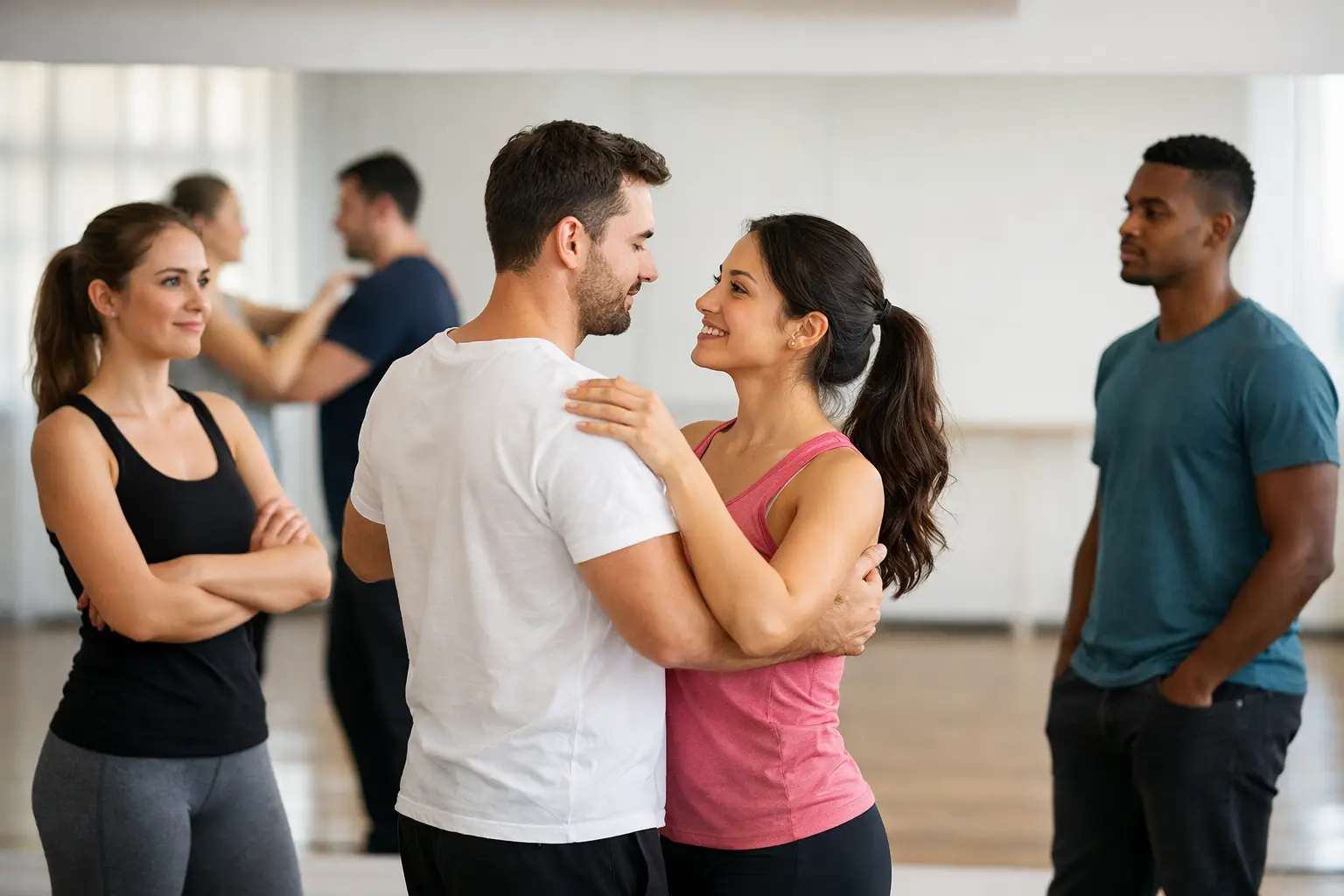
Showing up alone to a dance class can feel like the hardest step of the night. A lot of beginners quietly wonder, do you need dance partner for class, or are you about to spend an hour awkwardly standing by the wall while everyone else spins away? Good news – in most social dance classes, you do not need to bring one. In fact, coming solo is often one of the easiest, smartest ways to start.
That surprises people, especially if they picture ballroom as strictly couple-based or imagine country, swing, salsa, or Latin classes full of established pairs. Real social dance studios know better. If a class is built for actual people with actual lives, it has to work for singles, couples, shy beginners, and the friend who signed up on a whim after one too many songs that made them want to move.
Do You Need Dance Partner for Beginner Classes?
Usually, no. Beginner classes are often designed so anyone can join, whether they arrive with a spouse, a friend, or just their own two left feet. That is not a compromise. It is part of what makes social dancing social.
In a well-run class, instructors teach the roles, the timing, the basic patterns, and the connection skills in a way that works for everyone in the room. Some students come paired up and stay together. Some rotate. Some classes mix both approaches depending on the style and the group size. The goal is not to make solo students feel like extras. The goal is to help every student learn how partner dancing actually works in the real world.
That matters because social dancing is rarely as controlled as a movie scene. At a dance hall, wedding, club, or community event, you may dance with different people all night. Learning to adapt, communicate clearly, and keep your timing steady is part of the fun.
Why no-partner-required classes work so well
A no-partner-required format removes one of the biggest excuses people use to stay off the floor. You do not have to recruit a spouse, persuade a skeptical friend, or wait until someone else’s schedule lines up with yours. If you want to dance, you can start.
It also tends to create a more relaxed atmosphere. When people know singles are welcome, the room feels more open and friendly from the start. Beginners are not the odd ones out. They are the point.
There is another perk many new students do not expect. Dancing with more than one person can actually help you learn faster. Every partner gives slightly different feedback through movement, frame, timing, and lead or follow energy. That teaches you how to feel the dance instead of memorizing one exact version of it with one exact person.
If your only goal is to dance with one partner forever, staying together in class can still be great. But if your goal is to become comfortable at real social events, variety helps. It is like learning conversation by talking to more than one person.
What if you come alone?
If you come alone, you are in very good company. Solo students are common in beginner programs, and they join for all kinds of reasons. Some are brand new in town. Some want a fun way to stay active. Some are single and social. Some are married to people who would rather do almost anything else than cha-cha on a Tuesday night.
Walking in solo does not mean you will feel isolated. A welcoming studio makes introductions easy, explains how partnering works, and keeps the class moving so nobody gets stuck in their own nerves. That first few minutes can feel fluttery, sure, but once the music starts, most people relax fast.
And yes, plenty of people make friends in class. Not in a cheesy reality-show way. More in the very normal, very nice way that happens when people laugh through the same missteps, count beats together, and cheer each other on when a pattern finally clicks.
What if you bring a partner?
Bringing a partner can be wonderful too. You already have a built-in practice buddy, and sharing a new hobby can be a lot of fun. Couples often enjoy learning something playful together that gets them off the couch and out into the world.
But here is the honest part – bringing a partner is not automatically easier. Sometimes couples are so focused on each other that they tense up, over-correct, or turn class into a tiny negotiation summit. A little humor helps. So does remembering that dance class is not a relationship test. It is just class.
The sweet spot is staying open. If the class rotates, trying that process can improve your dancing even if you signed up together. If the studio allows couples to stay paired, that can also be the right fit for some students. It depends on comfort level, goals, and the class structure.
Do you need dance partner for every style?
Not usually, but the answer can vary a bit by dance style and by class format.
Ballroom, Latin, swing, country, and club partner dances are all easier to teach in a studio that knows how to work with mixed enrollment. Beginner group classes are commonly structured to welcome both singles and couples. That is especially true when the focus is social dancing rather than intense competitive training.
At the same time, workshops, performance teams, or higher-level technique classes may sometimes have different expectations. More advanced material can require steadier partner matching or more consistent role experience. That does not mean beginners should worry. It just means reading the class description matters.
If a class says no partner required, trust that it was built that way on purpose. If a class requires a partner, it should say so clearly.
How partner rotation helps beginners
Rotation makes some new students nervous, but it is one of the best confidence-builders in social dance. You are not being judged. You are learning how to connect with different people, adjust to different styles, and keep dancing when things are less than perfect.
That is real progress.
When you rotate, you also stop relying on one person to make the move work. Leaders learn to lead more clearly. Followers learn to respond to actual signals instead of anticipation. Both roles improve because the dance has to function through communication, not guessing.
Of course, not everyone loves rotating right away. That is fair. Some people need a class atmosphere that feels patient, respectful, and beginner-friendly enough to make rotation feel comfortable instead of chaotic. Good instructors know how to set that tone.
The real question is not who you bring
The real question is whether the class is designed for beginners to succeed.
A strong beginner program should feel approachable, organized, and practical. It should teach dance styles people actually use at weddings, socials, clubs, and nights out. It should explain the basics without making newcomers feel behind. And it should welcome people whether they register as a single or a couple.
That is why the no-partner-required model works so well for social dance studios. It lowers the barrier to entry and gets more people moving sooner. For many adults, that is the difference between thinking about dancing and actually doing it.
At Dance Class Saskatoon, that approach fits the whole spirit of social dancing – friendly, flexible, and focused on helping real people feel good on a real dance floor.
So, should you wait until you find a partner?
Nope. That is the plot twist.
If you are curious about dancing, waiting for the perfect partner usually just delays the fun. The better move is to find a beginner-friendly class, show up, and let the first lesson do its magic. You do not need perfect rhythm, fancy shoes, or a romantic co-star. You just need a little willingness to try.
People often think confidence comes first and then they sign up. It usually works the other way around. You sign up, you learn a few basics, you realize nobody expects perfection, and confidence starts to swing into place.
So if you have been asking, do you need dance partner before joining a class, take a breath and give yourself permission to stop waiting. Social dance is meant to bring people together, not keep them out. Come as you are, step onto the floor, and let the rest follow.