
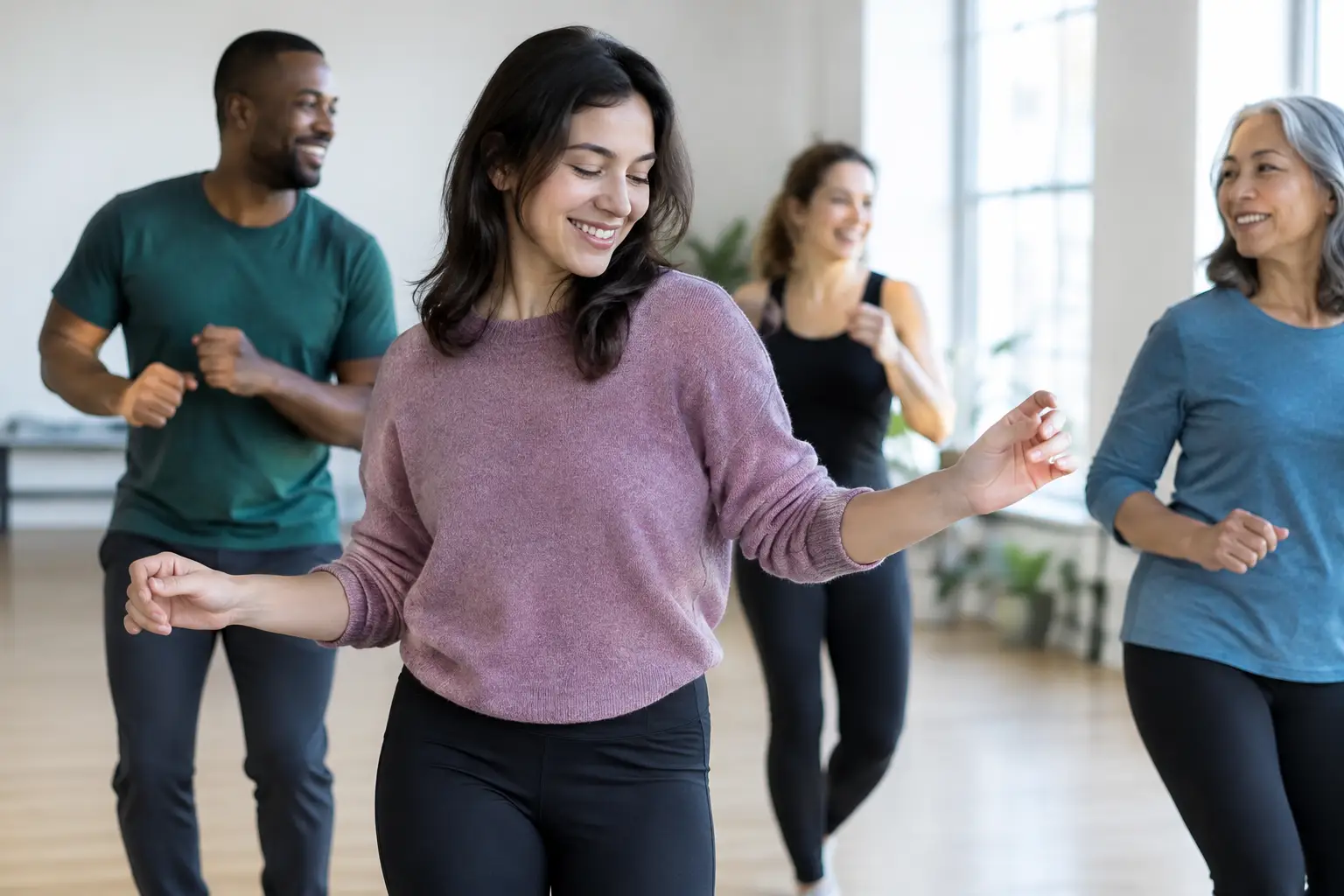
The music starts, people pair up, and your first instinct might be to become one with the wall. If that sounds familiar, you are exactly the kind of person who can benefit from dance classes for shy adults. You do not have to arrive bubbly, coordinated, or ready to perform. You only need enough curiosity to take one small step, then another.
Social dancing is not a personality test. It is a learnable skill with patterns, timing, and friendly repetition. For many quiet people, a class becomes a surprisingly comfortable way to move more, meet others without forced small talk, and feel at home on a dance floor.
Why dance feels intimidating before the first class
Shyness and dance nerves often travel together because dancing can feel visible. You may worry about forgetting steps, standing out, being asked to switch partners, or not knowing where to look. Those are real concerns, especially if your last dance experience was a school gymnasium with questionable lighting and even more questionable playlists.
The good news is that beginner social classes are designed around the fact that nobody knows the material yet. People are concentrating on their own feet, their timing, and whether the next step is forward or back. They are rarely judging yours.
There is also a difference between being shy and not wanting to socialize at all. A dance class gives you structure. Instead of having to invent conversation, you have a simple shared task: learn a basic step, try it with a partner, smile when it goes sideways, and try again. That framework can make connection feel much less awkward.
What makes dance classes for shy adults a good fit
The best beginner class does not throw you into complicated spins on night one. It starts with clear instruction, manageable patterns, and enough repetition for your body to catch up with your brain. A patient instructor will demonstrate the movement, break it into pieces, and offer practical corrections without putting anyone on the spot.
Partner rotation can sound terrifying at first, but it often helps shy dancers more than they expect. You do not need to find one person and keep a conversation going for an hour. You dance with someone for a few minutes, practice the same pattern, then move on. The interaction has a beginning, middle, and end built right in.
No-partner-required classes are especially helpful. Bringing a friend can be comforting, but coming alone does not mean being left out. In a well-run social dance class, singles are normal. So are beginners, missed counts, and the occasional cheerful traffic jam on the floor.
You are allowed to be new
A beginner class is not a room full of naturally gifted dancers pretending to be beginners. It is usually a mix of people who have never danced, people returning after years away, couples looking for a new date-night activity, and regulars learning a different style.
That mix takes the pressure down a notch. Someone may pick up rhythm quickly but struggle with partnering. Someone else may remember every pattern but need time to relax their shoulders. There is no single version of “good” on the first day.
You do not need to be the life of the party
You can be warm, polite, and quiet. That is plenty. A simple “Hi, I’m new” or “Want to try that again?” is all the conversation required. As you become more comfortable, you may find yourself chatting between songs. Or you may simply enjoy dancing. Both count as a win.
Pick a style that gives you an easy first step
The right dance style depends partly on what kind of music makes you want to tap your foot. Choosing something you genuinely enjoy makes it easier to return for week two, when the first-class nerves have started to loosen.
Country two-step and country swing are friendly choices for people who enjoy dance halls, country music, and upbeat movement. The rhythm is practical for social settings, and the goal is to get you moving comfortably with a partner, not to create a competition routine.
Swing can be joyful and energetic, with a relaxed social atmosphere and plenty of room for personality. Ballroom styles such as waltz, foxtrot, and rumba offer clear structure and a calmer pace, which some shy adults appreciate. Latin and club styles can be a great fit if you want confidence for weddings, parties, or a night out.
There is no universally least-scary style. A slower ballroom class may feel safer to one person, while another may relax faster in a playful swing or country class where everyone expects a little bounce and laughter. Let the music help you choose.
A low-pressure plan for your first class
Give yourself a few advantages before you arrive. Wear clean, comfortable clothes you can move in, along with shoes that stay on your feet and slide just enough to turn. Athletic shoes can work for some classes, though very grippy soles may make turning harder. You do not need specialized dance shoes to begin.
Arrive a few minutes early. It gives you time to settle in, see the room, and introduce yourself to the instructor without feeling rushed. Let them know it is your first time and that you are nervous. Experienced teachers have heard this many times, and they can point you toward the right spot and explain how the class works.
Your only job for the first class is not to become a dancer overnight. Make it your goal to learn one basic rhythm, try a few partner changes if the class rotates, and leave knowing you did something that initially made you nervous. That is real progress with a good beat.
If rotation feels like too much, ask about the class format beforehand. Some studios use rotating partners throughout a lesson, while others allow people to remain with the partner they brought. Neither format is automatically better. Rotations offer more practice and reduce the pressure of dancing with one person all evening, while staying with one partner can feel more secure at the beginning.
How confidence actually grows on the dance floor
Confidence does not arrive before you start. It shows up after repeated proof that you can handle a small uncomfortable moment. You miss a step, laugh, reset, and keep going. The next time, that moment feels less dramatic.
This is why a multi-week series can be so helpful. One drop-in lesson may be fun, but a series lets you revisit skills until they feel familiar. You begin to recognize the music, hear the count, and remember what your feet are supposed to do without staring at them like they have betrayed you.
Regular practice events add another useful layer. Class is where you learn the recipe. A practice dance is where you taste it, adjust it, and realize you can actually use it. The atmosphere is usually more relaxed than a crowded nightclub or formal event, making it a gentle bridge into real social dancing.
At Dance Class Saskatoon, that practical approach matters: lessons are meant to help people feel comfortable using what they learn at clubs, dance halls, weddings, and community events. The point is not perfection. The point is having more fun when a song you love comes on.
Give yourself permission to learn at your own speed
Some shy adults feel transformed after two classes. Others need a full session before they stop worrying about where to put their hands or whether they are on the correct foot. Both experiences are normal.
Try not to measure yourself against the most outgoing person in the room. They may have been dancing for years, or they may simply be better at looking confident while making the same mistakes. Focus on the changes you can feel: arriving with less dread, smiling more often, remembering a pattern, accepting an invitation to dance, or asking someone to practice.
You can also set boundaries that support you. Take a short break if you feel overloaded. Skip a practice event until you are ready. Bring a friend for your first series if that makes showing up easier. Growth works best when it is challenging enough to be meaningful but not so intense that you never want to return.
A shy person does not need to become loud to enjoy social dance. Sometimes confidence looks like walking into class alone, taking your place on the floor, and saying yes when the music starts. That first yes might feel small, but it can carry you much farther than you think.