
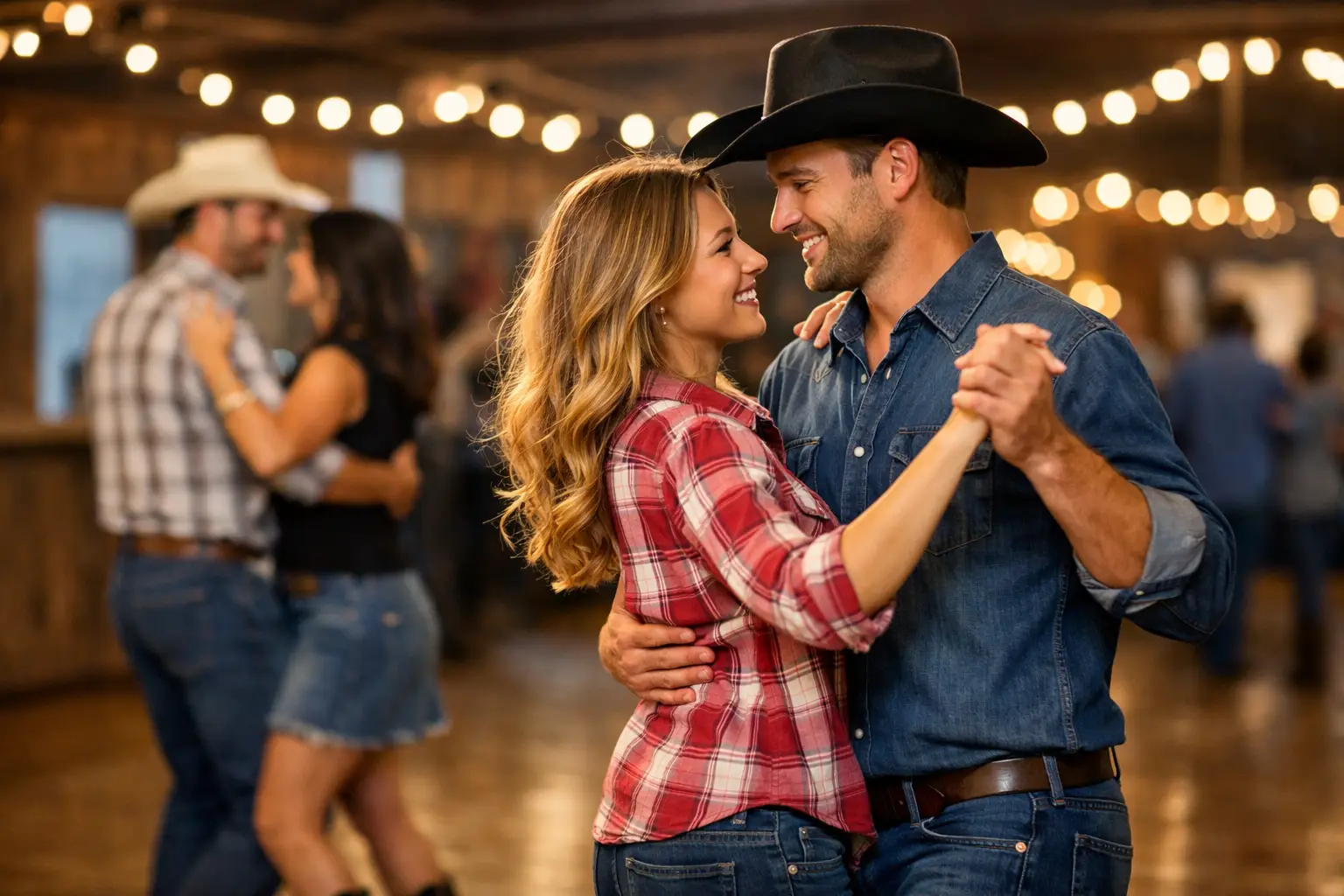
You do not need cowboy boots, a regular dance partner, or any kind of fancy footwork history to enjoy country two step classes. What you do need is a little curiosity, a willingness to move, and a place that teaches the dance the way people actually use it – on a social floor, with real music, real turns, and real fun.
That is exactly why so many adults are drawn to country two step in the first place. It is upbeat, friendly, and practical. You can use it at country bars, community dances, weddings, and social events without feeling like you are trying to perform for judges. For beginners especially, that matters. People are not looking for a high-pressure hobby. They want a dance they can actually take out for a spin.
Why country two step classes are so popular
Country two step has a sweet spot that a lot of social dances miss. It looks lively without being overly complicated, and it feels impressive without requiring years of training. When taught well, the basics come together quickly. You learn how to travel, how to keep time with the music, and how to work with a partner instead of against each other.
That last part is a big deal. Many first-time students think dancing is mostly about memorizing steps. In reality, social dancing is more about connection, rhythm, and clear leading and following. Country two step classes help people build those skills in a way that feels approachable. You are not just learning a pattern. You are learning how to dance with another person comfortably.
It is also a great fit for adults who want a social outlet. Some students come with a spouse or friend. Others come on their own. A welcoming class makes both feel normal. If the room is set up well and the teaching is organized, singles and couples can both have a great time without awkwardness taking over the dance floor.
What beginners usually worry about
Let us talk about the nerves, because they are real. A lot of people want to try classes but hesitate for the exact same reasons. They think they have no rhythm. They assume everyone else will already know what they are doing. They worry they will mess up, turn the wrong way, or step on somebody’s toes.
Here is the good news – beginner country two step classes are built for that. They are supposed to start simple. Good instructors do not throw students into a blur of spins and fast combinations. They break things down, keep the pacing manageable, and repeat what matters most.
Another common concern is not having a partner. For social dancing, that should not be a deal-breaker. A studio that welcomes people without partners removes one of the biggest barriers right away. It also tends to create a more social, more relaxed atmosphere. That means less pressure and more chances to actually practice dancing with different people, which is helpful because social floors rarely give you the same partner every song.
What you will actually learn in class
The first thing most students learn is timing. Country two step has a distinct rhythm, and once that clicks, everything else gets easier. From there, classes usually work through the basic movement, travel across the floor, frame, connection, and simple directional changes.
Then comes the fun stuff. Turns, passes, and combinations start to appear once the foundation is stable. In a strong progressive program, each class builds on the previous one. That structure helps students improve without feeling scrambled. You are not collecting random moves. You are developing usable dance skills.
A practical class also teaches floorcraft, even if it is not called that outright. In plain English, that means learning how to move safely and smoothly when other couples are around you. This matters more than people expect. Social dancing is not done in a giant empty room. Knowing how to stay relaxed, aware, and musical in a shared space is part of becoming a confident dancer.
The difference between a fun class and a useful one
A class can be entertaining and still leave people unprepared for real social dancing. That happens when instruction focuses too much on flashy patterns and not enough on lead-follow skills, musical timing, and confidence-building repetition.
The best country two step classes balance energy with substance. Yes, you want a cheerful atmosphere. Yes, you want to laugh, move, and enjoy the music. But you also want teaching that gives you something solid to stand on. Clear explanations, patient instructors, and a step-by-step progression make a huge difference.
It also helps when the material is taught with the real world in mind. Dancing in class is one thing. Dancing at a social event with unfamiliar partners and a busy floor is another. Instruction should bridge that gap. Students need practice that feels relevant to where they actually plan to dance.
Why a multi-week format works better
One-off lessons can be fun for trying something new, but country two step usually clicks better in a multi-week series. There is just enough detail in the dance that most adults benefit from repeating the fundamentals over time. A single class might teach the idea. A series helps make it feel natural.
That extra time lets students settle in. The first class is often spent getting comfortable. By the second or third, posture and timing start improving. By the later weeks, students are usually less focused on their feet and more focused on dancing with the music and their partner. That is where the magic starts to happen.
For many people, consistency is also what turns dancing from a scary new thing into a favorite part of the week. The class becomes social. Familiar faces show up. Confidence grows a little more each time. Before long, students who were sure they had two left feet are gliding around the floor with a grin.
Country two step classes for couples and singles
This dance works beautifully for couples, but it is not reserved for them. Couples often enjoy taking classes together because it gives them a shared activity that is active, upbeat, and much more interesting than another evening on the couch. It can also make nights out more fun, since they are learning something they can actually use together.
Singles get a different but equally valuable experience. Partner dancing is one of the easiest ways to meet people in a low-pressure setting because there is a built-in activity, a clear structure, and no need for forced small talk. You are moving, laughing, and learning all at once. That tends to melt the ice pretty quickly.
The key is a class culture that makes everyone feel included. Nobody should feel like an extra wheel. Instructors who manage partner rotation well and keep the room welcoming help everyone relax and learn faster.
What to look for before you sign up
If you are comparing options, look beyond the dance style listed on the schedule. Pay attention to how the class is taught. Is it beginner-friendly? Is it structured as a progression instead of a random drop-in experience? Are the instructors known for being patient and clear? Does the studio focus on social dancing, not just choreography?
Those details matter because they shape the whole experience. Affordable pricing helps, of course, but value is really about what you gain. A class that leaves you feeling capable, included, and excited to come back is worth far more than one that simply fills an hour.
It is also smart to choose a place that offers opportunities to practice outside the lesson itself. Socials, practice parties, or other community events give students a chance to try what they are learning in a relaxed setting. That is often where confidence makes its biggest jump.
Your first class does not need to be perfect
The funniest part of learning to dance is that everyone thinks they need to feel ready before they begin. But readiness usually shows up after you start, not before. Your first class might feel a little clunky. You might forget a pattern, miss a cue, or laugh your way through a turn gone sideways. That is not failure. That is dancing.
What matters is finding country two step classes that meet you where you are and help you grow from there. With good instruction, a welcoming room, and a little repetition, the pieces come together faster than most people expect.
So if country music makes your feet tap and the idea of social dancing sounds like a good time, take that first step. The floor is friendlier than it looks, and once you catch the rhythm, you may never want to sit out another song.