
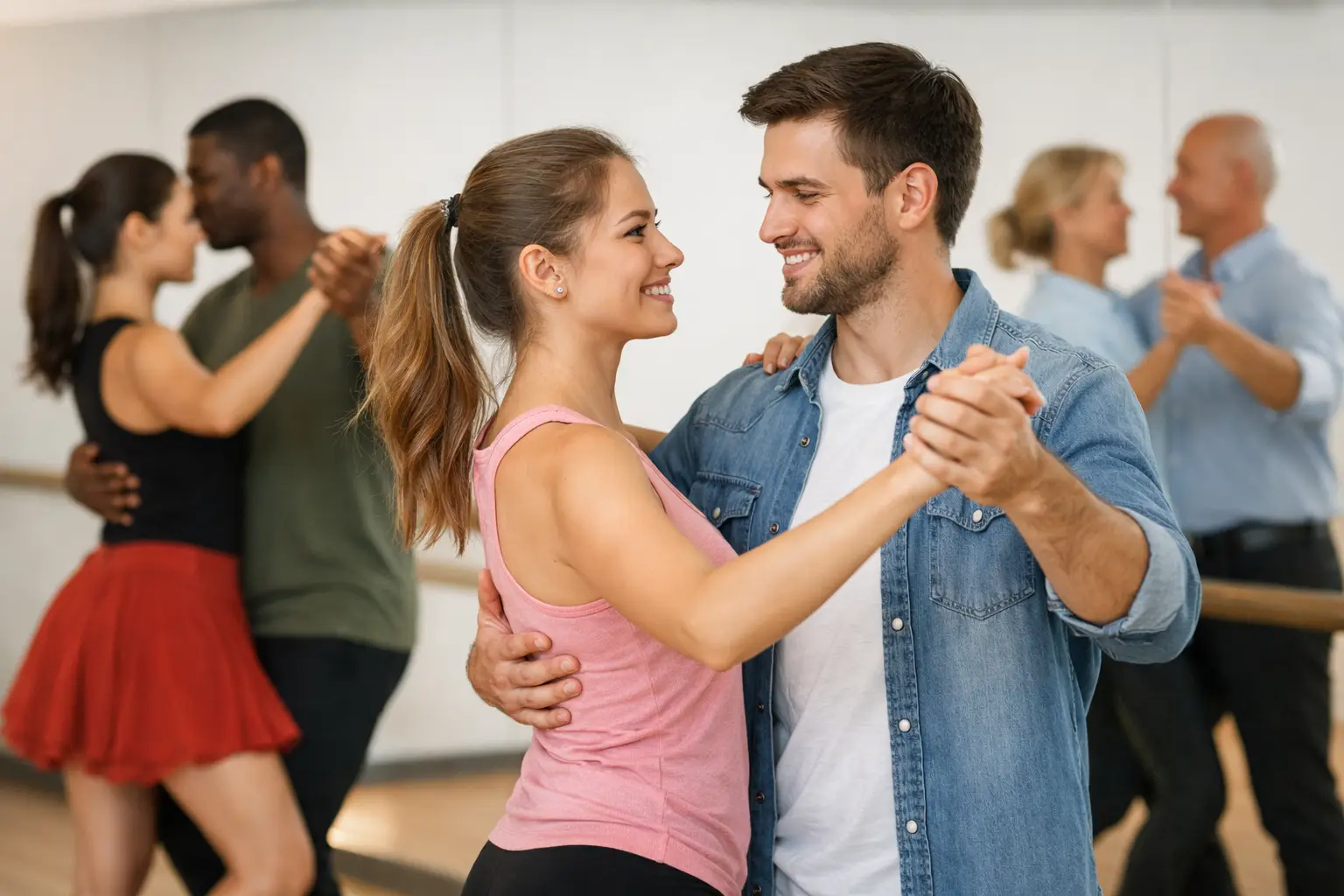
The best first dance is not necessarily the one with the fewest steps. It is the one that gets you moving before your inner critic has time to cut in. If you are wondering what dances are easiest first, look for a style with a clear beat, repeatable patterns, and plenty of places to use it socially. A welcoming class helps, too. Great instruction turns that first uncertain shuffle into a real, music-filled win.
For most adults, the easiest place to start is a social dance that feels useful right away. You do not need fancy spins, perfect posture, or a partner who has been dancing for years. You need a few dependable moves, a little rhythm, and permission to laugh when your feet head in different directions.
What Dances Are Easiest First? Start With These Styles
There is no single answer for every beginner. The easiest dance depends on the music you enjoy, whether you want to dance with a partner, and where you picture yourself using it. Still, a few styles are especially friendly for brand-new dancers.
Country Two-Step
Country two-step is a favorite first choice for people who want to feel comfortable at country bars, dance halls, weddings, and community events. Its basic rhythm is easy to hear once you know what to listen for, and the traveling movement gives the dance a relaxed, going-somewhere feeling.
The first few classes usually focus on walking together with the music, staying in your lane on the floor, and leading or following simple turns. That is enough to have fun surprisingly quickly. The trade-off is that two-step moves around the room, so learning floorcraft matters. You will soon discover that dodging other couples gracefully is part of the dance party.
East Coast Swing
East Coast Swing is lively, playful, and built for upbeat music. It works beautifully with rock and roll, jive-style songs, and plenty of pop tunes with a bouncy beat. The basic pattern repeats, which means beginners can spend less time memorizing and more time enjoying the music.
This style is a smart choice if you like energy and do not mind a little bounce in your step. It can feel physically faster than a slow dance, but the patterns are often easier to recognize than they look. Start small, keep your steps under you, and save the flashy moves for later. Swing does not need to be wild to be a blast.
Bachata
Bachata has one of the most approachable beginner rhythms in partner dancing: step to the side for several counts, then add a gentle tap. That simplicity gives new dancers room to pay attention to their partner connection and musical timing without juggling a complicated foot pattern.
It is an excellent first style for anyone drawn to Latin music or club dancing. Bachata can become detailed and expressive as you advance, but its beginner foundation is wonderfully manageable. The key is keeping it comfortable and social. A good class teaches connection and respectful partner spacing from the start, so nobody has to guess their way through it.
Salsa
Salsa is often easier than beginners expect, especially when taught with a clear, repeatable basic step. It has a strong musical pulse, a huge social scene, and enough simple turn patterns to make your first dances feel exciting rather than repetitive.
The challenge is timing. Salsa music can sound busy at first, and beginners sometimes try to chase every instrument they hear. You do not have to. Learn where the basic count sits, keep your steps compact, and let the music do the heavy lifting. If Latin music makes you want to move in your kitchen, salsa may be your best first spin around the floor.
Waltz
Waltz is a calmer, elegant option for dancers who prefer smooth movement over fast turns. Its steady three-count rhythm makes it recognizable, and beginner patterns can be wonderfully simple. It is useful for formal events, ballroom nights, and songs that call for something more graceful than a side-to-side sway.
Waltz asks for a little more attention to posture and movement around the room than some club dances. Still, its pace gives beginners time to think. If fast music makes your brain feel like it has tied its shoelaces together, waltz can be a lovely place to begin.
The Real Signs a Dance Is Beginner-Friendly
A dance is easy to start when the first lesson gives you something you can actually use. That usually means a predictable rhythm, a basic step that repeats, and a small set of patterns that work with many songs. It also helps when the dance does not require extreme flexibility, athletic lifts, or months of technique before it feels enjoyable.
Partner dancing has one extra ingredient: communication. Leading and following are not about dragging someone around the floor or reading minds. They are a shared language built with gentle direction, attention, and timing. Beginners often worry they will be bad at it, but everyone starts there. Patient instruction makes that learning curve feel far less steep.
The easiest class environment matters just as much as the easiest dance. Look for a program that welcomes singles and couples, rotates partners when appropriate, and teaches practical social skills rather than choreography you will only perform once. Dancing is a conversation, not a test you have to pass.
Choose by the Music You Already Love
Trying to pick a first style from a long dance menu can feel like choosing one dessert at a buffet. Instead of asking which dance is objectively easiest, ask which music makes you tap your foot without thinking.
Choose country two-step or country swing if you love modern country, classic country, and a friendly dance-hall atmosphere. Choose East Coast Swing if energetic oldies, rock, and playful pop songs make you smile. Choose bachata or salsa if Latin rhythms call your name and you want a versatile social dance. Choose waltz if you enjoy romantic, flowing songs and would like a smooth option for special occasions.
Your excitement counts. A technically simple dance will not feel easy if you dread the music, while a slightly more challenging style can become comfortable quickly when you cannot wait for the next song.
Do You Need a Partner Before You Start?
Nope. Not even a little bit. Many people begin alone because their spouse is not interested, their friends are busy, or they simply want to meet new people. In a social group class, dancing with different partners can actually help you learn faster. You experience a variety of connections and discover that good dancing is based on clear fundamentals, not on having one perfect partner.
Couples are welcome, too. Learning together can be a fun date-night habit, provided you both give yourselves permission to be beginners. Miss a turn? Laugh, reset, and catch the next beat. The floor will not crumble beneath you.
Make Your First Classes Feel Easier
Wear comfortable clothes that let you take normal-sized steps. Shoes that stay on your feet and slide a little are usually more helpful than very sticky running shoes. Bring water, arrive a few minutes early, and expect your brain to work as much as your legs during the first lesson.
Most importantly, do not measure success by how many moves you remember. Measure it by whether you can find the beat, return to a basic step, and enjoy one full song without freezing. Those are real milestones. The turns, dips, and fancy footwork can wait their turn.
At Dance Class Saskatoon, beginner social dance classes are built around that practical kind of confidence: the kind you can take to a club, a wedding, a dance hall, or the next song that catches you by surprise. Pick the music that moves you, take the first step, and let the good times shuffle in.