
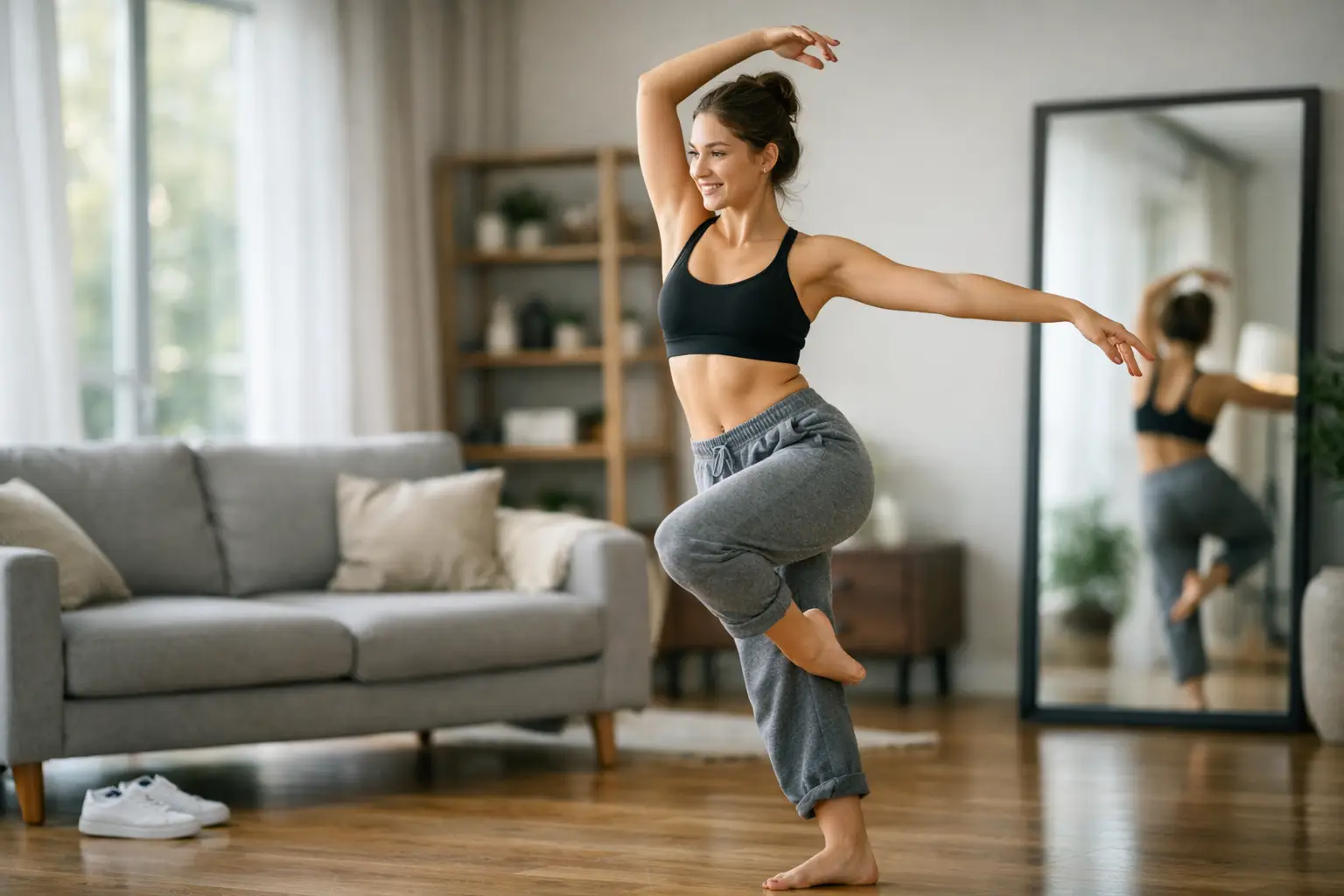
You remembered the steps in class. Then your favorite song comes on at home, at a wedding, or out with friends, and suddenly your feet file for early retirement. If you are wondering how to practice dance outside class, the good news is that you do not need a ballroom-sized living room, a perfect partner, or hours of spare time. You need a simple plan that helps your body remember what your brain already knows.
The goal is not to rehearse every count until dancing feels like homework. The goal is to make your basic steps feel familiar enough that you can relax, hear the music, and enjoy the person across from you. That is where social dancing really starts to shine.
Start Small So Practice Actually Happens
A 10-minute practice session you repeat three times a week will help more than one ambitious hour that never makes it onto the calendar. Pick a consistent cue: after dinner, before your evening show, or when you first get home from work. Clear enough floor space to take two or three steps in each direction, put on comfortable shoes or socks that do not grip too much, and you are ready to move.
Start with the basic rhythm from your current class. For a country two-step, that may mean walking your quick-quick-slow. For salsa, it could be stepping in place and finding the forward-and-back rhythm. For swing, settle into the pulse before worrying about turns. Your basic step is not boring – it is the home base that makes every pattern, spin, and surprise recovery possible.
Practice one skill at a time. Trying to run the basic, a turn pattern, timing, posture, arm styling, and connection all at once is a fast route to frustrated feet. Give each short session one clear job. You might spend Monday on timing, Wednesday on a class combination, and Friday on dancing freely to a full song.
How to Practice Dance Outside Class Without a Partner
No partner? No problem. Plenty of the most useful practice can happen solo, and it can make you a more comfortable partner when you return to class or a dance floor.
First, practice your own footwork without using your arms as a crutch. Count out loud if that helps: one, two, three, four, or quick, quick, slow. Then repeat it with music. If your steps fall apart when the song starts, slow down. You can clap the rhythm, march it, or simply shift weight from foot to foot until the beat feels less like a moving target.
Next, rehearse the pathway of a move. Imagine where your partner would stand and walk through the pattern at half speed. A lead can practice clear body positioning and a follower can practice completing each step and turn on their own balance. Both roles benefit from knowing where the feet go before adding the extra information of a partner’s hands, frame, and momentum.
A chair can be a handy stand-in for spacing, but do not pull, twist, or lean on it. The point is to visualize connection, not wrestle the furniture. Better yet, use a mirror occasionally to check posture and alignment, then turn away from it. Social dancing is not a mirror sport. You want to develop the ability to feel your movement, not constantly inspect it.
Let the Music Be Your Practice Partner
Dancers often say they cannot dance to music when what they really mean is they have only practiced to the one song used in class. Different songs can feel faster, slower, busier, or more relaxed. That variety is exactly why music practice matters.
Choose a few songs that fit the dance you are learning. Begin with music that has an easy-to-hear beat, then gradually try songs with a different tempo or mood. Keep your first goal simple: stay on the beat for one whole song. Do not add a complicated pattern just because you know it. If you can maintain a clean basic from the first chorus to the last, you are building a skill you will use everywhere.
Try this mini challenge: play a song, find the beat by clapping, and identify where the musical phrases repeat. Many popular songs organize themselves in groups that make changes feel natural. When you hear a new verse, chorus, or musical accent, you may choose to add a turn, change direction, or simply smile and keep your basic going. Musicality does not have to be fancy to feel great.
It also helps to practice at more than one speed. Slower music gives you time to notice your weight changes and posture. Faster music tests whether your steps stay compact and relaxed. If a song is too quick, do not force giant steps. Make them smaller, soften your knees, and protect the rhythm. Small steps are often the secret sauce of social dancing.
Rehearse What Went Wrong, Not Just What Went Right
After class, take two minutes to make a quick mental note. Which move felt smooth? Which one made you pause, laugh, or accidentally invent a new dance? That second category deserves a little home practice while the lesson is fresh.
Break the troublesome move into pieces. If a turn feels confusing, practice only the footwork. If you lose your balance, practice spotting a fixed point as you rotate and finish with your weight under you. If you forget what comes next, say the sequence aloud in plain language: basic, turn, basic, change places. Clear cues stick better than a foggy memory of what the instructor’s arms were doing.
Video can help, but use it wisely. A short clip of yourself can reveal whether you are rushing, taking oversized steps, or dropping your frame. Watch it once or twice with curiosity, not criticism. The camera is a coach’s tool, not a confidence crusher. Pick one adjustment for your next practice and leave the rest alone.
Make Room for the Real-World Dance Floor
Home practice builds mechanics. Social practice builds comfort. Whenever you can, dance with different people at a practice party, community dance, club night, wedding, or friendly get-together. You will learn that every partner has a different height, energy, experience level, and sense of timing. That is not a problem to solve – it is the whole point of social dancing.
At Dance Class Saskatoon, practice events are a cheerful bridge between learning a pattern and using it in the wild. They give you a place to try the basics, recover from a missed step, and discover that nobody is grading your footwork. A kind smile and a comfortable basic will take you much farther than a dozen complicated moves performed with panic in your eyes.
When you practice with someone else, keep the focus on connection. Leads, aim for clear and gentle information rather than pushing a move through. Followers, keep your own balance and avoid guessing before you feel the lead. Both of you can help by starting with simple patterns, checking in with each other’s comfort, and laughing off the occasional tangle. A dance floor is allowed to be fun. In fact, that is the assignment.
Build Confidence Through Repetition, Not Perfection
Progress may show up quietly. One week, you will notice that you no longer need to count every step. Another week, you will recover from a mistake without stopping. Eventually, a song will start and your body will know what to do before your inner critic gets a chance to make a speech.
Keep your practice light, specific, and regular. Return to the basics whenever a new pattern feels wobbly, and give yourself permission to dance imperfectly while you learn. Put on one song tonight, take the first step, and let your confidence find its rhythm.