
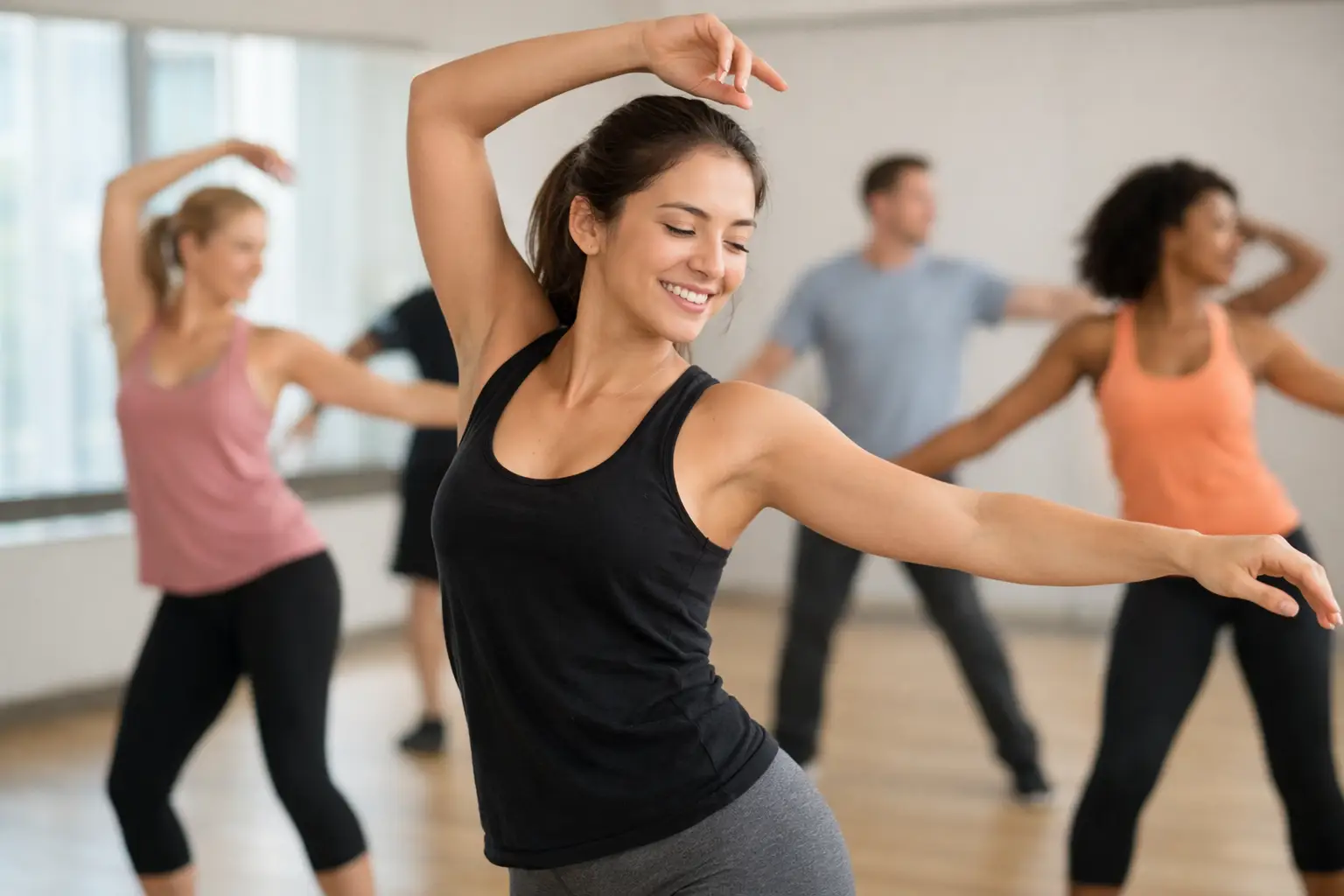
Showing up to your first lesson alone can feel like the hardest step of the whole dance. Not the turn, not the timing, not even remembering which foot starts first. For many adults, the real hurdle is simpler: they want dance classes no partner needed, because waiting for a friend, spouse, or brave volunteer to sign up first usually means never starting at all.
The good news is that social dance classes are built for exactly this situation. You do not need to arrive as half of a matched set to learn ballroom, Latin, country, swing, or club styles. In a well-run studio, singles are normal, beginners are expected, and the class structure is designed to help everyone learn comfortably.
That matters more than people think. When a studio removes the partner requirement, it removes one of the biggest excuses standing between “I’ve always wanted to try that” and “I’m actually doing it.” And once that barrier is gone, dancing starts to feel a lot more fun and a lot less complicated.
Why dance classes no partner needed work so well
Social dancing is, by nature, social. That means classes are usually organized to keep people moving, learning, and interacting instead of locking everyone into one fixed pairing for the entire session. Many group classes rotate partners during practice, which gives students a better feel for leading, following, timing, and adapting to different people.
That rotation is not just a convenience for singles. It is one of the best ways to learn. Dancing with only one person can feel comfortable at first, but it can also hide mistakes. Dancing with several partners helps you develop clearer communication, better balance, and more confidence in the actual skill rather than in one familiar pattern.
It also makes the room feel lighter. You are not there to perform a romance-novel scene with a stranger. You are there to learn, laugh, miss a step here and there, and get better every week. That takes the pressure down fast.
What to expect in no-partner-required dance classes
If you have never taken a group lesson before, the phrase can sound vague. What does “no partner needed” actually look like in practice?
Usually, it means you can register on your own and still fully participate. The instructor will structure the class so singles and couples can both learn. In many cases, students rotate throughout class. In some settings, instructors may also balance roles as much as possible or offer guidance on how the rotation works before the music starts.
The atmosphere matters here. A welcoming class does not throw beginners onto the floor and hope for the best. It starts with the basics, breaks down the steps, and gives you time to practice without feeling like you are trying to catch a train while counting beats. Experienced, patient instructors make a huge difference because they know how to keep things moving while still making room for real learning.
There can be trade-offs, of course. If a class has a very uneven lead-follow ratio one night, you may spend a little time observing or practicing footwork solo between turns. That is normal. It is not a sign that the format does not work. In fact, those short moments can help you absorb the pattern before jumping back in.
The biggest benefits of starting solo
One of the best parts of joining alone is that you arrive with your own reasons. Maybe you want to feel comfortable at weddings. Maybe country two-step has been calling your name. Maybe you just want a hobby that gets you off the couch and into a room with actual humans. All of those are good reasons.
Starting solo also tends to make people more open. You are more likely to meet new classmates, ask questions, and focus on your own progress instead of worrying whether your partner is enjoying the class at the exact same level you are. That freedom can be a real confidence booster.
There is a practical upside too. Social dance is one of the rare activities that mixes movement, music, memory, and connection in the same hour. You get physical activity, mental engagement, and a social outlet without it feeling like a chore. That is a pretty sweet step pattern.
And yes, plenty of people make friends this way. Not because the class is trying too hard to be a mixer, but because learning together naturally breaks the ice. Everyone is a little new, a little focused, and usually relieved to discover they are not the only one who walked in nervous.
Which styles are easiest when no partner is needed?
The short answer is: more than you think. Ballroom, Latin, country, swing, and club styles can all work beautifully in group classes with rotating partners. What matters most is the teaching approach.
For total beginners, styles with clear rhythms and practical social use tend to feel especially rewarding. Country dances are popular because they are fun, approachable, and useful at real dance nights. Swing brings energy and personality, while ballroom and Latin add structure and variety. Club styles can be a great fit if your goal is to feel less awkward on a night out.
It depends on your personality too. If you like clean technique and steady progression, ballroom may click right away. If you want bounce, flavor, and a little extra spark, Latin or swing might be your lane. If your dream is to stop side-stepping awkwardly at a local dance hall, country classes can get you there with practical confidence.
How beginners can feel more comfortable right away
The first class is rarely about being good. It is about showing up. If you can do that, you are already ahead of the version of yourself that stayed home thinking about it.
Wear something easy to move in, bring clean indoor shoes if the studio recommends them, and come a few minutes early so you are not rushing into the room with your heart doing its own cha-cha. Introduce yourself. Tell the instructor you are new. Good teachers want that information because it helps them guide you better.
Then give yourself permission to be a beginner in public. You will not master every step in one class, and you do not need to. Social dancing grows through repetition. Week by week, the counts feel less mysterious, the patterns start to stick, and your body stops negotiating with your brain over every single movement.
If you are shy, that is okay too. You do not need to arrive as the life of the party. You just need to be willing to rotate, smile, and keep trying. Confidence in dance is usually earned, not granted at the door.
Why structured classes beat trying to figure it out alone
Online videos can be helpful for reviewing, but they are a rough substitute for real instruction. Social dance is full of timing, frame, connection, and movement details that are much easier to feel than to decode from a screen.
A structured class gives you progression. One week builds on the next. You learn what to do, why it works, and how to use it in an actual social setting. That last part is huge. Plenty of people do not just want steps for the sake of steps. They want to go out dancing and feel like they belong on the floor.
That is where a community-focused studio really shines. When classes are designed around real-world social dancing instead of performance pressure, the whole experience becomes more useful and more fun. You are not training for an exam. You are learning a skill you can actually enjoy.
At a place like Dance Class Saskatoon, that no-partner-needed approach is part of what makes the experience feel so approachable. Students can join a multi-week series, learn progressively, and build comfort in a setting that feels organized without feeling stiff. That balance matters.
Dance classes no partner needed are really about freedom
Yes, they make scheduling easier. Yes, they help singles join without overthinking it. But the bigger benefit is freedom. You get to start now, not after convincing someone else. You get to learn at your own pace, meet new people, and build a skill that travels with you to weddings, parties, clubs, community events, and spontaneous nights out.
There is no perfect moment to begin dancing. No magical week when you suddenly feel ready, coordinated, and completely fearless. Most people start with a little curiosity and a few nerves. Then they take a class, realize it is more welcoming than expected, and wonder why they waited so long.
So if the only thing stopping you is not having a partner, let that excuse sit this one out. The music will still start, the class will still move, and your first good dance might be one decision away.