
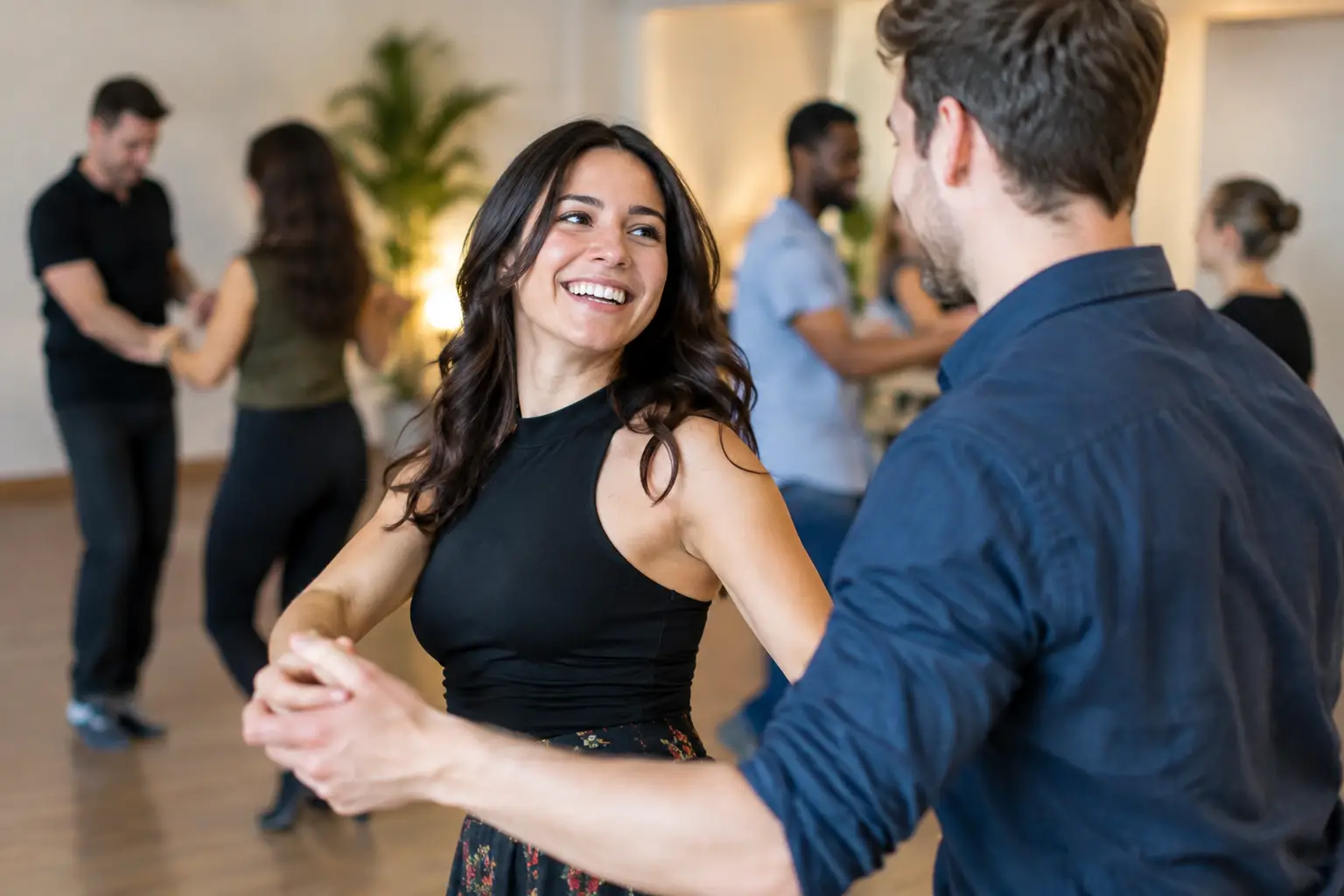
The music starts, people begin pairing up, and suddenly your feet feel like they have forgotten every step. Take a breath. This practice party survival guide is here to remind you of one very good thing: nobody arrives perfectly polished. A practice party is where dancers try things, laugh at missed turns, meet new people, and turn class patterns into real social-dance confidence.
You do not need a partner, a fancy outfit, or a memory stuffed with every count. You only need a willingness to step onto the floor and give it a go. That is where the fun really begins.
What a Practice Party Is Really For
A practice party is not a performance, a competition, or an audition for the next dance show. It is a friendly social dance setting built for learning. The goal is to use the moves you have been working on in class with different partners, different songs, and a little more freedom than a structured lesson allows.
That last part can feel exciting and awkward at the same time. In class, an instructor calls the timing, demonstrates the pattern, and keeps everyone moving together. At a party, you decide when to ask someone to dance, which move to try, and what to do when the song is faster than expected. That freedom is practice, too.
The best dancers in the room are not the ones who never make a mistake. They are the ones who keep their cool, make their partners comfortable, and enjoy the song anyway. A missed step is not a disaster. It is just a new opportunity to find the beat again.
Before You Go: Set Yourself Up for Fun
Arrive a few minutes early if you can. This gives you time to say hello, get familiar with the room, change shoes if needed, and settle your nerves before the first song starts. Walking in late and rushing straight onto the floor can make anyone feel flustered.
Wear clothes you can move in comfortably. Social dancing involves turning, reaching, bending your knees, and sometimes getting pleasantly warm. Choose something that lets you move without tugging, adjusting, or worrying about it all night. Layers are a smart call, especially if you tend to warm up after a few lively swing songs or country two-step laps.
Shoes matter more than many beginners expect. You want a pair that stays secure on your feet and allows you to pivot without sticking to the floor. Super-grippy athletic shoes can make turns harder on your knees, while loose sandals can be an adventure nobody asked for. You do not need specialty dance shoes on day one. Clean, comfortable shoes with a reasonably smooth sole are often enough.
A little dance-floor courtesy goes a long way, too. Fresh breath, deodorant, and clean clothing help everyone enjoy close partner dancing. Bring water and take breaks as needed. Hydrated dancers make happier dancers. Science? Maybe. Good sense? Absolutely.
Your Practice Party Survival Guide to Asking Someone to Dance
The hardest part of a first practice party is often not the footwork. It is asking. The good news is that a simple, friendly question works beautifully: “Would you like to dance?” No clever line required.
Make eye contact, smile, and ask between songs whenever possible. If someone is already talking, drinking water, putting on their shoes, or clearly catching their breath, give them a moment. If they say no, do not take it personally. They may be resting, waiting for a friend, or sitting out a dance they do not know. A cheerful “No problem, maybe later!” keeps the room comfortable for everyone.
If someone asks you, it is completely fine to say yes even if you are new. You can also be honest: “I am still learning this one.” Most social dancers appreciate knowing that upfront, and a good partner will keep things simple. If you need a break, you can say no kindly. You are never required to dance every song.
Do not wait around for the perfect partner or your perfect song. Ask different people to dance. Practicing with a variety of leads and follows helps you develop better connection, clearer communication, and flexibility. It also turns a room full of strangers into a dance community much faster.
No Partner? You Are Still in the Right Place
Practice parties are especially valuable for people who come on their own. Staying seated until someone invites you can feel safer, but it also makes the evening smaller than it needs to be. Challenge yourself to ask one person during the first few songs. Then ask another later.
Many people in the room arrived solo, too. They are likely hoping for the same thing you are: a relaxed chance to dance, improve, and have a good time. One invitation can break the ice for both of you.
Keep the Dancing Simple and Musical
When the music begins, start with the basics. Your rock step, box step, basic two-step, or simple swing rhythm is enough. Trying a complicated pattern before you have found the beat is a quick route to confusion-ville.
Listen for the steady pulse in the music. If you lose your place, simplify your feet, reconnect with the rhythm, and keep moving. Your partner does not need a parade of patterns. They need a comfortable, clear dance that feels good with the music.
Leads, focus on clarity rather than force. A lead is an invitation, not a steering wheel. Give your partner time to respond, keep your frame comfortable, and choose moves that fit both the space and the song. Follows, stay connected, keep your own balance, and avoid guessing a move before it is led. That little moment of patience makes social dancing feel wonderfully smooth.
If a move does not work, smile and move on. Do not stop to explain it in the middle of the dance unless your partner asks. A practice party is not the time for long corrections or surprise coaching. Save detailed questions for class, an instructor, or a quiet moment off the floor.
Floorcraft: The Secret Skill Nobody Brags About
A crowded floor asks every dancer to pay attention. Keep your steps smaller than you think you need, especially in the center of the room. Big traveling moves, long kicks, and dramatic spins may be fun, but they need space. If the floor is busy, choose compact patterns and protect the dancers around you.
For dances that travel around the room, such as country two-step or certain ballroom styles, move with the flow of traffic rather than against it. If you stop to practice a figure, move toward the middle when possible. The outer edge is usually the highway, so do not park there.
Accidental bumps happen. When they do, pause just long enough to make sure everyone is okay, offer a quick “Sorry about that,” and continue. No dramatic apologies, no blaming, no panic. Grace on the dance floor is a very attractive quality.
When Nerves Show Up Mid-Song
Even after you have danced a few songs, nerves can pop up again. Maybe a faster tune comes on. Maybe you recognize a skilled dancer watching nearby. Maybe your brain suddenly decides that counting to eight is advanced mathematics.
Give yourself one small job: find the beat. Breathe, soften your shoulders, and return to your basic. Most anxiety gets louder when you are trying to do too much. A simple dance done with a relaxed smile is far more enjoyable than a tricky dance performed with a worried stare.
It also helps to remember that experienced dancers were beginners once. They have stepped on toes, forgotten patterns, turned the wrong direction, and laughed their way through it. The welcoming people at a social dance are not looking for perfection. They are looking for a pleasant partner and a shared good time.
Make the Most of Each Dance
Think of every song as one small experiment. Try the pattern from last week’s lesson once or twice. Practice keeping your timing through a whole song. Work on a clearer lead, lighter connection, or more relaxed posture. Then let yourself simply enjoy the rest.
You do not have to prove that you know everything from class. In fact, repeating a few comfortable basics is how those basics become natural. The more automatic your foundation feels, the more room you will have for musicality, conversation, and fun.
Between songs, thank your partner. A genuine “That was fun, thank you” is all it takes. If you enjoyed dancing with them, ask again later in the evening, but do not feel you need to stay with one person all night. Mixing partners is part of the magic.
Leave While You Are Still Smiling
You do not need to stay until the final song to call the night a success. If you danced three songs, met someone new, and tried one class pattern in the wild, that is a win. If you stayed longer and your confidence grew song by song, even better.
At Dance Class Saskatoon, practice parties are a chance to turn learning into living, breathing social dancing. Come as you are, take the pressure off, and let every imperfect turn teach you something useful. The next time the music starts, step out before your nerves can count you out – your future favorite dance partner may be waiting for an invitation.