
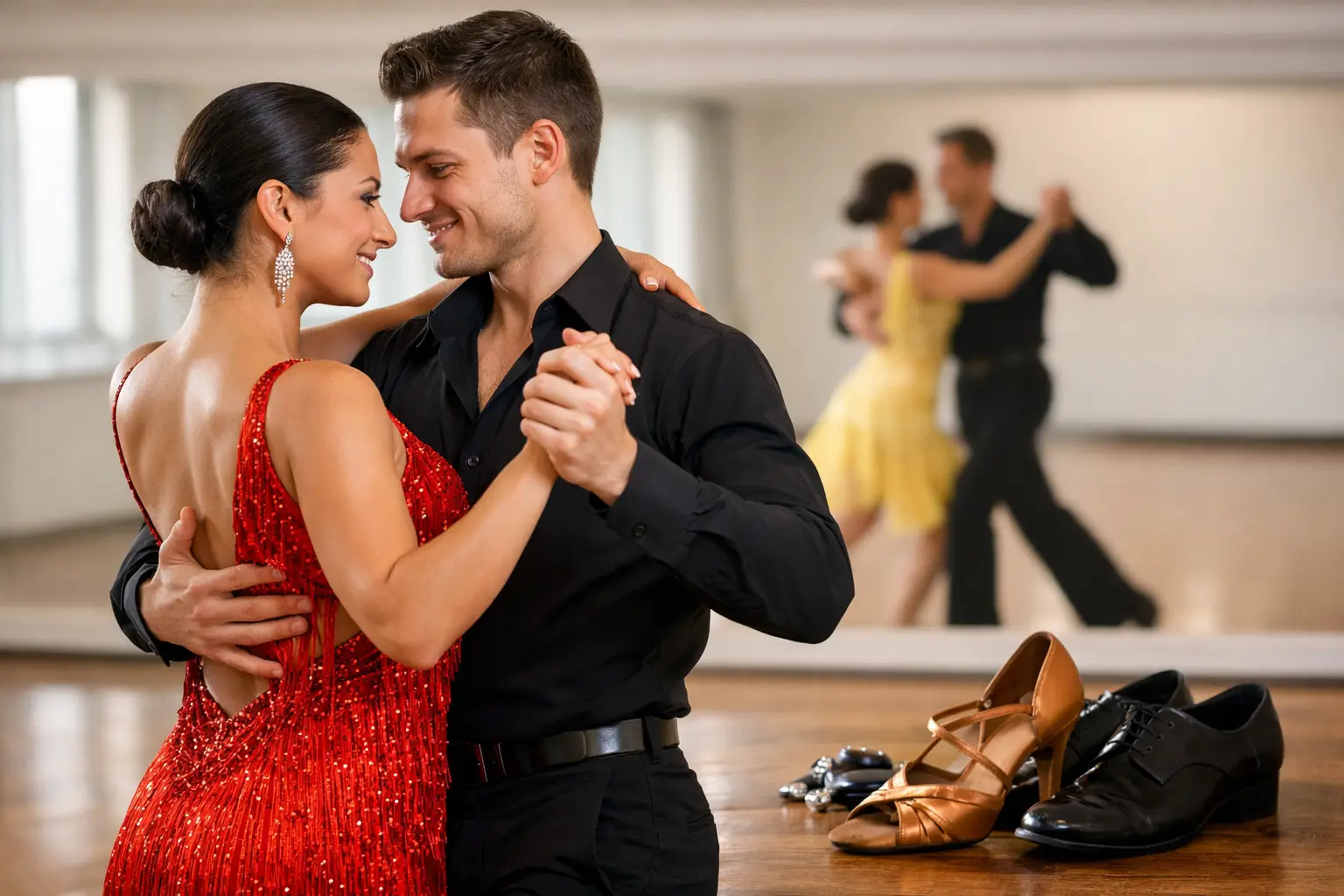
If you have ever watched a social dance floor and thought, “That looks fun, but where would I even start?” rhythm ballroom dances are one of the friendliest places to begin. They are lively, practical, and built for connection, which makes them a great fit for adults who want to feel comfortable at parties, weddings, clubs, and community dance events without needing years of formal training.
What makes rhythm especially appealing is that it feels social right away. The music has bounce, the movement has personality, and the dances are designed to be danced with another person instead of performed at them. That means you can focus less on being perfect and more on finding your groove.
What are rhythm ballroom dances?
In ballroom, “rhythm” usually refers to a group of American-style dances that emphasize grounded movement, musicality, and a more relaxed, expressive feel than some of the smoother ballroom categories. The core rhythm ballroom dances are commonly Cha Cha, Rumba, East Coast Swing, Bolero, and Mambo.
That lineup gives you a nice mix. Some dances are playful and snappy, some are romantic and slow, and some are built to get the party moving. If you are new to partner dancing, this variety is a big plus because you do not have to force yourself into one mood or music style. You can try a few and see which one clicks with your personality.
The other good news is that rhythm is social by nature. These dances teach skills that carry over to real dance floors – timing, leading and following, partner awareness, and confidence in motion. You are not just memorizing steps for the sake of it. You are learning how to dance with people.
Why rhythm ballroom dances work so well for beginners
Some dance styles look amazing but can feel a little intimidating at first. Rhythm tends to meet people where they are. The movement is expressive without needing extreme technique on day one, and the music often feels familiar enough that beginners can relax into it.
That matters more than most people expect. When adults start dancing, the biggest obstacle usually is not physical ability. It is self-consciousness. People worry about having two left feet, not having a partner, or being the only beginner in the room. Rhythm helps cut through that because the dances are upbeat, forgiving, and fun to practice with other people who are learning too.
There is also a practical angle. If your goal is to use what you learn outside the studio, rhythm gives you solid mileage. Swing works at parties. Cha Cha shows up in lots of social settings. Rumba builds control and partner connection. Even if you eventually branch into country, Latin, or club styles, the rhythm foundation pays off.
The main rhythm ballroom dances and how they feel
Cha Cha
Cha Cha is cheeky, sharp, and full of sparkle. It has a playful rhythm that encourages clean footwork and a little attitude. Beginners often enjoy it because the timing is distinct once you hear it, and the dance feels energetic without being wild.
It can take a few classes to stop overthinking the triple steps, so do not worry if it feels busy at first. Once the pattern settles in, Cha Cha becomes one of those dances that makes people grin while they are doing it.
Rumba
Rumba is slower, smoother, and more connected. It teaches weight transfer, timing, and how to move with intention instead of rushing from step to step. That slower pace sounds easier, but it can actually reveal habits faster because there is nowhere to hide. You feel every step.
That is not a bad thing. It is one of the best dances for building strong fundamentals. If you want to improve balance, partner communication, and control, Rumba is a gem.
East Coast Swing
If your idea of a good time includes lively music and lots of social energy, East Coast Swing is hard to beat. It is bouncy, compact, and made for real people on real dance floors. You do not need a giant ballroom to enjoy it.
For beginners, swing can feel a little fast at first. The trick is not to muscle through it. Good instruction helps you find the rhythm, stay grounded, and keep the movement comfortable. Once that happens, this dance becomes pure fun.
Bolero
Bolero has a softer, more dramatic quality. It blends rise and fall with rhythm movement, creating a dance that feels smooth one moment and expressive the next. It is beautiful, but it is often a later favorite rather than the first one people fall into.
If you already enjoy slower music and want something with a more flowing style, Bolero may be your match. If you are brand new and looking for instant social-floor confidence, you might start with Cha Cha or Swing first and add Bolero after.
Mambo
Mambo is bright, rhythmic, and musical. It rewards people who like syncopation and love feeling the beat in a more direct way. It has real personality, but timing matters, so beginners usually do best with clear coaching and progressive classes.
The payoff is worth it. Mambo sharpens your ear for music and adds punch to your dancing.
Choosing the right rhythm dance for you
The best dance is not always the most famous one. It is the one you will actually enjoy enough to keep practicing.
If you want easy social energy, East Coast Swing is a strong pick. If you like flirty, crisp movement, Cha Cha might steal the spotlight. If you want to build connection and confidence with slower music, Rumba is a smart place to start. And if you are drawn to musical detail or dramatic expression, Mambo and Bolero may be more your speed.
It also depends on your goal. Someone preparing for weddings and parties may want the broadest social usefulness first. Someone who loves the idea of structured learning might enjoy rotating through several styles in a series class. There is no gold star for choosing the hardest dance first. The win is showing up, learning the basics, and feeling better on the floor each week.
What beginners usually struggle with
Most people do not struggle with steps as much as they struggle with timing, posture, and overthinking. The brain wants to collect every detail at once, while the body needs repetition and a little patience.
Timing is the biggest one. Many new dancers can do the step pattern alone, then lose it when music starts. That is normal. It takes time to connect counts to motion. A good class breaks this down so you are not left guessing where the beat went.
Partnering is another learning curve. Leading is not dragging. Following is not mind reading. Both roles involve communication through movement, and that skill develops best in a welcoming class where people rotate, practice, and learn from experienced instructors.
Then there is the classic fear of looking silly. Honestly, everyone looks a little clunky at first. That is how learning works. The people who improve are not the people who never wobble. They are the people who keep dancing through the wobble.
How to learn rhythm ballroom dances faster
The fastest progress usually comes from consistency, not cramming. One class a week with a little review between lessons beats one giant burst of effort followed by three weeks off.
It also helps to learn in a setting built for social dancers, not just performers. You want clear instruction, partner practice, and steps that make sense on everyday dance floors. Fancy routines can be fun, but if your main goal is to feel comfortable going out dancing, practical skills matter more.
Practice parties make a difference too. They give you a chance to try what you learned without the pressure of a big public event. That middle step between lesson and real-world dancing is where confidence starts to click.
And yes, you can learn if you come alone. In fact, plenty of adults do. A no-partner-required environment lowers the pressure and makes classes feel more social from the start.
Rhythm ballroom dances in real social life
This is where rhythm really shines. These dances are not just for showcases or competition clips. They fit real nights out. They give you something to do with the music instead of just swaying in place or standing on the sidelines.
That changes the whole experience. You stop hoping someone else will know what to do, and you start feeling like you belong on the floor. For couples, that can mean more fun at weddings and events. For singles, it can mean meeting people in a way that feels active and relaxed. For anyone who has said, “I wish I could dance,” rhythm is a strong answer.
At a studio like Dance Class Saskatoon, that social side matters. The point is not to make beginners feel behind. It is to help them build practical skills, enjoy the room, and leave class feeling a little more confident than when they walked in.
Why rhythm is worth trying
Rhythm ballroom dances have range. They can be playful, romantic, energetic, smooth, or punchy depending on the style and the song. More importantly, they teach you how to connect movement to music and to another person in a way that feels fun instead of stiff.
If you are curious, that is enough reason to start. You do not need special shoes, perfect timing, or a partner waiting in the wings. You just need the willingness to take a few steps, laugh through the awkward bits, and let the music do some of the heavy lifting. Your confidence does not show up before the first class – it usually walks in a few weeks later, right on beat.