
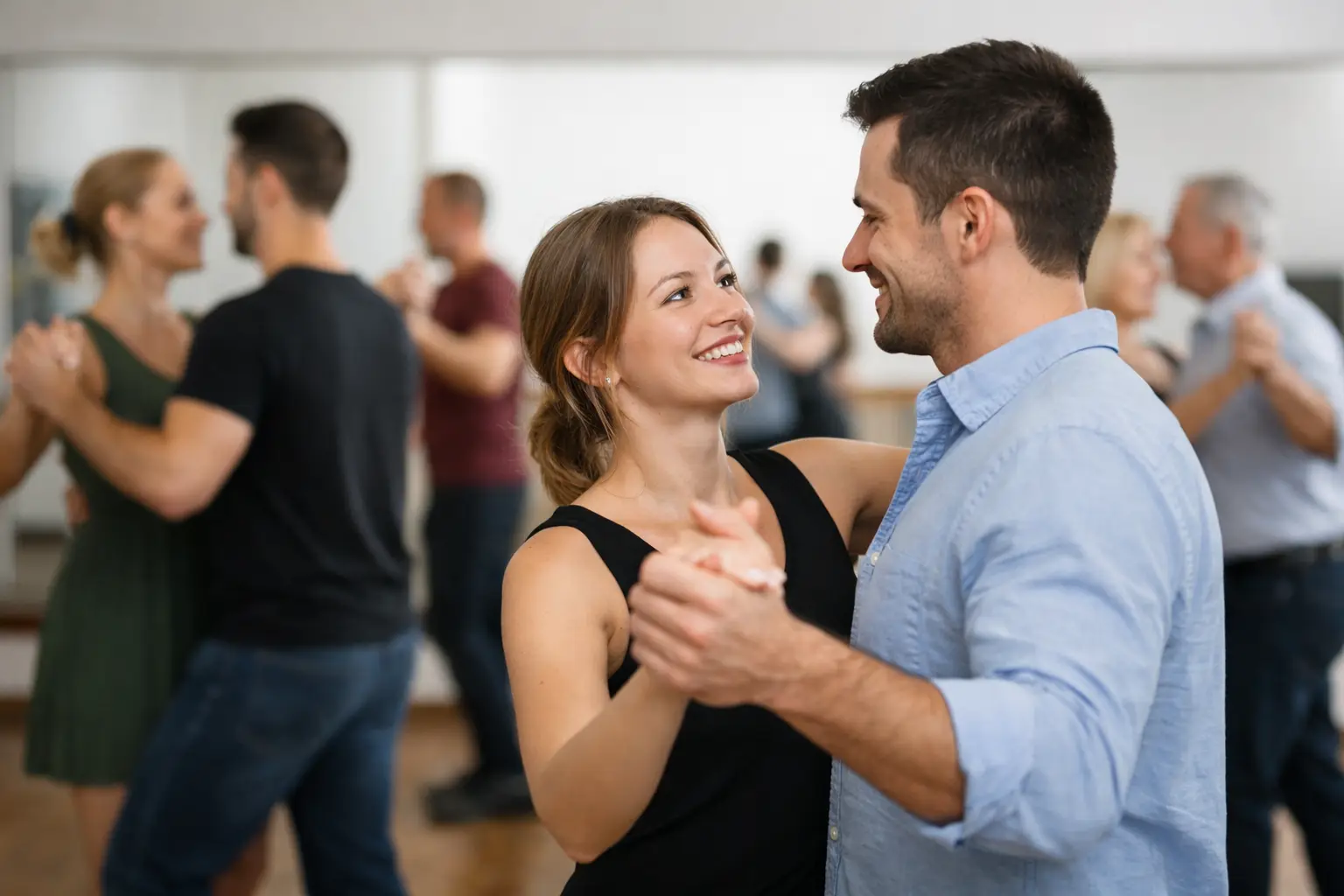
You do not need rhinestones, a perfect rhythm, or a dance partner waiting in the wings to get started. If you have ever wondered what is social dance class, the short answer is this: it is a fun, practical way to learn how to dance with other people in real life, not just in front of a mirror. Think date nights, weddings, country bars, swing nights, community dances, and those moments when you want to say yes to the dance floor instead of hiding by the snacks.
What Is Social Dance Class?
A social dance class teaches everyday partner dancing for real social settings. That means the focus is not on competition, strict performance technique, or memorizing flashy choreography just to look fancy for 30 seconds. It is about learning lead and follow, timing, movement, connection, and enough usable patterns to enjoy dancing with different people in a relaxed setting.
In a good class, you are not training to become a ballroom champion unless you want to. You are learning how to feel comfortable dancing at a wedding, a club, a country night, a Latin party, or a local dance event. That practical difference matters. Social dancing is built for the floor you will actually use.
What happens in a social dance class?
Most social dance classes follow a simple rhythm, pun fully intended. You arrive, meet the instructor, warm up a bit, and start working on the basics. That usually includes posture, frame, timing, foot placement, and how to communicate movement with a partner.
After that, the class builds from simple steps into a few patterns or combinations. In many studios, students rotate partners during class so everyone gets practice leading and following with different people. That is a huge help, especially for beginners. Dancing with only one familiar person can feel easier at first, but rotating teaches the real skill of social dancing – adapting, listening, and staying relaxed with different partners.
Classes are often taught in multi-week series instead of one-off sessions, because progress comes from repetition. Your first class might feel like learning a new language with your feet. By week three or four, things usually start to click. By the end of a series, many students are surprised by how much more natural they feel.
Who is social dance class for?
Almost everyone, honestly. Social dance classes are especially great for adults who want a structured way to learn without the pressure of a competitive studio environment. If you are a total beginner, you belong there. If you used to dance years ago and want to shake off the rust, you belong there too.
It also works well for couples, but it is not only for couples. Many people assume partner dance classes require bringing someone with you. Not always. Plenty of social dance programs welcome singles and rotate partners, which makes the class more social, more flexible, and far less intimidating than people expect.
If your goal is to meet people, build confidence, stay active, or finally stop saying “I can’t dance,” this type of class is a strong fit. If your goal is intense competition training, it may be only a starting point. That is one of the big it-depends moments. Social classes are designed to make dancing approachable and usable, not elite and intimidating.
Why people choose social dance instead of performance dance
The biggest difference is purpose. Performance dance is usually about presentation. Social dance is about participation. One is built around being watched. The other is built around joining in.
That changes the whole feeling of class. Social dance students are not usually chasing perfection. They want confidence, rhythm, connection, and enough skill to enjoy themselves in the moment. There is still technique involved, of course. Good technique makes dancing smoother and more comfortable. But the technique serves the experience, not the ego.
For many adults, that is a relief. You can learn seriously without having to take yourself too seriously.
What styles might be included?
Social dance classes can cover a wide range of styles depending on the studio. Common options include ballroom favorites like waltz and foxtrot, Latin dances like salsa, cha cha, and rumba, swing styles like East Coast Swing, and country dances like two-step. Some studios also teach club-friendly dances that work well in casual nightlife settings.
This variety is one of the best parts. Different styles suit different personalities and different venues. Country dancing has its own easygoing charm. Swing brings energy and bounce. Ballroom feels classic and smooth. Latin styles often bring a little extra spice to the floor.
You do not need to pick your forever dance on day one. In fact, trying a few styles is often the best way to find what feels natural and fun for you.
What beginners usually worry about
Let us step right onto the toes of the biggest fears. Most beginners worry about three things: looking awkward, not having a partner, and falling behind.
Looking awkward is normal at first. Everyone starts there. Even experienced dancers had a first class where their feet went one direction and their brain went another. Good instructors know this. They break things down, repeat often, and create a room where mistakes are part of the process, not a disaster.
Not having a partner is also less of a problem than many people think. In many social dance classes, partner rotation is built in. That means you can come solo and still get plenty of practice.
As for falling behind, that depends on the class structure. Beginner series are designed to start from the ground up. You are not expected to know anything. That is the whole point. If a class is progressive, though, joining in the middle may feel trickier than starting at the beginning. When in doubt, ask which level fits you best.
The real benefits go beyond dancing
Yes, you learn steps. But the payoff is bigger than that.
Social dance classes help people feel more comfortable in their own bodies. They improve coordination, balance, memory, and musical awareness. They also offer something many adults are missing – a reason to get out, move around, laugh a little, and meet people in a setting that is not work and not a screen.
There is also a confidence shift that happens when you realize you can walk into a social event and actually participate. That matters. Whether it is a wedding, a holiday party, or a Friday night out, knowing a few dance basics changes the experience. Instead of watching from the sidelines, you can join the fun.
And because partner dancing is social by design, it tends to build community faster than many other hobbies. You start recognizing faces, improving together, and sharing those little wins, like finally nailing a turn without drifting halfway across the room.
What makes a good social dance class?
A good social dance class feels welcoming from the start. The instructor should be experienced, clear, patient, and able to teach complete beginners without making them feel lost or talked down to. The class should have structure, but it should also feel relaxed enough that people can laugh and learn at the same time.
Practical teaching matters too. You want a class that connects the lesson to actual social dancing. That means learning how to move with a partner, how to dance to music you will really hear, and how to handle the small surprises that happen on a crowded dance floor.
Affordability and format matter as well. Many adults do better in multi-week group classes that keep the cost reasonable and let skills build week by week. A studio like Dance Class Saskatoon, for example, stands out when it combines broad style options, no-partner-required learning, and a friendly community feel with experienced instruction.
Is social dance class worth it if you feel shy?
Yes, and maybe especially then.
Shy people often assume dance class is for outgoing extroverts who twirl into every room like it is their personal spotlight. In reality, many social dancers start because they want a gentle way to get more comfortable around others. The structure helps. You are not forced to make endless small talk. You have something to do, something to learn, and a clear way to interact.
That said, it can feel vulnerable at first. You are learning in front of other people. You may mess up. Someone might too. That is normal. In a supportive class, that awkwardness fades quickly and gets replaced by familiarity.
So, what is social dance class really about?
It is about saying yes to the dance floor with a little more confidence and a lot less fear. It is about learning skills you can actually use, in a room where beginners are welcome, progress is realistic, and fun is part of the lesson plan.
If you have been waiting until you feel coordinated enough, brave enough, or partnered enough, do not sit out the song. The best time to start is usually before you feel fully ready. One class can change the way you hear music, move through a room, and show up socially – and that is a pretty good first step.