
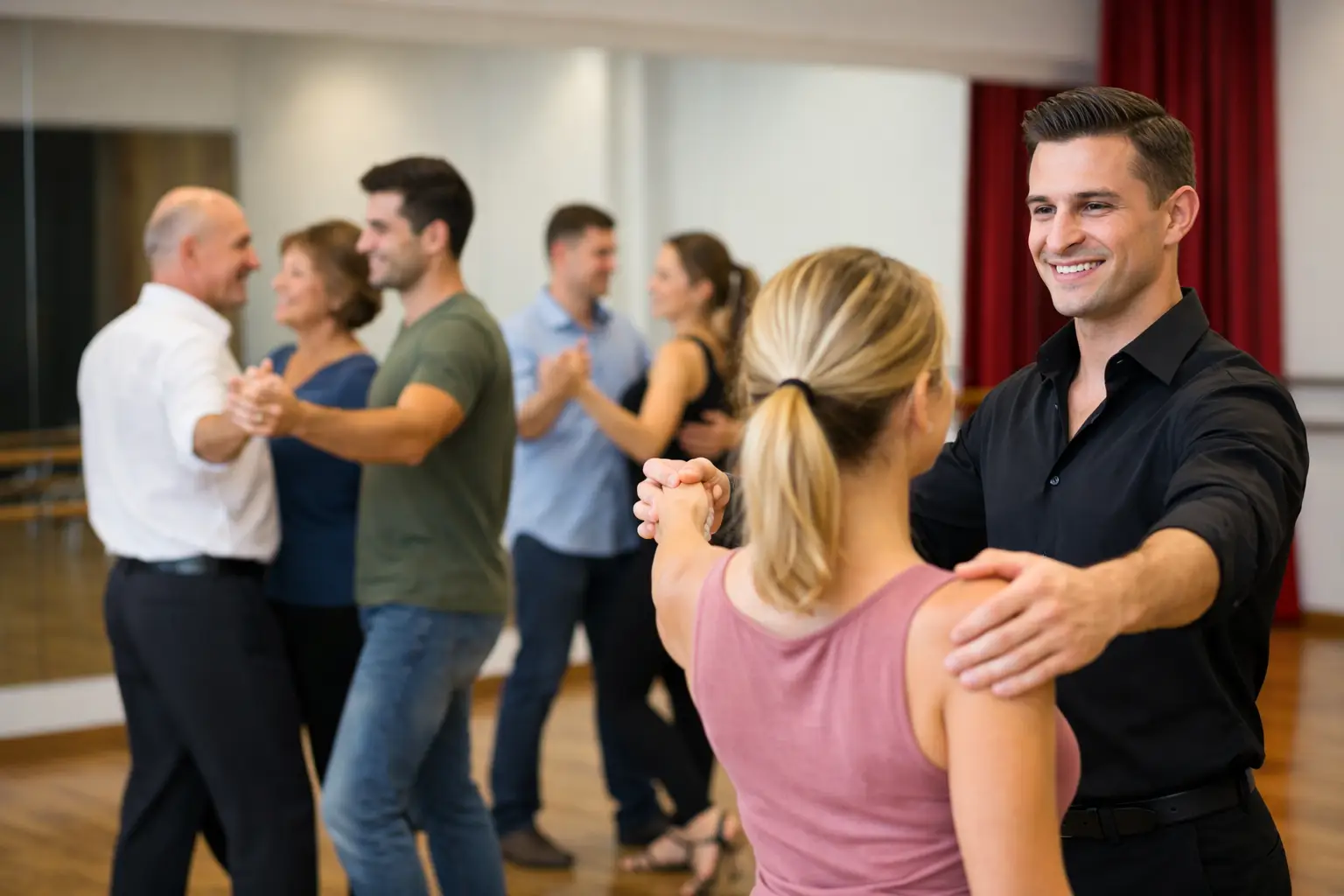
You do not need shiny shoes, a dance partner, or a secret childhood spent watching ballroom competitions to get started. If you have been wondering how ballroom group series works, picture a friendly room of adults learning one clear skill at a time, laughing through the occasional wrong turn, and leaving each week with moves they can actually use.
At Dance Class Saskatoon, a ballroom group series is built to make social dancing feel possible, not intimidating. You show up, learn with a supportive group, practice the pattern, and gradually trade the “What do I do with my feet?” feeling for real confidence on the dance floor.
What a ballroom group series is
A ballroom group series is a set of scheduled classes that runs over several weeks. Rather than dropping into a different lesson every time, you and your classmates build skills in a logical order. One week gives you the foundation, the next adds a new figure or direction change, and later classes help you connect those pieces so the dance starts to flow.
That structure matters. Ballroom dances such as foxtrot, waltz, tango, cha-cha, rumba, and East Coast swing have their own timing, footwork, and character. Learning them in a series gives your brain and body time to settle into the rhythm instead of trying to absorb everything in one big spin around the room.
For beginners, the goal is not to perform a perfect routine. It is to learn how to lead or follow a few dependable patterns, stay connected to the music, and enjoy dancing with other people. That is the good stuff.
How a ballroom group series works week to week
Most classes begin with a quick welcome and a review of what the group covered previously. Your instructor may revisit the basic step, timing, or frame before introducing the new material. This is not wasted time. Repetition is how a step that felt like a brain teaser last week becomes something your feet recognize on their own.
Next comes the new pattern. Experienced instructors break it down in manageable pieces: where to step, when to turn, how much connection to use, and what the leader and follower each need to feel. You will usually try it slowly first, then repeat it to music once the shape of the movement makes sense.
The rest of class is practice with coaching. You may work on the same figure several times, receive a small adjustment, and suddenly find that it feels much easier. Some weeks focus on a new move; others spend more time making familiar moves smoother. Both are progress, even if one looks less flashy from the outside.
You can come without a partner
One of the biggest worries new dancers have is also one of the easiest to set aside: you do not need to bring a partner. Group ballroom classes are designed for singles and couples alike.
In many group settings, students rotate partners during practice. Rotating lets everyone keep dancing and gives you experience adapting to different partners. That is a valuable social-dance skill, because people have different heights, step sizes, and ways of moving. Learning to adjust kindly and clearly makes you a more comfortable partner for anyone.
If you attend with a spouse, friend, or date, your rotation options may depend on the class format and your comfort level. Some couples enjoy switching because it speeds up learning. Others prefer to stay together. Ask before class if you have a preference, and the instructor can help you understand what to expect. No awkward guessing game required.
Why group learning can feel easier than expected
A private lesson gives you highly individualized attention, while a group series offers a different kind of advantage: momentum. Everyone in the room is working through similar questions, whether that is remembering a rock step, finding the beat, or figuring out which hand goes where.
That shared beginner experience takes the pressure down a notch. You are not the only person taking a moment to sort out a turn. You are part of a group doing the same thing, one count at a time. The room often becomes more relaxed as people realize that a missed step is not a disaster. It is just a chance to laugh, reset, and try again.
Group classes also expose you to a range of dancing styles and personalities. You may arrive hoping to learn ballroom for a wedding, a cruise, or a special event, then discover that the weekly social connection is what keeps you coming back. Funny how one little box step can lead to a fuller calendar.
What you will learn first
Beginner ballroom instruction starts with the skills that make every dance more enjoyable. Expect to work on posture, dance position, rhythm, and the basic communication between leader and follower. These are not stiff, formal rules meant to make dancing feel serious. They are practical tools that help two people move together without yanking, guessing, or stepping on each other.
You will also learn a small collection of core patterns. A simple box step in waltz, a basic walking pattern in foxtrot, or a side-break action in cha-cha can create a surprising amount of dancing once you can repeat it comfortably. The magic is not in collecting dozens of moves. It is in knowing a few that work when the music starts.
As the series continues, the instructor may add turns, changes of direction, variations, or styling details. The pace depends on the dance and the group. A class that needs another week on the foundation is not falling behind. It is building a better floor to dance on.
Expect practical social dancing, not competition pressure
Ballroom can look glamorous on television, but social ballroom is for real people at real events. The focus is on dancing in a way that feels comfortable at a community hall, club night, wedding reception, or practice party.
That means learning to navigate a shared floor, keep your movements considerate, and choose patterns that fit the space. A giant traveling step might be fun in an empty studio, but it is not always the right call when other couples are dancing nearby. Social skills are dance skills, too.
You may also learn how to recognize the feel of a song. Not every tune announces, “Hello, I am a foxtrot!” from the first beat. With practice, you start hearing the rhythm and making a calmer choice about what dance fits. No need to freeze by the snack table while everyone else heads to the floor.
Practice between classes helps, but perfection is not required
The fastest way to make a series stick is to spend a few minutes practicing between classes. Put on one or two songs at home, review the basic step, and focus on one idea rather than trying to remember the entire lesson. Five focused minutes can do more than an hour of frustrated overthinking.
Still, life is busy. Missing a practice session does not mean you should skip the next class. Come back, review what you can, and let the lesson bring you up to speed. Dance learning is rarely a straight line. Some days a move clicks instantly; other days it takes a few tries before your feet and music finally agree.
Practice events are especially helpful because they move the skill from the classroom into a social setting. You get to try the dance at your own pace, meet fellow students, and see that everyone is still learning. That is where confidence starts to feel less like a goal and more like a habit.
What to wear and bring
Wear clothing that lets you move comfortably. You do not need formal ballroom attire for a beginner group series. Think comfortable, presentable, and easy to move in. Layers are often a smart choice because dancing warms people up quickly.
Shoes should be secure and allow you to move without sticking too much to the floor. Very grippy athletic shoes can make turns harder, while loose footwear can be distracting. If you are unsure, bring a clean pair of indoor shoes and ask your instructor for guidance before investing in dance shoes.
Bring water, an open mind, and a little patience with yourself. The last one may be the most useful item in the bag.
When a group series is the right fit
A ballroom group series is a great choice if you want structured learning, a welcoming social atmosphere, and an affordable way to build a new skill over time. It works especially well for adults who want a regular activity without the pressure of a competitive dance path.
Private lessons can be a better fit if you have a very specific deadline, such as an upcoming wedding, need scheduling flexibility, or want concentrated one-on-one coaching. Many dancers enjoy both. A group series creates community and repetition, while private instruction can fine-tune personal goals.
The best choice depends on what gets you onto the floor consistently. A course that feels fun enough to attend each week will take you much further than an ambitious plan that never makes it past the calendar.
Your first class is just the first step
You may feel a few nerves walking in. Nearly everyone does. Then the music starts, someone smiles, the instructor counts you through the first pattern, and the room gets a little lighter. Give yourself permission to be new at this. A ballroom group series is not a test of whether you are already a dancer – it is a cheerful place to become one, step by step.