
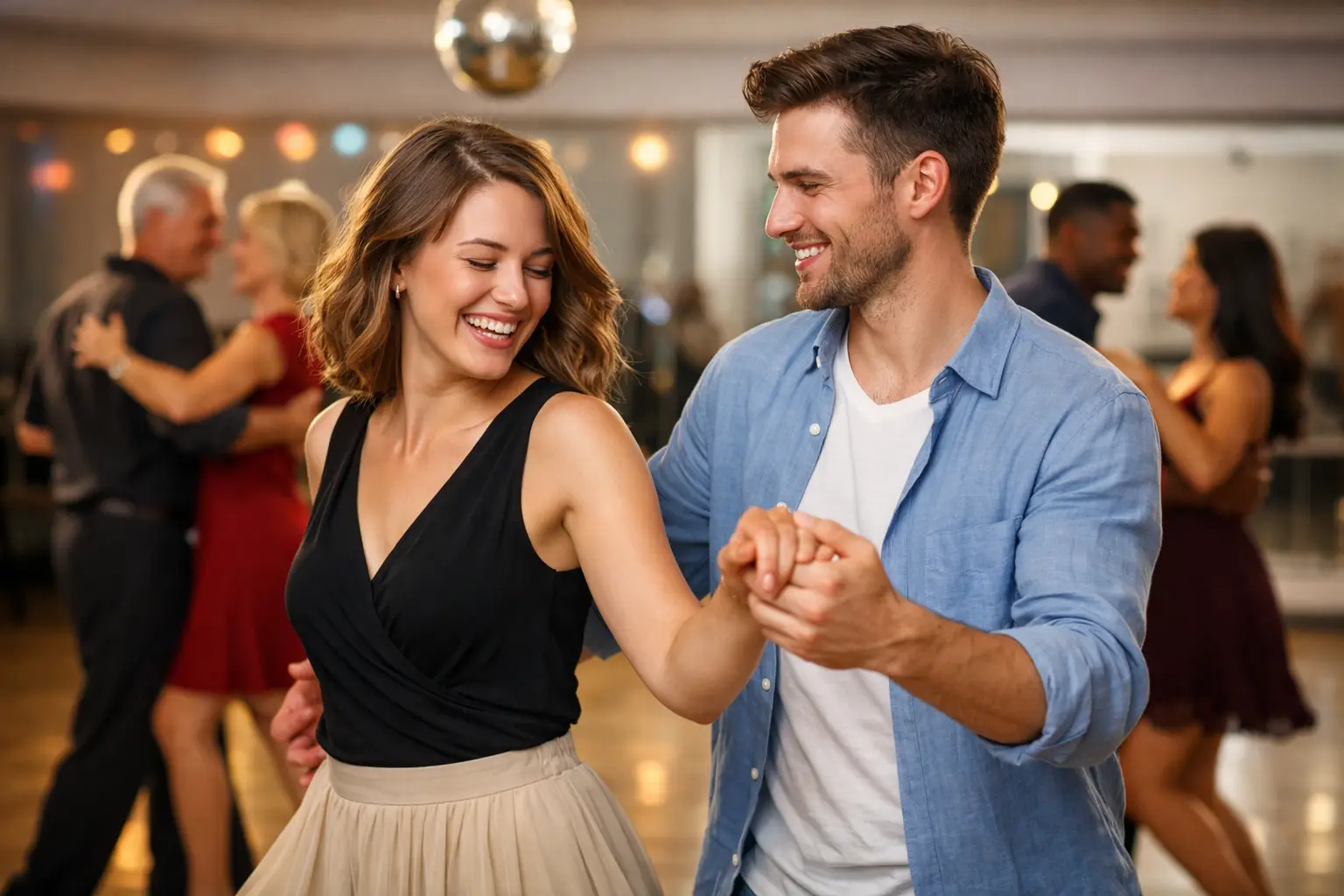
The first time the music starts and everyone begins moving at once, a dance practice party can feel like a big leap from class. Then something lovely happens: you recognize a pattern, someone asks you to dance, and those carefully counted steps start to feel like actual dancing. That is the whole point. Practice parties give you a friendly place to turn lessons into confidence, one song at a time.
At Dance Class Saskatoon, a practice party is not a test, a competition, or a room full of people waiting for you to get every turn perfect. It is a social night built for learning dancers. You can try a step, laugh when it goes sideways, reset, and keep going. That is how dancing gets comfortable.
What Happens at a Dance Practice Party?
A practice party brings students together to dance the styles they have been learning in class. Depending on the evening, you may hear country two-step, waltz, cha-cha, swing, salsa, nightclub two-step, or a few crowd-pleasing favorites that get the room buzzing. The music is chosen with social dancing in mind, so you have time to find the beat and use familiar moves.
Unlike a regular class, there is no long lesson attached to every song. You are encouraged to practice what you know with different partners, at your own pace. Instructors may be nearby to answer questions, demonstrate a tricky idea, or help you get unstuck, but the floor is yours.
This difference matters. Class gives you the building blocks. A party teaches you how to choose a move, listen to a full song, adjust to another person’s connection, and keep smiling when the next step is not obvious. Real social dancing is less about reciting a sequence and more about making simple choices that work with the music and your partner.
Why Practice Parties Build Dance Confidence Faster
Confidence does not usually arrive after you memorize one more pattern. It grows when you have a few successful dances in a row and realize, “Oh, I can do this.” A practice party creates those small wins without the pressure of a packed club or a formal event.
Dancing with different people is a big part of the magic. Every partner has a slightly different frame, timing, stride, and level of experience. At first, that variety can feel challenging. Over time, it makes you more adaptable. Leads learn to communicate clearly rather than force a move. Follows learn to stay responsive while keeping their own balance and rhythm. Everyone gets better at the shared conversation that makes partner dancing so much fun.
There is also a social benefit that cannot be duplicated by practicing alone in the kitchen. You meet classmates beyond the person standing beside you each week. You find familiar faces, trade stories about the moves that finally clicked, and discover that plenty of other people were nervous on their first night too. No partner is required because partner rotation is part of the culture, not an awkward exception.
How to Get Ready Without Overthinking It
You do not need special shoes, a competition outfit, or a notebook full of dance figures. Wear something you can move in comfortably. Shoes that stay on your feet and allow you to pivot gently are a smart choice. Very grippy rubber soles can make turns harder on some floors, while shoes that slip too much can make you feel unsteady. The best option depends on the floor and the dance style, so comfort and control win every time.
Bring water, especially if you plan to dance several songs in a row. Partner dancing is more active than it looks from the sidelines, and a quick water break can keep your energy up. Fresh breath and a small towel or extra shirt are thoughtful choices on a busy dance floor. Social dancing is close-contact fun, and everyone appreciates a considerate partner.
Before you arrive, pick one or two simple goals. Maybe you want to dance one full song without stopping. Maybe you want to ask three new people to dance, practice a basic turn, or keep your eyes off your feet. A modest goal gives the evening direction without turning it into homework. Save the ten-move routine for later. Basics with good timing will carry you much farther than a complicated pattern you cannot comfortably lead or follow.
A Simple Way to Ask Someone to Dance
A smile and a direct question are enough: “Would you like to dance?” If the answer is yes, offer your hand and head to the floor. If the answer is no, simply smile and say, “No problem.” They may be resting, waiting for a friend, or sitting out a style they do not know. It is not a verdict on your dancing.
At the end of the song, thank your partner. If you led, it is courteous to walk them back toward where you found them or make sure they are comfortably headed back to their group. These small habits make the room feel welcoming and help everyone relax.
Dance Practice Party Etiquette That Keeps It Fun
Good floorcraft is one of the quickest ways to become a favorite partner. Keep your movements appropriate for the available space. On a busy floor, choose compact turns and avoid traveling patterns that cut across other couples. If you bump someone, offer a quick apology, check that they are okay, and carry on. It happens to everyone.
Match your dancing to your partner’s experience. If someone is new, give them clear basics and plenty of time. If they are more experienced, do not assume they want a high-speed collection of advanced moves. The best dance is the one both people can enjoy. Smooth, musical, and comfortable beats flashy every single time.
Avoid teaching your partner during a social dance unless they ask for help. Even well-meant corrections can make a newcomer freeze up. If a move does not work, simplify it, laugh it off, and try something else. Instructors are there for technical questions. Your job on the floor is to be a kind, clear, and enjoyable partner.
When You Forget Everything You Learned
It will happen. The music starts, your mind goes blank, and the pattern you practiced five times in class vanishes into thin air. Take a breath and return to the basic. Most partner dances have a home base: a basic step, a rock step, a walk-walk rhythm, or a simple side step. Find the beat, reconnect with your partner, and use that foundation until the next idea comes to you.
This is not “messing up.” It is a real social dance skill. Experienced dancers do it constantly, often so smoothly that you never notice. The ability to recover is more valuable than the ability to remember an endless list of figures.
If you are following, focus on your own timing and balance rather than trying to guess the next move. If you are leading, make the next choice smaller and clearer. A gentle basic, a simple underarm turn, or a change of direction can bring both dancers back together. Keep the music as your guide and let the song do some of the work.
Make Your First Practice Party Easier
Arrive near the beginning if you can. The room is often quieter at first, which makes it easier to settle in, say hello, and get a dance before the floor gets lively. Start with a style you know from class, even if it is only one basic pattern. Early success is a great cure for nerves.
Try not to spend the whole night with the same person. Dancing with a friend is a wonderful way to begin, but mixing in a few new partners helps you learn faster and makes the event feel more social. If you come alone, you are in good company. Many dancers do, and the shared rotation of partners is one reason practice parties are such an easy place to meet people.
Stay for one song longer than your nerves suggest. That extra dance is often the one where the beat settles in, the conversation starts, and the room stops feeling unfamiliar. Your feet do not need perfection to join the fun. They just need a little music and a reason to move.