
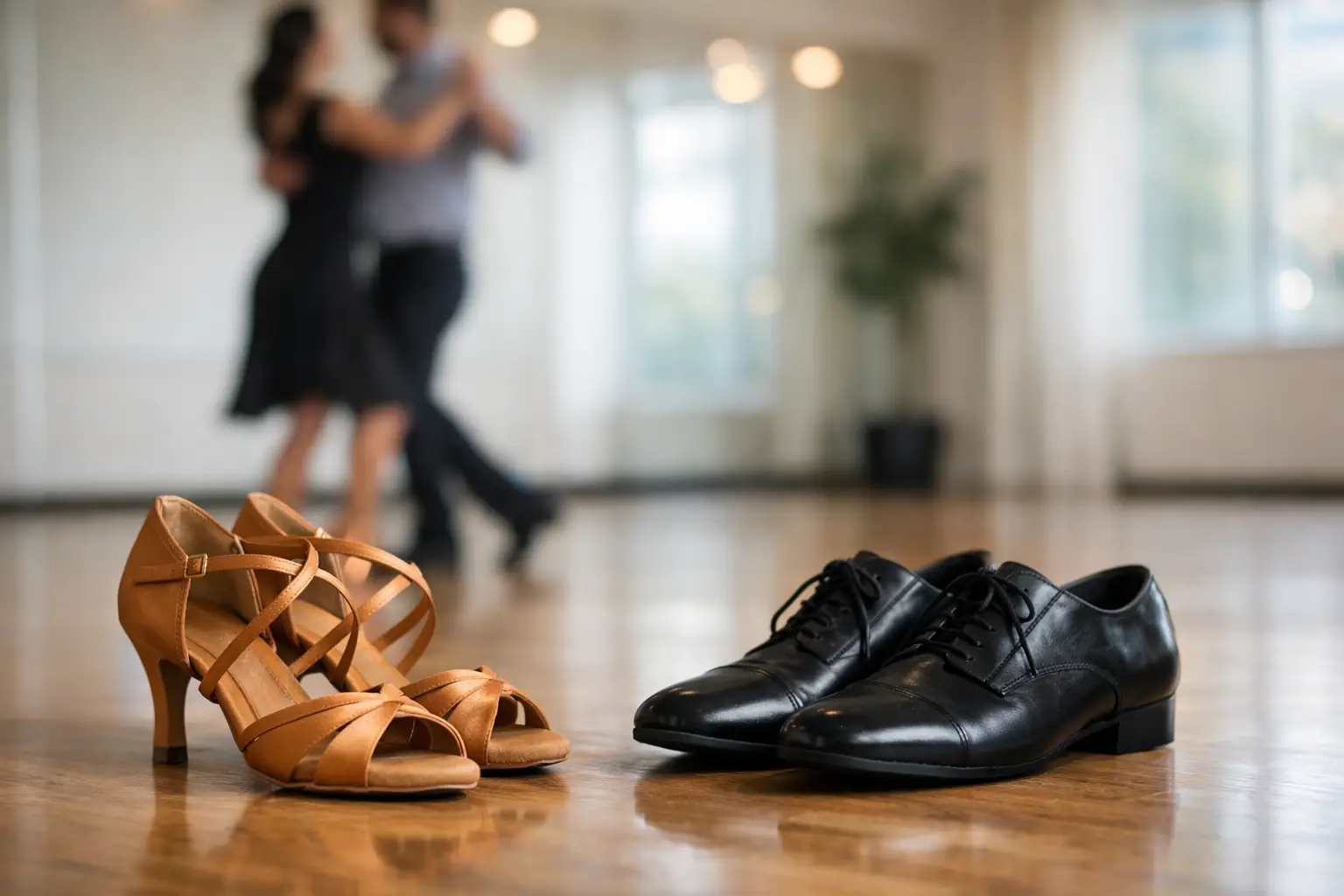
You have picked a class, found a time that works, and maybe talked yourself into coming without a partner. Then comes the surprisingly big question: what shoes for ballroom classes should you wear? The short answer is shoes that stay on, let your feet move, and do not grip the floor like a pair of winter boots. You do not need fancy footwear to take your first steps, but the right pair can make learning a whole lot more comfortable.
What Shoes for Ballroom Classes Should Beginners Wear?
For a first ballroom class, choose clean, secure shoes with a smooth or moderately slick sole and a low heel. Many beginners do well in dress shoes, character shoes, jazz shoes, or a comfortable pair of indoor shoes that do not have deep rubber treads. The goal is simple: you need enough slide to turn and pivot without enough slip to feel unsteady.
A closed-toe shoe is often the easiest starting point. It protects your toes when you are learning foot placement, gives you a little more structure, and works across ballroom, swing, country, and many Latin styles. If you already own a pair of low-heeled dress shoes that feel comfortable for an hour or two, bring them along and give them a spin.
The most important rule is this: do not wear a shoe you cannot comfortably stand, walk, and turn in. A glamorous shoe that pinches after ten minutes can turn a fun night of dancing into a toe-tapping test of endurance. Save the suffering for a dramatic tango face, not your feet.
Why Your Everyday Sneakers May Fight Your Turns
Athletic shoes are great for walking the dog, running errands, and chasing a bus. On a dance floor, though, their sticky rubber soles can make turns harder. When your upper body starts a turn but your foot stays planted, your knee may absorb the twist. That is not the kind of ballroom connection anyone is looking for.
This does not mean sneakers are forbidden. If sneakers are what you have and they help you feel safe getting started, wear them for your first class. A lightweight, clean indoor sneaker with a flatter sole is usually easier to manage than a bulky running shoe. As you begin to learn pivots, spins, and traveling patterns, you will likely notice why dancers prefer soles that glide more easily.
Avoid outdoor shoes with mud, gravel, salt, or wet soles. They can damage a studio floor and create a slipping hazard for everyone. Bring a separate pair to change into if the weather is messy. Your dance friends and the floor will thank you.
The Best Shoe Features for Social Dancing
Ballroom shoes are designed for dancing, but the label matters less than the features. Look for a shoe that fits snugly without squeezing, supports the arch of your foot, and stays securely attached during quick steps. A strap, lace, buckle, or closed heel can prevent the shoe from sliding around when the music picks up.
The sole makes a major difference. Suede soles are popular for ballroom because they offer controlled movement on a wood floor. They let you glide and turn while still giving you traction. Leather soles can also work well, especially for social dancing, though they may feel more slippery depending on the floor. Some dancers use dance sneakers with a split sole or pivot point for styles that need more flexibility.
Comfort beats style in the beginning. Your feet will be learning new patterns, shifting weight in unfamiliar ways, and occasionally landing half a beat late. Give them a shoe that works with them, not against them.
Heel Height: Low Is a Smart Place to Start
If you like dancing in heels, start lower than you think. A heel around one to two inches is manageable for many new dancers, especially if it is wide, stable, and securely attached. A flared ballroom heel is usually easier to balance on than a narrow stiletto.
Higher heels can create a beautiful line in Latin and ballroom dancing, but they also change your balance and put more pressure on the front of the foot. They are not required for learning. Plenty of dancers enjoy social ballroom in flats, low heels, or supportive dance shoes for years.
For dancers who prefer a traditionally masculine shoe, a low, broad heel is typically ideal. It gives a little lift without feeling wobbly and works nicely for smooth dances, country patterns, and social ballroom. A comfortable dress shoe or purpose-made ballroom shoe is a solid choice.
Open-Toe or Closed-Toe Shoes?
Open-toe Latin sandals can feel light and flexible, and they are a favorite for salsa, cha-cha, rumba, and other Latin dances. However, they leave your toes more exposed. In a beginner class, where everyone is concentrating on direction and timing, an accidental step happens now and then. Closed toes offer more peace of mind.
If you choose an open-toe shoe, make sure the straps hold your foot firmly in place. Loose sandals can make your toes grip the shoe, which creates tension and fatigue. Flip-flops, slides, and backless shoes are not a great match for partner dancing. They can fly off at the exact moment you finally nail that turn. Fun for a blooper reel, less fun on the floor.
Match Your Shoes to the Dance Style – But Do Not Overthink It
At a social dance studio, one practical pair of shoes can take you through a surprising number of classes. A low-heeled suede-soled ballroom shoe works beautifully for waltz, foxtrot, rumba, cha-cha, and many country dances. If you are trying a little of everything, start with versatility rather than building a shoe collection before you know what you love.
Swing and jive often call for comfort, flexibility, and secure footing. Some dancers enjoy flat shoes or dance sneakers for their bounce and quick weight changes. Country dancers may wear boots, especially for line dance or two-step, but check that the sole allows you to pivot. A boot with a very grippy rubber sole can make turns feel like work.
For Argentine tango, a secure shoe with a smooth sole is helpful because of the pivots and close connection. For salsa and bachata, many dancers eventually choose lightweight Latin shoes with suede bottoms. Still, your first priority is learning the rhythm and enjoying the people around you. You can upgrade when dancing becomes your regular night out.
When Is It Time to Buy Ballroom Shoes?
You do not have to buy ballroom shoes before your first lesson. Start with a suitable pair from your closet, then pay attention to how your feet feel. If you attend classes regularly, practice at social events, or find that turning in your current shoes is difficult, a dance-specific pair is a worthwhile upgrade.
Good ballroom shoes can improve comfort, make pivots easier, and help you feel more connected to the floor. They are also usually lighter and more flexible than standard dress shoes. The trade-off is that suede soles need care and are best kept indoors. Brush the bottoms occasionally to restore their grip, and do not wear them through the parking lot.
Try shoes on later in the day, when feet are often a little fuller, and test both feet. Walk, rise onto the balls of your feet, and make a gentle turn. There should be no painful pressure at the toes, heel, or sides. A shoe that is slightly too tight will not become your best dance partner.
A Simple First-Class Footwear Plan
If you are still deciding, keep it easy. Wear clean indoor shoes with a low heel, secure fit, and a sole that can slide a little. Bring a second option if you are unsure. Your instructor can take a quick look and let you know whether your shoes are likely to work well for the class and floor.
At Dance Class Saskatoon, the point is to get moving, meet people, and build real social-dance confidence – not to pass a fashion test at the door. Come as you are, wear something that lets you move, and let the music do the rest. The best dance shoes are the pair that gets you onto the floor often enough for your feet to remember the steps.