
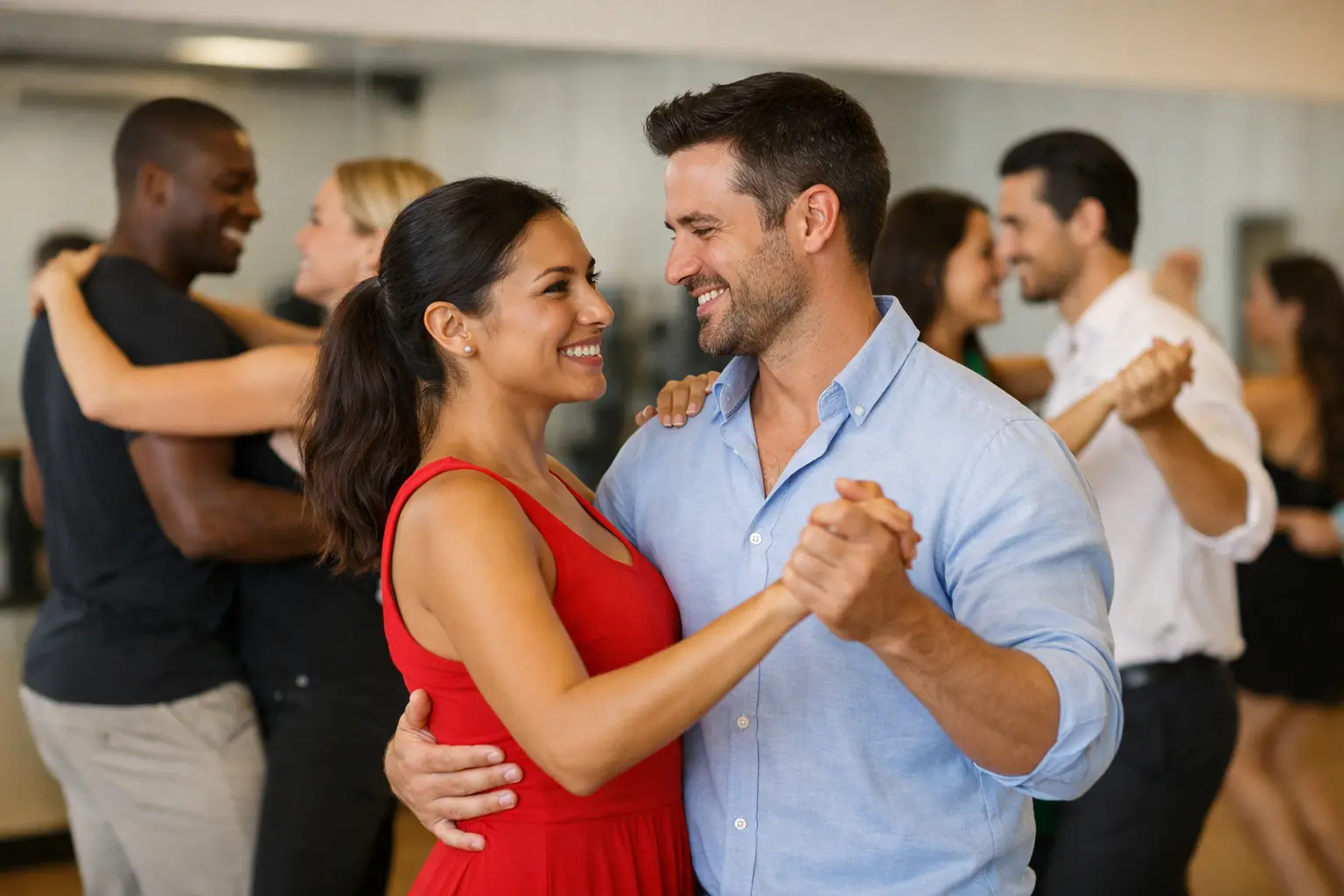
The first time the music starts and your feet have to move with someone else, it can feel like a lot. Then you learn one simple pattern, share a laugh after a missed turn, and suddenly the room feels a whole lot friendlier. That is what latin dance classes for adults are really about: getting out of your head, into the music, and onto a dance floor you can actually enjoy.
You do not need dance experience, special shoes, or a partner waiting at home. You just need a little curiosity and a willingness to try something new. Whether you want a fun date-night activity, a way to meet people, or the confidence to say yes when a great song comes on, Latin dancing gives you a practical reason to get moving.
Why Latin Dance Classes for Adults Feel Different
Adult beginners often arrive with the same question: “What if I have two left feet?” Good news – nobody is handing out foot inspections. Social dance classes are built around learnable patterns, comfortable repetition, and instructors who understand that adults may need a little time to connect the steps, music, and partnering.
Latin styles are especially welcoming because they bring energy right away. The music is upbeat, the basic steps are clear, and even a short combination can feel satisfying. You are not training for a stage performance or chasing perfection. You are learning how to lead or follow comfortably, keep time, and have fun with another person.
That social focus matters. A class can teach you more than a routine. It can help you feel at ease changing partners, asking someone to dance, and recovering when a step goes sideways. Those are the skills that make a night at a club, community event, wedding, or practice party feel less intimidating and much more fun.
Pick a Style That Matches Your Personality
“Latin dance” covers a lively family of styles, and each one has its own flavor. You do not have to choose the perfect fit before your first class. Trying a few styles is part of the fun.
- Salsa is energetic, social, and full of turns. It is a great choice if you love lively music and want a style that appears often at Latin social events.
- Bachata has a relaxed, romantic feel with an easy-to-hear rhythm. Beginners often enjoy how quickly they can connect steps to the music.
- Cha-cha is playful and crisp, with a memorable triple-step rhythm. It suits dancers who like a little sparkle and personality.
- Rumba is slower and more expressive. It gives new dancers time to focus on timing, posture, and partner connection.
The best starting point depends on what motivates you. If your goal is a busy social dance floor, salsa or bachata may be a natural choice. If you prefer a slower pace while building confidence, rumba can be a comfortable entry point. A well-rounded program may also introduce several styles, which helps you find the rhythm that makes you grin.
No Partner? You Are Still in the Right Place
One of the biggest myths about partner dancing is that you need to arrive as a couple. In a social group class, many people come on their own. Partners rotate during class so everyone gets a chance to practice leading, following, timing, and adapting to different dancers.
Rotation can sound nerve-racking at first, especially if you are shy. In practice, it is one of the fastest ways to improve. You quickly learn that a missed step is not a disaster, different partners provide useful feedback, and everyone is there to learn. Before long, saying “Would you like to dance?” becomes easier than making small talk beside the snack table.
Couples are welcome, too. Taking a class together can be a wonderful shared hobby, but rotating occasionally is often helpful for both partners. It builds adaptability and keeps either person from feeling responsible for teaching the other. The goal is teamwork, not a living-room debate over whose fault that turn was.
What Your First Few Classes Usually Look Like
A good beginner series starts with the building blocks. You will learn a basic step, how it fits the music, and a few simple partner patterns. Instructors typically break the movement down before putting it together, giving you time to practice without feeling rushed.
Expect repetition. That is not a sign you are behind. Repetition is how your body learns to move without needing a running commentary in your brain. At first, you may count every beat. After a few classes, the rhythm starts to feel more natural, and your attention can shift toward connection and enjoyment.
You may also learn a few social dance basics that apply across styles: how to offer a comfortable hand connection, where to look, how much pressure to use when leading or following, and how to reset gracefully after a mix-up. These details are small, but they make dancing feel better for everyone.
How to Get More From Each Class
Progress does not require hours of drilling in front of a mirror. A few simple habits will carry you far. Wear clothes you can move in and shoes that stay secure on your feet while allowing you to turn. Avoid overly sticky soles, but do not rush out for specialty dance shoes before you know what you enjoy.
Arrive a few minutes early so you can settle in rather than sliding into class flustered. Listen to the music outside class, even if you are just tapping the rhythm while making dinner. Familiarity with the sound makes the steps easier to remember.
Most of all, give yourself permission to be a beginner. The people who improve fastest are not always the ones who nail every pattern immediately. They are the ones who keep showing up, ask a question when they need help, and laugh when the spin becomes a very enthusiastic half-spin.
Practice Parties Turn Steps Into Social Skills
Learning patterns in class is valuable. Using them with real music in a relaxed social setting is where the magic starts to stick. Practice events give you a low-pressure place to try what you have learned, dance with different people, and discover that you know more than you thought.
A practice party is not a competition. Nobody expects perfect timing or fancy moves. Start with your basic step, dance for one song, and build from there. If you only remember one turn, use it well. A clear, comfortable basic with a happy partner beats a complicated sequence that leaves both of you puzzled.
For adults in Saskatoon, that connection between class and real-life dancing is a major reason to choose a social studio. Dance Class Saskatoon focuses on skills you can use beyond the lesson, whether you are heading to a local venue, a wedding reception, or simply enjoying an evening with new friends.
The Real Reason to Start
Yes, Latin dance can help you become more active. Yes, it can sharpen coordination and give date night a fresh beat. But the lasting benefit is often simpler: it gives you a place to belong while learning something joyful.
You may walk in hoping to learn salsa and leave with a new weekly tradition, a few familiar faces, and the confidence to step onto a dance floor without waiting for someone else to go first. Put on comfortable shoes, bring your sense of humor, and let the next song give you a reason to move.