
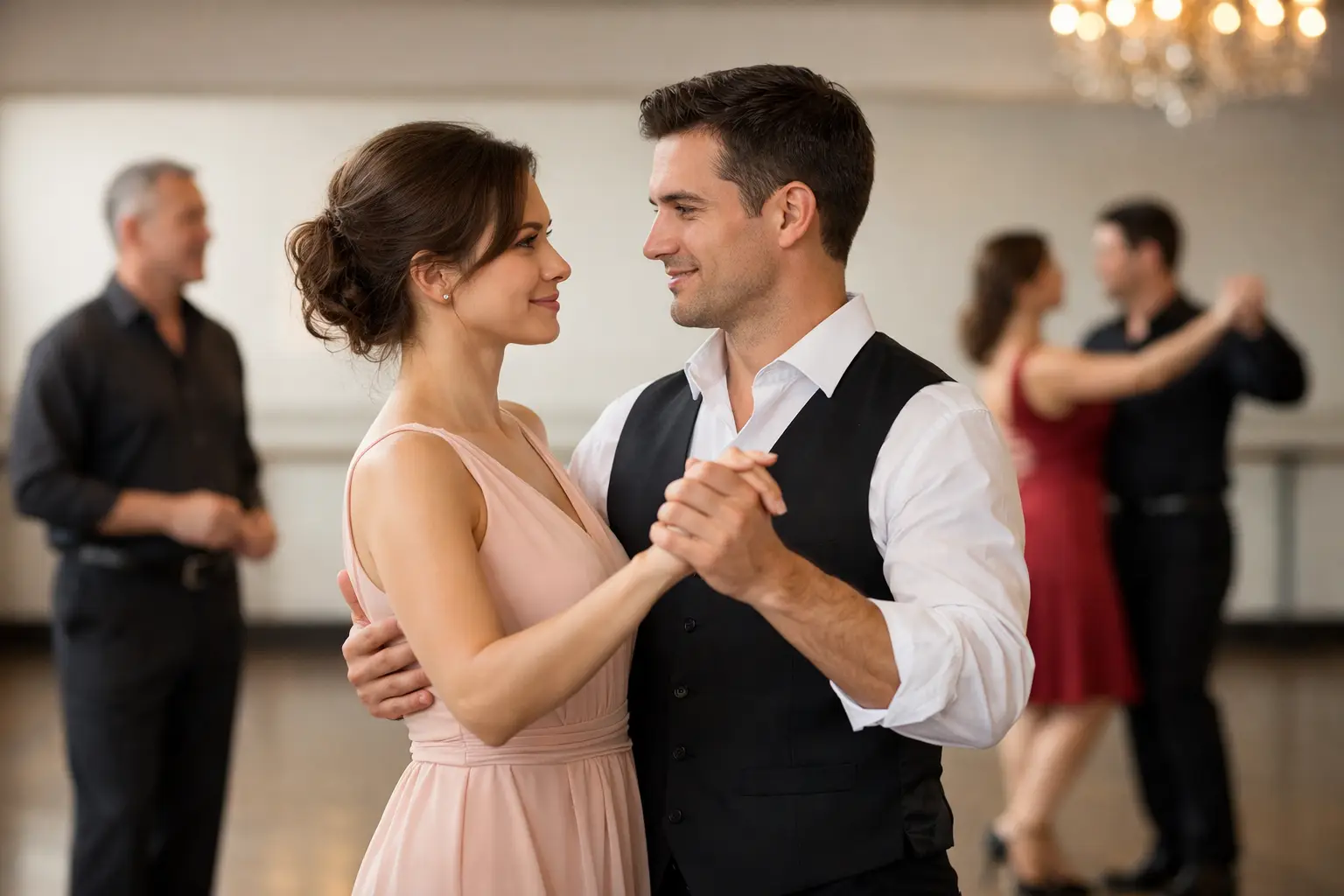
That moment when the music starts and everyone else seems to know where to put their feet? It passes faster than you think. This complete beginner ballroom guide is here to replace the nerves with a simple plan, a little rhythm, and plenty of permission to laugh while you learn.
Ballroom dancing is not reserved for fancy galas, competition costumes, or people who were born knowing a foxtrot from a tango. It is a practical social skill that gets you moving, meeting people, and feeling more at home at weddings, parties, clubs, and community dance events. Start where you are. Two left feet are welcome.
What Ballroom Dancing Really Means
“Ballroom” is often used as a big umbrella for partner dances that travel around a floor or are danced in a shared social setting. Some styles are smooth and gliding, while others are lively, rhythmic, and full of personality.
The dances you may encounter first include waltz, foxtrot, tango, cha-cha, rumba, swing, and salsa. Depending on the class, you may also explore country two-step, nightclub two-step, jive, or quickstep. They do not all feel alike, and that is part of the fun. Waltz has a floating three-count, cha-cha has a playful pulse, and swing brings a bouncy, relaxed energy.
For a true beginner, the best first dance depends on where you want to use it. Want something romantic and useful at weddings? Try waltz. Want a dance with a casual, social feel? Swing or country two-step can be a great fit. Want music with a little spice? Cha-cha or salsa may get your feet tapping. You do not need to choose perfectly. The first class is a chance to test the beat, not make a lifelong commitment.
Your Complete Beginner Ballroom Guide to the First Class
Your first lesson will likely feel much more relaxed than you expect. A good beginner class starts with posture, timing, basic foot patterns, and how partners communicate. Instructors demonstrate a small piece, break it into manageable counts, then give you time to practice it with music.
You will hear terms such as “lead” and “follow.” These are dance roles, not statements about personality, gender, or who gets the last word at dinner. The lead generally suggests direction and timing through clear body movement, while the follow responds to that information. Many modern social classes welcome people learning either role, and learning both can make you a more flexible, thoughtful dancer.
At first, focus on three things: keep your weight moving from foot to foot, listen for the beat, and stay kind to yourself. Fancy turns can wait. The most useful dancer in the room is not the one with the flashiest move. It is the person who can keep time, connect comfortably with a partner, and smile through the occasional mix-up.
Most group classes rotate partners. That might sound intimidating, but it is one of the fastest ways to learn. Different partners give different signals, which helps you understand the dance rather than memorize one person’s habits. It also means you can arrive solo and still dance all evening. No partner? No problem. That is how many great dance stories begin.
What to Wear Without Overthinking It
Choose clothes that let you move easily and make you feel like yourself. You do not need a ballroom gown, a vest, or shoes that could double as wedding decor. Comfortable pants, a skirt or dress that allows a natural stride, and a breathable top are all solid choices.
Shoes matter more than most beginners realize. Avoid flip-flops, heavy boots, very sticky athletic shoes, and anything likely to slide off. You want a shoe that stays secure, has a smooth enough sole to pivot, and does not pinch after an hour. A low heel or clean casual shoe is often perfect for starting out. Dedicated dance shoes can be helpful later, especially if you fall in love with turning, but they are not a first-class requirement.
Bring water, and consider a light layer if you tend to get warm once the music picks up. That is all. Save the pressure for your dance frame, not your wardrobe.
The Skills That Make Social Dancing Feel Good
Beginners sometimes believe dancing is all about remembering steps. Steps matter, but the magic comes from a few quieter skills that make every pattern easier.
First, find the beat. You do not have to count perfectly all night, but listening for the steady pulse keeps you and your partner together. Try tapping your foot or gently shifting your weight before you start moving. If you lose the rhythm, pause, breathe, and step in place until you find it again. Resetting is a dance skill, not a failure.
Next, aim for comfortable connection. Ballroom dancing is a conversation through movement. Keep your arms supportive without gripping, maintain a relaxed posture, and avoid pulling your partner into a move. Clear information feels light, not forceful. If a turn goes sideways, let it go and return to a basic step. The floor will keep spinning without you.
Finally, learn floor awareness. On a busy dance floor, smooth traveling dances often move counterclockwise around the outside, while spot dances such as cha-cha or salsa usually stay more central. Watch the space around you, choose moves that fit the crowd, and apologize quickly if you bump someone. A little dance-floor courtesy keeps the good vibes in step.
Common Beginner Worries, Answered
“I have no rhythm” usually means “I have not practiced hearing the beat yet.” Rhythm is a skill. Some people catch it quickly, while others need more repetitions and a patient instructor. Neither path says anything about your potential.
“I am too old to start” is another worry that deserves a gentle spin away. Social dancing can be adapted for different fitness levels and mobility needs. The right pace matters. If you have an injury or physical concern, tell your instructor before class so they can help you modify movements sensibly.
“What if I make mistakes?” You will. Everyone does, including experienced dancers. The difference is that experienced dancers have learned not to stop the whole song over one missed count. Keep moving with a basic, laugh if it is funny, and try again. Confidence grows from recovery, not perfection.
“I do not have a partner” may be the easiest concern to solve. Partner rotation is common in social dance classes, and many people attend on their own specifically because they want a new hobby and a friendly way to meet others. Couples can often choose to stay together, though rotating can speed up learning. It depends on your comfort level and the class format.
How to Improve Between Lessons
A weekly class gives you instruction, but a few minutes of practice between classes helps the material settle in. Put on one song, review the basic step, and stop before you get frustrated. Ten focused minutes is more useful than an hour of repeating a pattern while your brain has checked out.
Practice without a partner, too. Work on your timing, weight changes, posture, and foot placement. If you are learning a lead role, imagine where your partner would be. If you are learning a follow role, practice staying balanced and responsive. Solo practice may feel silly at first, but it builds the control that makes partner dancing more comfortable.
Practice parties and social dance events are the next helpful step. They offer real music, varied partners, and a chance to use simple patterns outside the classroom. You do not need a big move collection. One reliable basic, a turn, and a good attitude can carry you through several songs.
Choose a Class Built for Real-Life Dancing
A beginner-friendly program should make the process clear, welcoming, and useful beyond the studio. Look for a multi-week series that gives you time to build on each lesson rather than tossing new moves at you every hour. Experienced instructors should explain not only what to do, but why it works and how to adapt it when the music or partner changes.
The atmosphere matters just as much. At Dance Class Saskatoon, classes are designed for adults who want to learn in a relaxed, social setting, whether they come with a date, a friend, or arrive ready to meet new people. The goal is not to turn every newcomer into a competitor. It is to help you feel comfortable saying yes when someone asks, “Want to dance?”
Your first few classes may feel like a lot of counting, turning, and politely untangling arms. Then, often without warning, a song comes on and your feet know what to do. Keep showing up, keep the basics close, and let the next dance be the one that gets you hooked.