
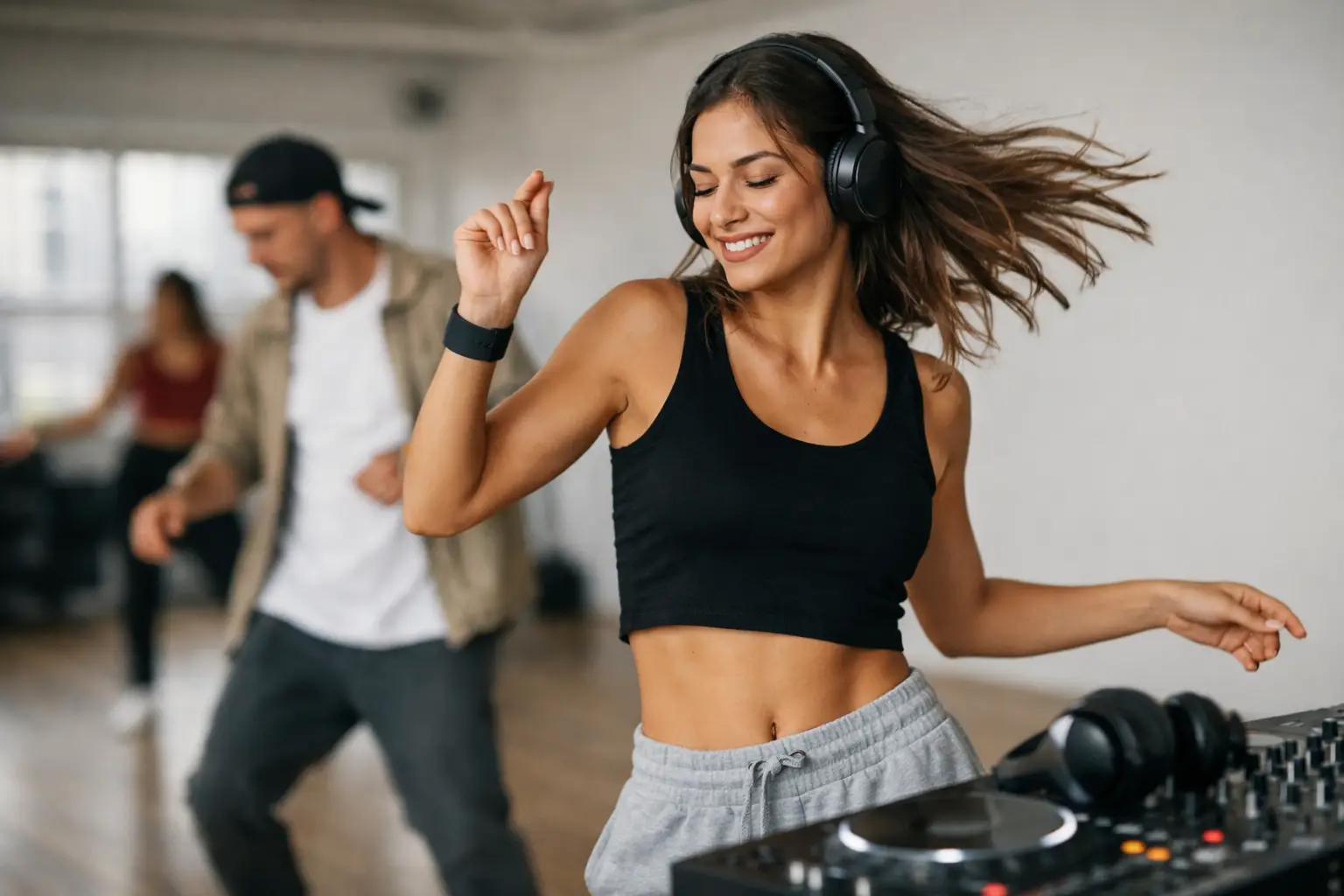
The music starts, other people move like they were born knowing what to do, and suddenly your feet feel as if they missed the memo. If you are wondering how to find dance rhythm, here is the good news: rhythm is not a mysterious talent reserved for “natural” dancers. It is a skill you can hear, count, feel, and practice until your body starts responding without a long internal debate.
You do not need a partner, fancy footwork, or a perfect sense of timing to begin. You need a steady beat and permission to keep things wonderfully simple. Once the beat becomes familiar, dancing at a wedding, country bar, club, or social dance gets much less intimidating – and much more fun.
Start With the Beat, Not the Steps
Most beginner timing trouble comes from trying to memorize feet before hearing the music. A dance pattern may look like “step, step, rock step” or “quick, quick, slow,” but those instructions only work when they have a musical home.
Start by listening for the pulse: the steady, repeating thump that makes people tap a foot or nod their head. In many pop, country, swing, and Latin songs, that pulse is easy to find in the drums, bass, guitar, or handclaps. Do not worry about identifying every instrument. Your job is simply to locate the part of the song that repeats at a dependable pace.
Try this while sitting in your car or at home. Tap one hand on your leg along with the strongest repeating pulse. If you lose it, stop, listen for a few seconds, and join back in. That reset is not failure. Experienced dancers do it too when a song has a tricky intro or a musical break.
How to Find Dance Rhythm by Counting
Once you can tap the beat, give it numbers. For many social dances, count evenly: 1, 2, 3, 4, 5, 6, 7, 8. Then begin again. Eight counts are common because much popular dance music is grouped into sets of eight, even when the dance itself uses only two, three, four, or six steps.
At first, counting out loud can feel a little silly. Do it anyway. Your voice gives your brain another way to organize what your ears are hearing. Try walking in place while counting. Put one foot down on each number, keeping your steps small and relaxed. You are not performing yet. You are building the connection between music, counting, and movement.
Some dances have a different rhythm shape. A basic salsa timing often uses counts 1, 2, 3, pause, 5, 6, 7, pause. East Coast Swing often feels like triple step, triple step, rock step. Country Two-Step has a smooth quick, quick, slow, slow feeling. The count changes with the style, but the starting point stays the same: hear the steady pulse first.
If numbers make you tense, use words instead. Say “walk, walk, walk, walk” to a simple beat. For a triple step, say “tri-ple-step.” For a slower pattern, say “slow, slow, quick, quick.” The labels are only tools. The music is the boss.
Let Your Body Find the Pulse
A common beginner habit is freezing everything except the feet. That can make dancing feel like a math test with shoes on. Before learning a pattern, stand comfortably with your knees soft and shift your weight gently from one foot to the other on the beat.
Notice the difference between touching a foot down and actually transferring weight onto it. In partner dancing, a real weight change is what tells your body where it can go next. If your weight stays stuck on both feet, the next step often feels late, rushed, or tangled.
Keep your steps underneath you. Big steps make it harder to react to the music, especially at faster tempos. Small steps give you choices. They also make you kinder to your partner and less likely to turn the dance floor into an obstacle course.
Your upper body can help, too. A gentle bounce might suit swing. A smooth side-to-side shift can help with country or ballroom. Latin dances may use a more grounded hip action, but that comes from weight changes, not from forcing your hips to do something dramatic. Let the motion grow naturally from the beat.
Listen for the “One”
Finding the beat is a major win. Finding the first beat of a musical phrase, often called the “one,” gives you an even better map.
Listen to a song and count eight beats repeatedly. Many songs have a small musical change when the count returns to one: a lyric starts, a drum lands more strongly, or a new phrase begins. You may not catch it right away, and that is completely normal. Keep listening to the same song for a few rounds instead of changing tracks every 20 seconds.
Why does this matter? Starting a dance pattern on the one often makes it look and feel more connected to the song. But social dancing is forgiving. If you begin on a different count and stay consistent, you can still have a great dance. Do not stand at the edge of the floor waiting for the perfect moment while the whole song slips away. Start simply, settle into the beat, and enjoy yourself.
Practice With Songs That Help You Succeed
Not every song is a friendly first practice partner. Songs with a clear drumbeat and a moderate tempo are easier than songs with shifting tempos, long pauses, or layers of percussion competing for your attention.
Choose one style and one or two songs for a week. Listen to them more than once. First, tap the beat. Next, walk the beat. Then practice a basic step. Repetition is not boring when it creates that satisfying moment where your feet finally go, “Oh, we know this one.”
A metronome can help if you struggle to hold a steady pace, but it is not required. A metronome teaches consistency; music teaches you how to respond to phrasing, energy, and mood. Both have a place, though music is usually more motivating when you are learning social dance.
Do Not Chase Every Sound
Busy songs can make beginners try to dance to the singer, the drums, the guitar riff, and every accent at once. That is a fast route to feeling behind.
Pick one anchor. Usually, choose the clearest steady beat. Keep your basic step there, even if the singer stretches a word or a guitar adds a fancy flourish. Later, once your timing is secure, you can play with accents by adding a turn, a pause, or a little extra styling. First comes the groove. The sparkle can wait.
This matters especially in partner dance. Your partner needs to feel a reliable rhythm from you more than they need a complicated pattern. A simple basic done comfortably with the music feels far better than five impressive moves delivered in a hurry.
Recover Gracefully When You Lose the Rhythm
Everyone loses the beat sometimes. The song changes, a turn goes sideways, someone bumps your elbow, or your brain suddenly starts narrating every step. The best recovery is usually the least dramatic one.
Return to a basic step, make your movement smaller, and listen for the strongest pulse again. If you are dancing with a partner, keep a calm connection rather than pulling or panicking. A smile goes a long way. Social dancing is a conversation, not an exam, and a tiny timing wobble is rarely as noticeable as it feels.
If you are leading, choose fewer patterns until the rhythm comes back. If you are following, keep your own weight changes clear and avoid guessing the next move. Both roles benefit from returning to the beat together.
Learn Rhythm in a Room Full of People
Practicing alone builds awareness, but group classes add something headphones cannot: real feedback. You can see how a basic step fits the music, feel how timing works with another person, and discover that nearly everyone has had the same “which foot was that?” moment.
At Dance Class Saskatoon, beginners can learn in a welcoming, no-partner-required setting where the goal is practical social dancing, not perfection under a spotlight. An experienced instructor can slow a rhythm down, count it out, and then help you bring it back up to music without losing your smile.
Give yourself a few songs to settle in each time you dance. The rhythm does not need to arrive with fireworks. One day, you will hear a favorite track, your foot will start tapping before you think about it, and the floor will feel less like a test and more like an invitation. That is your cue to step in.