
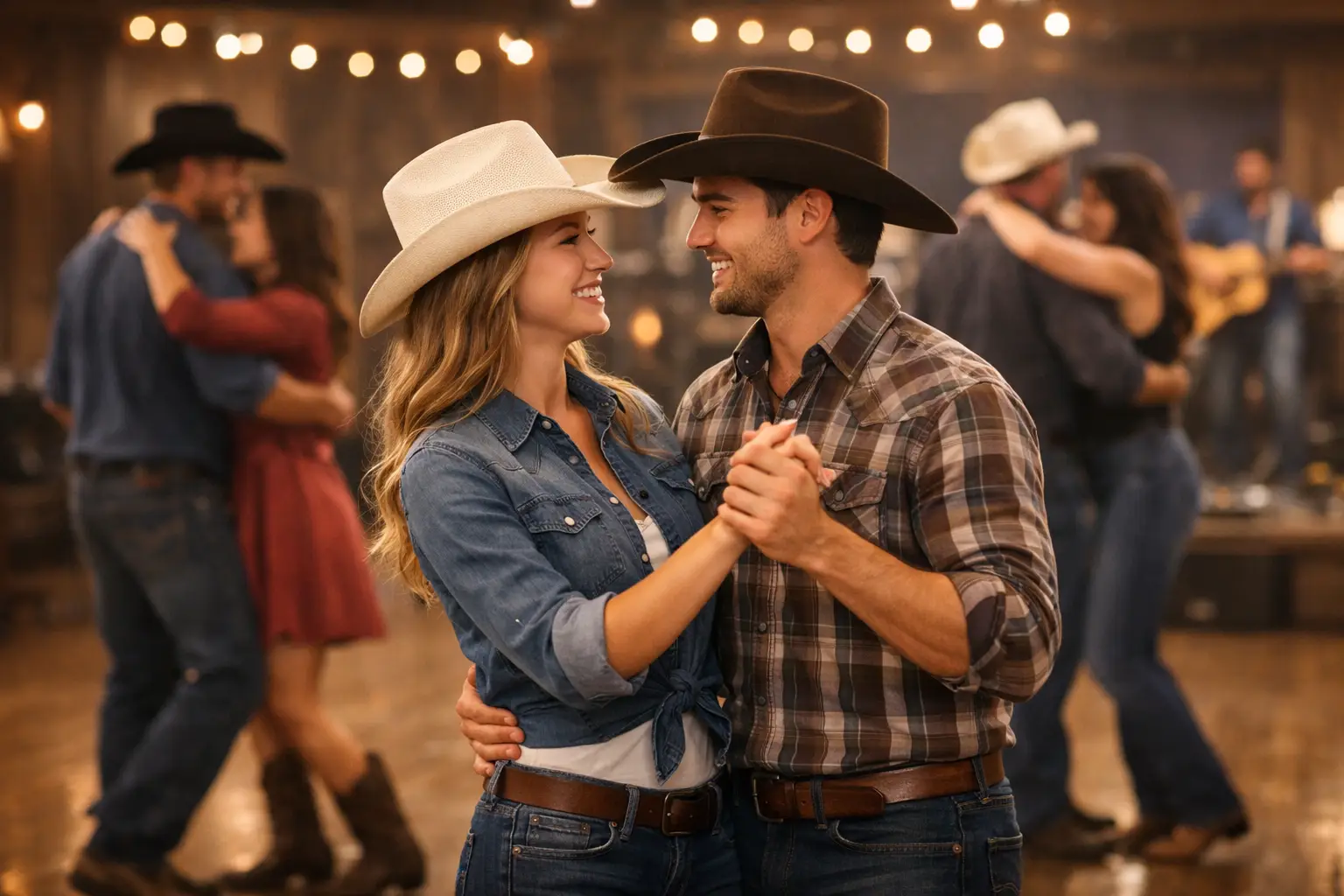
A great country song comes on, the floor starts filling up, and suddenly standing near the wall feels like a missed opportunity. The best country dances to learn are the ones that get you moving comfortably in the places you actually want to go – from a local dance hall to a wedding reception or a lively night out with friends.
You do not need boots, a dance partner, or years of rhythm training to get started. You need a few dependable steps, a little practice, and a style that matches the music you enjoy. Some country dances are perfect for couples who want an easy shared hobby. Others are social superpowers for singles who want to meet people and join the fun. Let’s two-step into the best options.
What Makes a Country Dance Worth Learning?
The right first dance should be useful, not just impressive. A dance that works with lots of music, has clear beginner patterns, and appears often at social events will give you more chances to use it. That means faster confidence and fewer evenings spent saying, “I wish I knew how to dance to this.”
It also helps to choose based on your goal. Want a relaxed date-night skill? Country Two-Step or Country Waltz may be your sweet spot. Want variety and a social challenge? West Coast Swing has plenty to keep you interested. Want to join the floor without needing a partner? Line dancing is ready when you are.
8 Best Country Dances to Learn
1. Country Two-Step
Country Two-Step is the first pick for many new country dancers, and for good reason. It is upbeat, friendly, and designed for the kind of medium-to-fast country songs that get people out of their seats. Its basic rhythm is easy to recognize once you feel it: quick, quick, slow, slow.
This dance is a wonderful choice for couples and singles alike because you can use a small collection of turns, passes, and changes of direction to create a full dance. Beginners can enjoy the basic right away, while more experienced dancers can keep adding personality. If your goal is to feel at home at country nights, this is a terrific place to start.
2. Country Waltz
Country music is not all boot-scootin’ speed. When a slower, sweeping song comes on, Country Waltz gives you a graceful way to travel around the floor. It uses the familiar three-count rhythm of waltz, but its feel is relaxed and social rather than formal or stiff.
Country Waltz suits dancers who enjoy a smoother connection with their partner. It is also a smart complement to Two-Step because the two dances cover very different tempos. Learn both and you will be ready for a much wider slice of the playlist.
3. West Coast Swing
West Coast Swing is a versatile partner dance with a cool, elastic feel. It can work beautifully with country, blues, pop, and contemporary music, making it one of the most useful dances for people who do not want to be limited to one genre.
It takes a little longer to feel natural than Country Two-Step because the rhythm has more flexibility. That is part of the fun. Once you understand the basic patterns, West Coast Swing gives you room to play with the music and develop your own style. It is an excellent next step for dancers who like a creative challenge without losing the social side of partner dancing.
4. East Coast Swing
If you hear lively country, rockabilly, or old-school swing and your feet start tapping, East Coast Swing can be your dance. Its bouncy six-count basic is energetic, cheerful, and easy to recognize. Think quick turns, fun spins, and a little extra pep in your step.
East Coast Swing is usually danced in place more than Country Two-Step, so it can be handy when the floor is busy. It is a great dance for building rhythm and learning how to lead or follow turns clearly. Bring your smile – this one has plenty of personality.
5. Country Cha-Cha
Country Cha-Cha brings a playful Latin-inspired rhythm to country music. The signature cha-cha-cha timing creates a fun, compact pattern that works especially well with slower country songs that have a strong beat.
This dance is a good fit if you want something a little different without jumping into advanced footwork. Country Cha-Cha encourages clean timing and connection, but it is still very approachable in a beginner class. It also gives you an option for songs that feel too slow for Two-Step and too quick for a relaxed sway.
6. Nightclub Two-Step
Nightclub Two-Step is smooth, simple, and surprisingly practical. Despite its name, it is often a lovely choice for country ballads, wedding songs, and slower romantic music. The movement is compact, which means you can dance it even when the floor is crowded.
For couples, this is one of the best country dances to learn for real-life occasions. It is not flashy, and that is exactly the point. A few well-timed basics and gentle turns can make you look comfortable and connected without worrying about complicated choreography.
7. Line Dancing
Line dancing deserves a place on every country dance list because it removes one of the biggest beginner worries: finding a partner. Everyone faces the same direction and follows the same repeating sequence, creating that unmistakable group energy when the floor moves together.
There are easy beginner dances and fast, detailed routines, so choose carefully at first. Learning a few common patterns helps, but the real benefit is confidence. Line dancing teaches you to hear counts, change weight, and recover if you make a mistake. Miss a step? Keep moving. The next wall is a fresh start.
8. Polka
Polka may not appear at every country event, but when the music is fast and festive, it is a total joy. Its traveling, turning energy makes it a favorite at community dances and celebrations, especially when the band picks up the pace.
Because it moves around the floor quickly, Polka is best learned with attention to floorcraft and partner connection. It can be more physical than the other dances on this list, but it is also a fantastic workout disguised as a party. If you like high-energy music and do not mind a little spin, give it a whirl.
How to Choose Your First Dance
If you only pick one dance, start with Country Two-Step for an upbeat country-night favorite or Nightclub Two-Step for slower songs and weddings. If you want to dance solo and make new friends, line dancing offers the easiest entry point. If musical variety matters most, West Coast Swing gives you the broadest range beyond country music.
The best approach for many beginners is to learn one traveling dance and one dance for slower songs. For example, pair Country Two-Step with Country Waltz or Nightclub Two-Step. That combination keeps you from sitting out whenever the tempo changes.
There is no need to wait until you feel coordinated enough. Coordination grows through repetition, friendly instruction, and a few laughs along the way. At Dance Class Saskatoon, progressive country classes are built to help beginners turn basic steps into real social-dance confidence, with no partner required.
Make Your First Night on the Floor Easier
Wear shoes that let you move without gripping the floor too hard, but skip anything so slippery that you cannot control your steps. Focus on small, comfortable movements at first. Big spins and dramatic moves can wait until your timing and connection feel steady.
Most of all, learn the social dance habit of looking after the people around you. Keep your movements appropriate for the space, move with the flow of the floor, and treat a missed step as part of the fun. The dancers who look most confident are rarely perfect – they simply keep smiling and keep dancing.
Pick the dance that makes you want to hear the next song, then give yourself permission to be new at it. One class can turn “I don’t dance” into “Want to try this one?”
2 Comments
When are they , and what times, how much please
We are currently offering Two Step every Tuesday Night. Registration is for 4 weeks at a time. Next Offering is October 6th – 27th, 2026.