
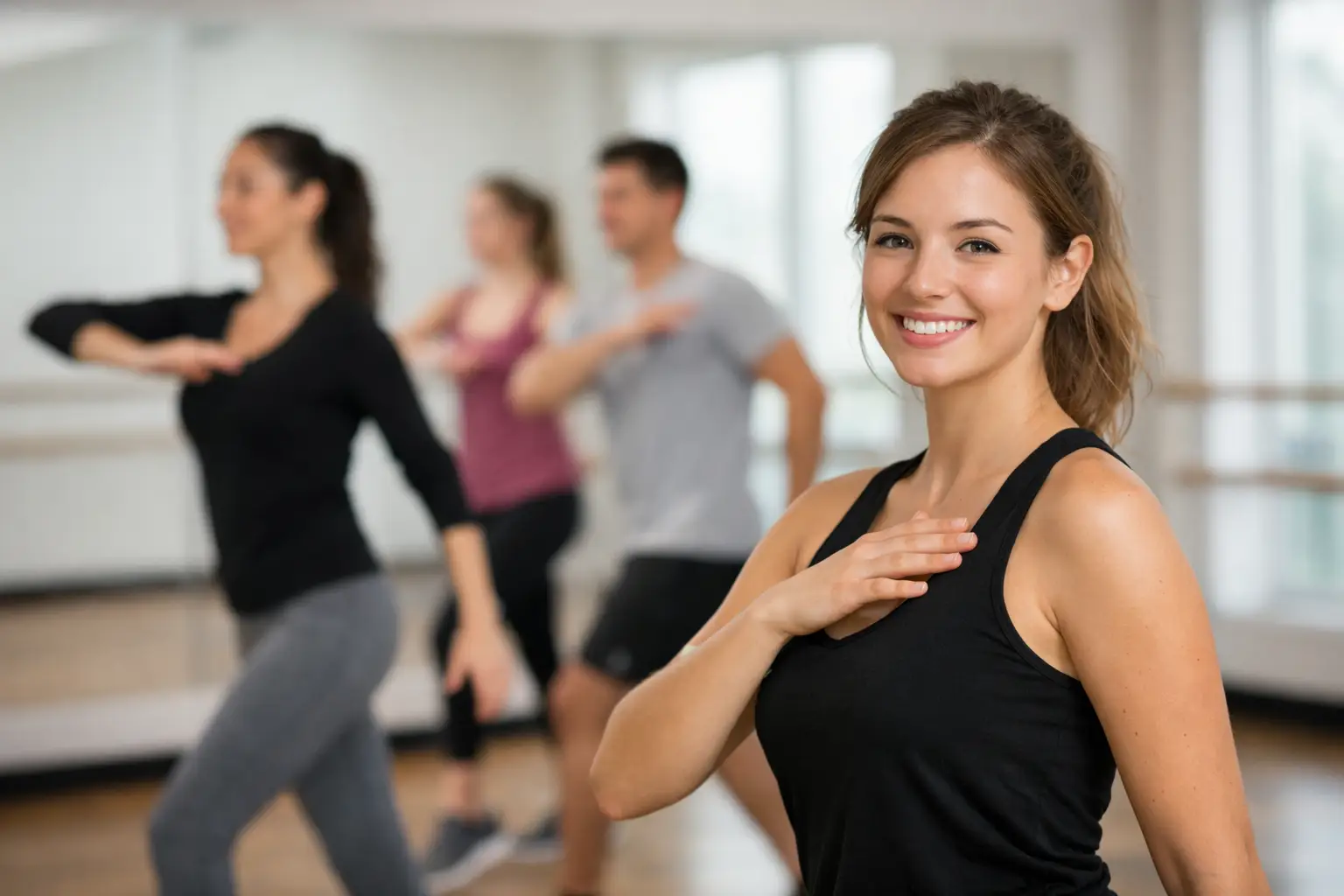
That moment before your first lesson starts can feel louder than the music. You may be wondering where to stand, whether everyone else already knows the steps, and what happens if you turn the wrong way. Here is the good news: learning how to survive first dance class nerves is less about natural rhythm and more about arriving ready to have a little fun.
Social dance classes are built for beginners. People show up because they want to move, meet others, try something new, or finally feel comfortable when a great song comes on. Nobody expects a flawless performance on night one. Your only job is to take the first few steps.
How to Survive Your First Dance Class Without Overthinking It
The fastest way to make a first class feel difficult is to treat it like an audition. It is not. It is a room full of adults learning a new physical language, one count at a time.
You will probably make mistakes. So will the person beside you. Even experienced dancers occasionally start on the wrong foot, forget a pattern, or laugh their way through a spin. That is normal, and honestly, it is part of what makes social dancing fun.
Give yourself permission to be new. You do not need fancy footwork, a dancer’s posture, or a dramatic backstory involving years of secret salsa training. You just need comfortable clothes, shoes that let you move safely, and enough curiosity to try again when a step feels awkward.
Arrive a little early
Give yourself 10 to 15 minutes before class begins. You will have time to find the studio, check in, use the restroom, and settle your nerves without rushing through the door at the last second.
Arriving early also lets you see that most people are doing exactly what you are doing: looking around, introducing themselves, and wondering what the evening will bring. A quick hello to the instructor or another student can make the room feel friendlier right away.
Wear clothes you can actually move in
You do not need a special dance outfit. Choose something comfortable that lets you take normal-sized steps, raise your arms, and turn without feeling restricted. Think casual, clean, and movement-friendly.
Shoes matter more than style. Avoid heavy boots, flip-flops, or shoes with sticky rubber soles that grip the floor during turns. A comfortable shoe with a smooth sole and secure fit is usually a smart start. If you are unsure, bring a second pair and ask your instructor what works best for the dance style.
Skip shoes that you are worried about scuffing, slipping out of, or balancing on. Your first class should be about learning, not negotiating with your footwear every eight counts.
Expect Simple Steps, Repetition, and Plenty of Laughs
A quality beginner class does not throw you into a complicated routine and hope for the best. It starts with the foundation: timing, basic foot placement, connection with a partner, and a small pattern you can use in real social dancing.
The instructor will demonstrate, break the movement down, count it out, and give you time to practice. Then you will repeat it. Repetition is not a sign that you are behind. It is how your feet begin to understand what your brain has just learned.
At first, you may feel like you can either count, move your feet, or smile at your partner, but not all three at once. That feeling passes. Keep the count simple, listen for the beat, and focus on one correction at a time.
You do not need to bring a partner
This is one of the biggest worries for new social dancers, especially singles. In many group classes, partners rotate so everyone gets a chance to practice with different people. That makes learning easier because you experience different leads, follows, heights, and movement styles.
Rotating also takes the pressure off. You do not have to convince a friend or spouse to join before you can start. Come on your own, meet people naturally, and learn in a welcoming group setting.
If you attend with a partner, rotations can still be valuable. They help you both learn to communicate through the dance rather than relying on familiar habits. Of course, comfort levels vary, so ask the instructor about the class format if you have concerns.
Forget perfection. Find the beat.
New dancers often stare at their feet, trying to make every step land perfectly. Checking your feet now and then is fine, but living there can make you tense and disconnected from the music.
Instead, listen for the pulse. In a country two-step, swing, salsa, or ballroom class, the rhythm may be counted differently, but the principle stays the same: let the music give your movement a home. If your feet get mixed up, pause, find the beat, and rejoin on the next basic step.
That recovery skill is far more useful at a real dance hall, club, or community event than memorizing a complicated pattern once. Social dancing is not about never making a mistake. It is about continuing gracefully when you do.
Be a Great Partner on Day One
You do not need experience to be a good partner. You need awareness. Keep your hands light, your movements controlled, and your attention on the shared space around you.
If you are learning to lead, avoid pulling, pushing, or trying to force a move. A good lead gives a clear invitation and leaves room for the other person to respond. If you are learning to follow, focus on waiting for the lead instead of guessing the next step. Both roles take practice, and both are active jobs.
A simple smile and a quick “thank you” after a rotation go a long way. If a mistake happens, do not apologize ten times or make it a big deal. Laugh, reset, and keep dancing. The best partners make the room feel safe, not serious.
Be mindful of personal space and hygiene, too. Fresh breath, clean clothes, and a little awareness after an energetic day are quiet acts of dance-floor kindness. Bring water, but avoid setting drinks where someone might trip over them.
When Your Brain Goes Blank, Do This
It will happen. The instructor explains a turn, everyone starts moving, and suddenly you cannot remember whether the next step is forward, back, side, or somewhere near the moon. Take a breath.
Return to the basic step. The basic is your home base, and every beginner dance class gives you one for a reason. Once you are moving on time again, watch the instructor, ask your partner where they are in the pattern, or wait for the next walkthrough.
Do not try to fix everything at once. Maybe your goal for the next song is simply to stay on the beat. Maybe it is to relax your shoulders. Maybe it is to make one turn feel less like a weather event. Tiny wins add up quickly.
Ask questions before confusion piles up
Experienced instructors want questions. If the count, hand position, or direction does not make sense, ask. Chances are good that someone else was wondering the same thing.
Try a specific question, such as, “Which foot starts?” or “Am I stepping back before the turn?” Specific questions get useful answers and help you make progress faster. There is no prize for pretending you understand while your feet quietly stage a rebellion.
Give Yourself More Than One Class
Your first lesson is an introduction, not a verdict on whether you are “a dancer.” It takes a few classes for the steps to feel familiar and for your body to relax into the rhythm.
Some people love their first class immediately. Others need two or three evenings before the nerves settle. It depends on the dance style, your comfort with new groups, and how much you have practiced movement-based skills before. Either way, consistency beats cramming.
At Dance Class Saskatoon, beginner-friendly group learning is designed to connect lessons with the kind of dancing people actually want to do out in the world. That means the goal is not to impress a panel of judges. It is to recognize a song, ask someone to dance, and feel ready to say yes when someone asks you.
After class, take a moment to notice what went better than expected. Maybe you learned names. Maybe you caught the beat. Maybe you laughed instead of freezing when you missed a step. Those are real signs that you are already finding your rhythm.
Your first dance class does not require bravery without nerves. It only asks for enough courage to walk in, take a basic step, and let the next song carry you a little farther.