
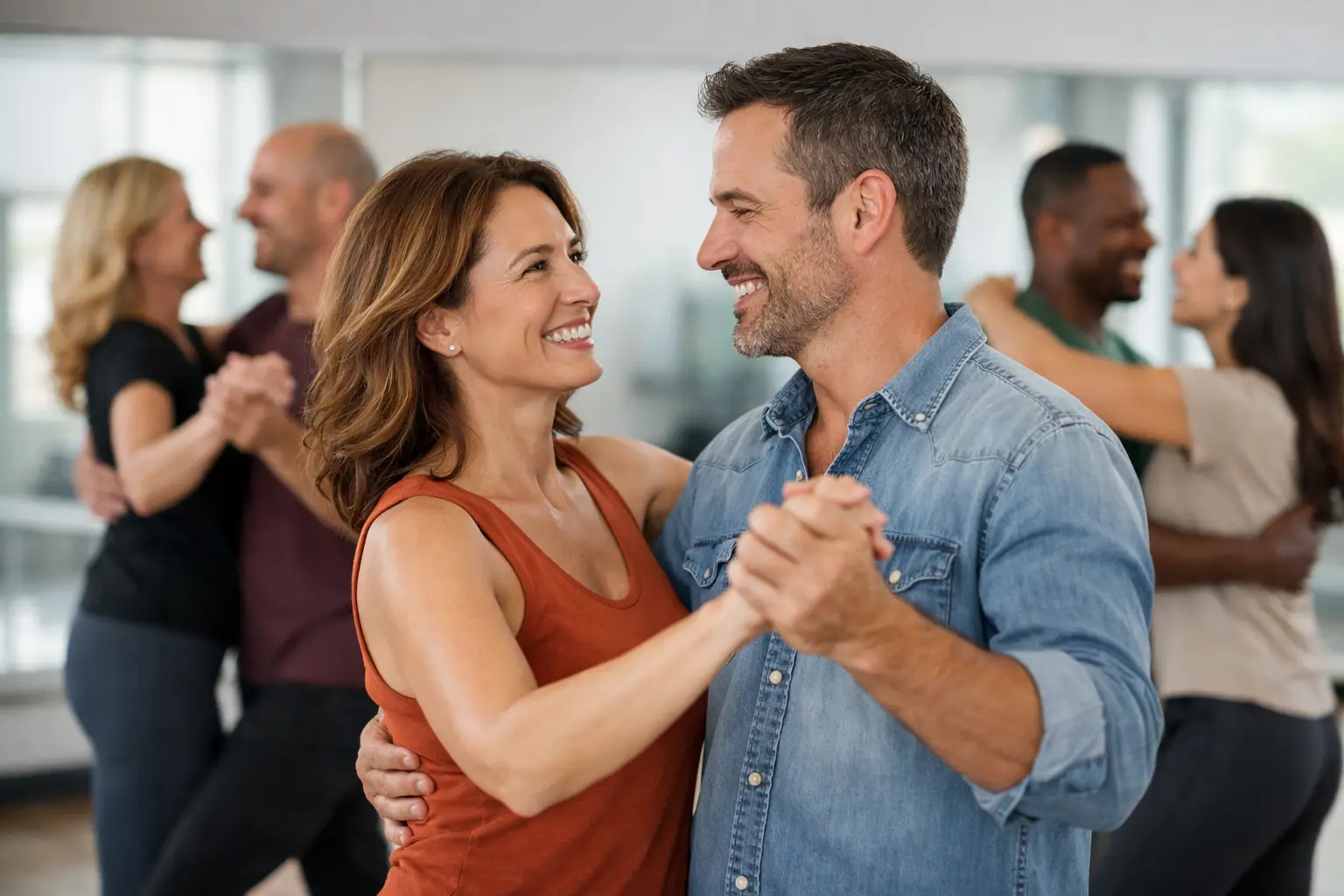
Most adults don’t avoid dancing because they hate music. They avoid it because they don’t want to feel awkward, lost, or like they joined the only class where everyone else already knows the steps. That’s exactly why partner dance classes adults actually stick with tend to look different from the old-school, high-pressure version people picture in their heads.
The right class feels social, structured, and surprisingly doable from day one. You don’t need fancy shoes, a performance background, or a perfectly matched partner. You need patient instruction, a welcoming room, and a format that helps real people learn how to dance in real life – at weddings, clubs, country bars, community events, and nights out that are a lot more fun when you’re not glued to the wall.
Why partner dance classes adults choose need to feel approachable
Adults learn differently than kids. You’re not showing up because your parents signed you up. You’re there because you want something practical, fun, and worth your time. That means a good class has to cut through the biggest barriers fast.
The first barrier is intimidation. If a studio feels too formal or too advanced, beginners tense up before the music even starts. A better approach is clear, step-by-step teaching that starts with rhythm, timing, and lead-follow basics instead of tossing new dancers into the deep end.
The second barrier is the partner question. Plenty of adults want to learn but assume they need to bring someone. In reality, no-partner-required classes are often the best fit because they make the room feel more relaxed and social. You get to practice with different people, which actually helps you become a stronger social dancer. It also takes the pressure off couples who worry about keeping up with each other every second.
The third barrier is relevance. Adults are much more likely to keep coming back when they can see where they’ll use what they’re learning. If the class connects directly to country dancing, swing nights, ballroom socials, Latin parties, or general night-out confidence, it stops feeling like homework and starts feeling like a ticket to a better Friday.
What makes a good adult partner dance class
Not every dance class is built for adults who are starting from scratch. Some are too technical too soon. Others are fun for one night but don’t give enough structure to create real progress. The sweet spot is a class series that keeps things light while still building skills week by week.
A strong program usually includes progressive instruction, so each week adds just enough without making your brain tap out. You learn the basic patterns, how to move with another person, and how to hear the beat without getting buried in jargon. That matters because adult beginners don’t need a lecture. They need teaching that clicks.
The instructor makes a huge difference too. Experienced, patient teachers know how to read a room. If people are nervous, they ease the temperature down. If the group is ready to push a little, they add challenge without turning the class into a stress test. The best instructors also teach for social floors, not just for perfect studio conditions. That means helping students handle different partners, different songs, and those little real-world moments where things go off-script.
Variety helps as well. Adults often come in saying they want to learn one thing, then discover they also love two-step, swing, salsa, or ballroom. A studio with broad style coverage gives people room to find their groove. One style might get you started, but another may be the one that really hooks you.
The biggest benefits go way beyond dance steps
Yes, you’ll learn patterns and footwork. But that’s rarely the reason adults fall in love with partner dancing.
Confidence is usually the first big win. There’s something wildly satisfying about hearing a song come on and knowing you can actually do something with it. You stop worrying about looking silly and start enjoying yourself. That shift carries into weddings, parties, date nights, and social events where dancing used to feel like a trap.
Then there’s the social side. Partner dancing gives you a reason to meet people without the weirdness of forced small talk. You already have a shared activity, the room is moving, and everyone is learning together. For singles, it’s a natural way to connect. For couples, it’s a chance to do something active and fun together that doesn’t involve staring at separate screens.
The fitness benefit is real too, even if it doesn’t feel like a workout in the usual sense. You’re moving, balancing, turning, and building coordination. It can improve stamina and posture, but in a way that feels a lot more like play than punishment. That makes it easier to stick with long term.
There’s also a mental reset that adults often don’t expect. Dance asks you to be present. You’re listening, moving, and interacting in real time. For an hour, your inbox can wait. That kind of active focus is part of the magic.
Which styles work best for beginners
It depends on what kind of music and social setting you picture yourself enjoying.
If you love country bars and casual social nights, two-step and progressive country styles are often a natural place to begin. They’re practical, social, and built for exactly the kinds of spaces where adults want to use them.
If you want a playful, energetic feel, swing is a strong pick. It has personality, bounce, and broad social appeal. It can be a little more athletic depending on the variation, but beginner-friendly classes make it very manageable.
If you’re drawn to rhythm and club-friendly music, Latin styles like salsa or bachata tend to attract adults who want something lively and expressive. These styles can build confidence fast because they feel fun early, even before your technique is polished.
Ballroom works well for adults who want classic partner skills that carry into formal events, weddings, and social dances. It often appeals to couples, but singles do just as well in the right environment.
The best answer is usually not “Which style is objectively easiest?” It’s “Which style makes you excited enough to come back next week?” Motivation beats perfection every time.
How to choose partner dance classes adults will keep attending
Start by looking at the format. Multi-week series are often more useful than random drop-ins for true beginners because they create continuity. You get repetition, progression, and a familiar group, which helps confidence build naturally.
Pay attention to whether the class is designed for social dancing rather than performance. Adults who want practical results should learn skills they can use outside the studio, not choreography they’ll forget by the next weekend.
Check whether the environment welcomes beginners and people without partners. That one detail can completely change how comfortable the experience feels. A no-partner-required setup often creates a more inclusive room and better social learning.
Affordability matters too. If the class feels financially realistic, people are more likely to stay with it long enough to improve. Dance shouldn’t feel like an exclusive club. It should feel like something you can fit into your life.
And don’t underestimate the value of practice opportunities. Classes are where you learn. Socials and practice parties are where it starts to feel real. That bridge between lesson time and actual dancing is where confidence starts doing a happy little cha-cha.
What to expect at your first class
Expect to be more comfortable than you think after the first ten minutes. Most adults walk in a bit stiff and self-conscious. Then the instructor gets everyone moving, people laugh at the same beginner mistakes, and the room loosens up fast.
You’ll probably start with basic timing, simple patterns, and partner connection. You do not need to “pick it up instantly” to belong there. In fact, struggling a little at first is normal. Learning to dance is physical, social, and mental all at once. That’s why repetition matters.
Wear comfortable clothes, shoes you can move in, and bring a willingness to try. That’s enough. Fancy gear can wait. The goal of your first class is not to look polished. It’s to get on the floor and realize this is more possible than you thought.
For adults in Saskatoon and area, that’s where a welcoming studio with experienced instructors can make all the difference. The friendlier the atmosphere and the more practical the teaching, the easier it is to stop overthinking and start dancing.
Why now is a pretty good time to start
A lot of adults keep dance on the “someday” list. Someday when work slows down. Someday when they feel less awkward. Someday when they find the perfect partner, perfect schedule, or perfect level of confidence.
That day has a habit of staying imaginary.
The truth is, dancing gets easier after you start, not before. Confidence is built on the floor, one class at a time. If you’ve been waiting for a sign, consider this your cue from the bandstand. Take the first step, let yourself be a beginner, and give fun a spot on your calendar.