
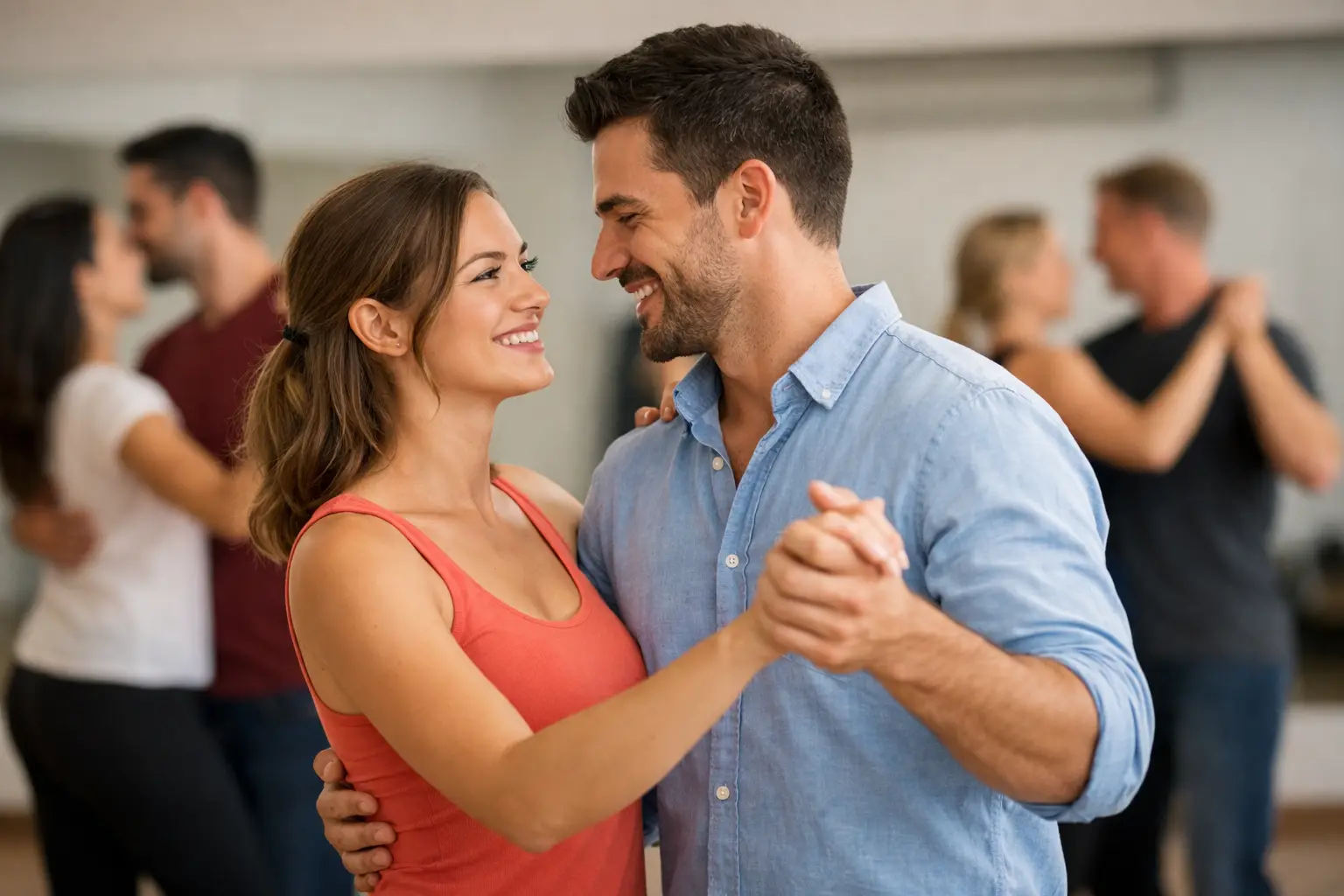
That first walk onto the dance floor can feel like a comedy of errors waiting to happen. One person worries about left feet, the other worries about looking awkward, and both wonder if everyone else already knows what they’re doing. The good news is that couples dance classes beginners join are built for exactly that moment – the brand-new, slightly nervous, ready-to-try crowd who want to learn without the pressure.
If you’re thinking about taking a class with your partner, or you’re simply searching for a way to move together, laugh together, and do something more exciting than another dinner out, beginner dance lessons make a lot of sense. They give you structure, a social outlet, and a skill you can actually use beyond the studio. Better yet, when the class is taught well, you do not need rhythm from birth, fancy shoes, or a movie-worthy first spin.
Why couples dance classes beginners love feel less intimidating than expected
A lot of adults put off dancing because they assume classes are serious, technical, or full of polished dancers who have been twirling since childhood. That’s rarely what a true beginner class looks like. A solid social dance program starts with the basics and expects people to be new.
That means instructors break down timing, foot placement, connection, and lead-follow skills in a way that feels manageable. You are not expected to glide in and perform. You are expected to show up, listen, try, laugh a little, and improve week by week.
For couples, there’s another perk. You’re learning together. Nobody has to be the expert at home. Nobody has to pretend they already know how to dance. You both get to start at the same level, and that tends to take the edge off.
What beginners actually learn in class
The biggest surprise for many new students is how practical beginner classes are. Good social dance instruction is not about stuffing your brain with terminology. It’s about helping you dance with confidence in real life.
In a beginner series, you’ll usually learn the core rhythm and movement of a dance, how to move with a partner without feeling stiff, and how to recognize the kind of music that fits the style. You may also work on posture, basic turns, directional changes, and how to recover when something goes sideways. That last one matters more than people think. Social dancing is not about perfection. It’s about staying relaxed enough to keep going.
Depending on the class, you might start with ballroom, Latin, country, swing, or club styles. Each one has a different flavor. Country can feel approachable and social right away. Swing brings energy and bounce. Ballroom often gives beginners a clear framework. Latin styles add rhythm and personality. There is no single best starting point. It depends on what music you enjoy and where you want to dance once class is over.
Choosing the right class matters more than choosing the perfect dance style
People often spend too much time asking which dance is easiest and not enough time asking whether the class itself is beginner-friendly. The truth is, a welcoming studio with patient instructors will make almost any beginner-level style feel doable.
Look for classes that clearly say they are for beginners, use a step-by-step format, and focus on social dancing rather than competition. A multi-week series is usually a better fit than a one-off drop-in if you want real progress. It gives your body time to remember the patterns and lets your confidence build gradually instead of all at once.
It also helps if the atmosphere is relaxed. Adults learn better when they do not feel judged. A good class keeps things organized without making the room feel stiff. You want instruction that is clear, but you also want space to smile, make mistakes, and try again.
Couples dance classes for beginners are not just for romantic pairs
This part trips people up, so let’s clear it up. The phrase couples dance classes for beginners sounds like it only applies to romantic partners. In practice, partner dancing is much broader than that.
Some people come with a spouse or date. Others join with a friend, sibling, or family member. Some arrive solo and dance with classmates throughout the session. In many social dance studios, not having a partner is completely normal. That setup can actually make learning easier because students gain experience dancing with different people, which improves timing, communication, and adaptability.
So if you want the fun of partner dance without the pressure of showing up as part of a matched pair, beginner classes can still be a great fit. The point is learning the skill, not passing a relationship test under fluorescent lights.
What to expect on your first night
Expect a mix of excitement and nerves. That is standard issue.
Most beginner classes start with a simple warm-up or introduction to rhythm and basic footwork. Instructors then build from one small pattern at a time. You practice it, repeat it with music, and slowly stitch it together into something that feels like actual dancing. Somewhere in there, someone usually laughs at the wrong turn, and that’s part of the fun.
Wear comfortable clothes you can move in. You do not need to dress like you’re headed to a ballroom showcase. Shoes should be clean, supportive, and easy to move in. If a studio has special footwear recommendations, follow those, but beginners generally do best when they keep it simple.
More important than your outfit is your mindset. Give yourself permission to be new. The first class is not an audition. It is the first step.
The real benefits go beyond the dance floor
Yes, dancing is fun. That’s the headline benefit, and it’s a good one. But beginners often stick with classes because of what happens around the dancing too.
You build confidence in a very practical way. Week by week, movements that once felt impossible start to feel natural. You become more comfortable with coordination, physical closeness, timing, and social interaction. That confidence tends to spill into other areas of life.
For couples, dance classes can become quality time with a pulse. You’re learning something together, solving little movement puzzles together, and sharing a hobby that gets both of you off the couch. There is also a communication piece. Partner dance teaches you how to pay attention, respond, and move as a team without overthinking every step.
Then there’s the social side. A good studio creates community, not just classes. Practice nights, social dances, and ongoing programs give beginners a place to keep using what they learn. That’s where lessons stop feeling like lessons and start feeling like a night out you can actually enjoy.
Common beginner worries, answered honestly
People worry they have no rhythm. Usually, what they actually lack is experience counting music and matching movement to it. That can be taught.
People worry their partner learns faster than they do. Sometimes that happens. It is normal. Dancing is a mix of timing, memory, balance, and confidence, and couples rarely progress at exactly the same pace. The key is choosing a class environment that keeps things light and encouraging instead of competitive.
People worry they’re too old to start. Not likely. Social dance is one of the most adult-friendly hobbies around because it can be adapted to different comfort levels, fitness levels, and goals.
And yes, some people worry about looking silly. You might, briefly. Everyone does. Then the music starts, the room relaxes, and suddenly nobody cares nearly as much as they thought they would.
How to get the most from beginner dance lessons
Consistency beats intensity every time. One class a week for several weeks will usually help more than a single enthusiastic burst followed by nothing. Repetition matters because dancing is physical learning. Your feet need practice as much as your brain does.
It also helps to stay for social practice when it’s offered. That is where beginner skills settle in. In class, you learn the pattern. In practice, you learn how to use it with music, momentum, and real-world unpredictability.
Keep your expectations friendly. You do not need to become amazing overnight. Aim to feel a little more comfortable each week. If you can walk out of class knowing one more pattern, hearing the beat a little better, or laughing more than you did last time, you’re on the right track.
For adults in Saskatoon who want a welcoming place to start, Dance Class Saskatoon is built around that exact beginner-friendly spirit. The focus is on practical social dancing, approachable instruction, and helping real people feel good on real dance floors.
Why now is a great time to start
There is never a magical moment when you suddenly feel perfectly ready to dance. Most people start somewhere between curious and nervous, and that is enough.
If you’ve been waiting until you feel more coordinated, more confident, or more sure of what style to pick, consider this your cue. Beginner classes are where confidence comes from, not where it is required. You learn by showing up, stepping in, and letting the music do some of the heavy lifting.
A few weeks from now, you could still be wondering whether dancing is for you, or you could be gliding through your first basic pattern with a grin on your face. The second option has better rhythm.