
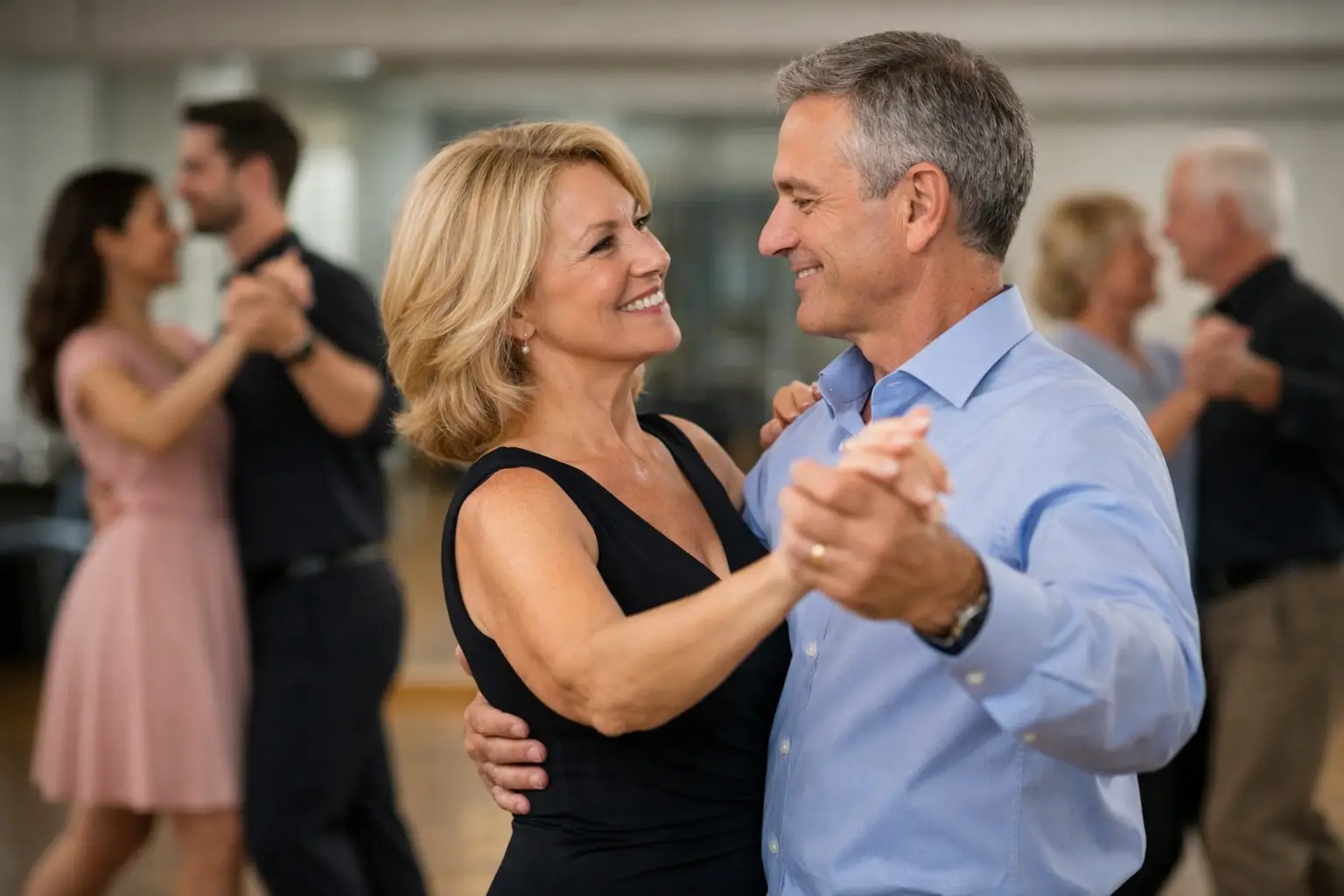
Some ballroom classes make you feel like you missed step one before the music even starts. Others make you want to grab the floor, laugh off a misstep, and come back next week. That difference matters more than fancy terminology or perfect posture on day one.
If you are thinking about trying ballroom classes, the real question is not whether you are coordinated enough. It is whether the class is built for real people who want to dance in real social settings. For most adults, that means learning in a way that feels clear, welcoming, and practical from the very first lesson.
What good ballroom classes actually teach
A lot of beginners picture ballroom as something stiff, ultra-formal, or meant only for couples gliding through a wedding scene. In practice, good ballroom instruction is much more useful than that. It teaches timing, leading or following, movement with a partner, and how to stay comfortable when the music changes or the room gets busy.
That is the part many people do not realize at first. Ballroom is not just about memorizing patterns. It is about learning how to move with confidence, how to read a partner, and how to enjoy the dance without freezing when something goes off-script. If a class only gives you a sequence to copy, you may get through one routine. If it teaches the why behind the movement, you can actually dance.
That is also why beginners often do better in structured group series than in one-off drop-in lessons. A series gives your body time to catch up with your brain. Week by week, what felt awkward starts to settle in. The count makes sense. The frame feels less foreign. Suddenly you are not just surviving the song – you are moving with it.
Ballroom classes for beginners should feel approachable
The biggest barrier for most adults is not ability. It is nerves. People worry they have no rhythm, no partner, no experience, or two left feet and a right foot that is somehow also left. The best classes take that anxiety and lower the temperature right away.
A welcoming class does a few things well. It explains clearly without overloading you. It keeps the room social instead of intimidating. It gives enough repetition for progress, but not so much that the evening feels like homework in dance shoes. Experienced instructors matter here, especially the patient kind. Beginners do not need a lecture. They need guidance that is encouraging, practical, and easy to use the same night.
No-partner-required formats help, too. They make ballroom more accessible for singles, couples, and friends who just want to try something new. That kind of setup also builds better social dancers, because you learn to adapt to different partners instead of depending on one familiar person.
How to tell if a class is the right fit
Not every ballroom program is trying to do the same job. Some are built for performance. Some lean competitive. Some are almost entirely social. None of those approaches are wrong, but they are not interchangeable.
If your goal is to feel comfortable at weddings, socials, dance halls, clubs, or community events, look for classes that focus on usable skills. You want instruction that connects directly to social dancing, not just studio-perfect routines. Ask yourself whether the class teaches lead and follow, floor awareness, timing, and adaptable patterns. Those are the tools that travel with you.
Pacing matters just as much. A class that moves too fast can leave beginners discouraged. One that moves too slowly can feel flat. A multi-week series often strikes the right balance because it gives students enough time to absorb the basics while still building momentum. You get the fun of making progress without feeling rushed off the beat.
Why group ballroom classes work so well
There is something special about learning in a room full of people who are all figuring it out together. Group classes bring energy. They make it easier to relax. They also remind you that everyone misses a step now and then, and nobody bursts into flames because of it.
For many adults, group learning is the sweet spot between affordability and personal attention. You get structure, social interaction, and instructor guidance without the pressure of a private-only environment. In a strong group program, instructors still circulate, answer questions, and help students make corrections that actually stick.
There is also the community piece. Social dancing gets more rewarding when you know people, attend practice events, and recognize familiar faces on the floor. That is one reason students tend to stay with classes longer when the studio culture feels warm and inclusive. It is not just about learning steps. It is about finding a place where showing up feels easy.
Which ballroom styles should you start with?
This depends on what kind of music and events you enjoy. If you love classic elegance and smooth movement, waltz and foxtrot are often appealing starting points. If you want upbeat energy and a little more sparkle, styles like cha-cha or swing may be more your speed. If your local social scene includes country bars or community dances, styles that connect to that world can be especially practical.
The best answer is usually not to chase the most impressive dance. It is to start with the one you are most likely to use and enjoy. Motivation counts. People practice more when the music feels familiar and the dance fits the places they actually go.
This is where a studio with broad style coverage has a real advantage. You do not have to guess your forever dance on day one. You can begin with a beginner-friendly series, build confidence, and branch out as your comfort grows. One style often opens the door to another. Before long, your dance card gets a lot more interesting.
What progress really looks like
Many new students expect a dramatic transformation after one class. That would be nice, but real progress usually shows up in quieter ways first. You stop staring at your feet. You hear the beat faster. You recover from mistakes without apologizing to the room. Those are big wins, even if they do not look flashy.
Then something clicks. A turn works. A lead feels clear. A whole song goes by and you are focused on the music instead of the mechanics. That is when ballroom starts to feel less like instruction and more like dancing.
It is worth saying that progress is not perfectly even. Some classes will feel easy and others will feel like your brain wore dance shoes made of pudding. That is normal. Adults learn movement through repetition, patience, and practice. The right class keeps that process enjoyable enough that you stick with it.
Ballroom classes are about more than technique
Yes, you will learn footwork, timing, posture, and partner connection. But the benefits do not stop there. Ballroom gets people off the couch and into a shared experience. It helps singles meet people, gives couples a fresh activity to do together, and gives hobby dancers a creative outlet that is social instead of solitary.
It can also be a confidence builder in everyday life. There is something powerful about walking into a room, hearing music start, and knowing you can join in. You do not need to be the best dancer there. You just need enough comfort to say yes.
That is one reason practical, welcoming instruction matters so much. A studio can teach patterns all day long, but if students never feel ready to use them outside class, something is missing. The best programs keep one eye on the lesson and the other on the real world. They help people become social dancers, not just class attendees.
What to look for before you sign up
A few details can tell you a lot. Look for clear class descriptions, a beginner-friendly path, and instructors who know how to teach adults without making the room feel stiff. Check whether the program is built as a series, whether it welcomes people without partners, and whether there are chances to practice beyond class.
Affordability matters, too. Dance should feel like an open door, not a velvet rope. A reasonably priced group series can make it much easier to start now rather than keep saying someday. If the studio also offers a variety of styles, that gives you room to keep growing once the first class hooks you.
For adults in Saskatoon and the surrounding area, that mix of structure, variety, and social comfort is exactly why community-focused programs tend to stand out. Dance Class Saskatoon, for example, leans into beginner-friendly group series, practical social dancing, and a no-partner-required atmosphere that helps new students settle in fast.
Ballroom does not have to be intimidating to be worthwhile. The right class will challenge you just enough, make you laugh a little, and send you home feeling more capable than when you walked in. If you have been waiting for the perfect moment, this is your cue to step onto the floor and let the learning start.