
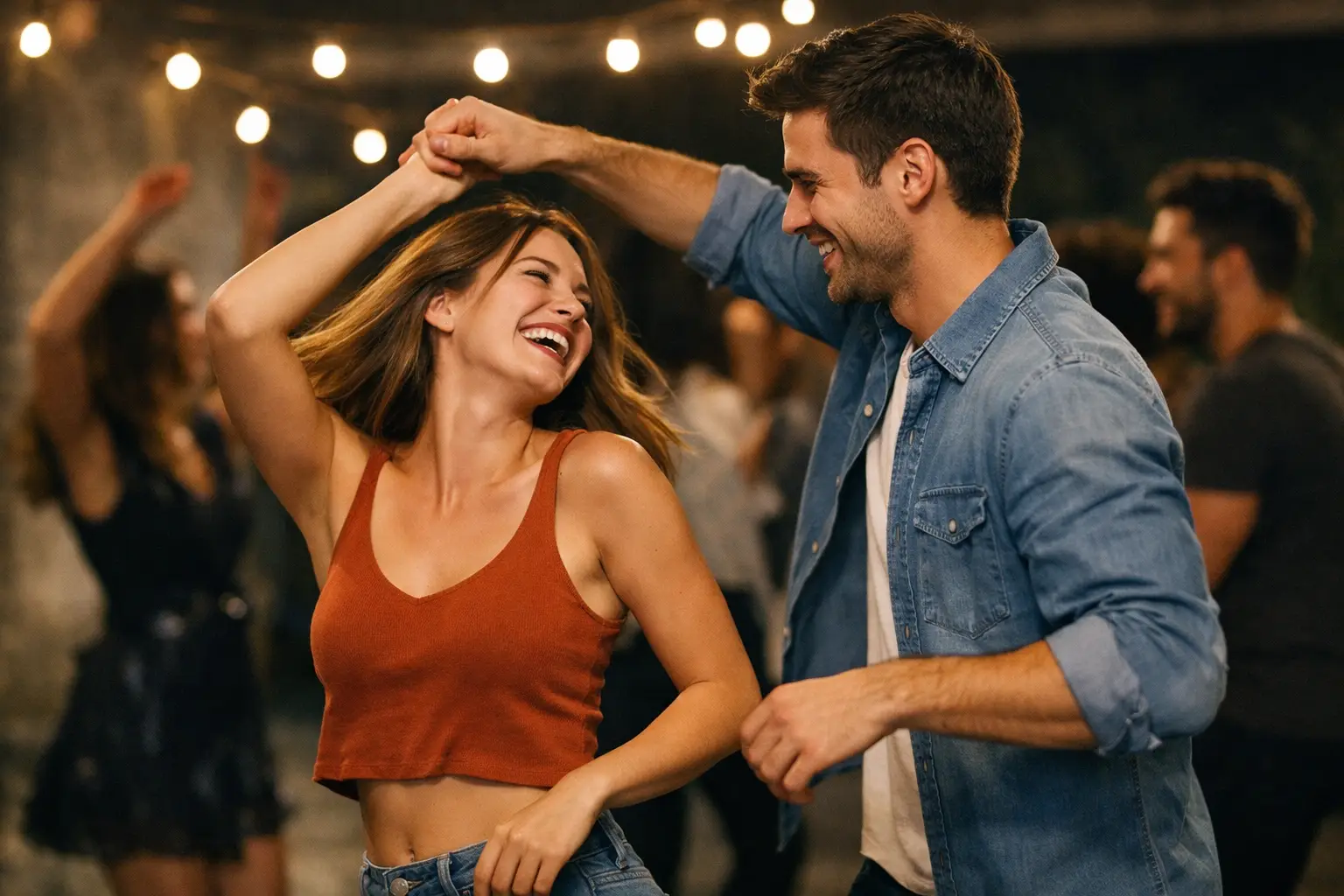
That first walk onto a dance floor can feel louder than the music. You start wondering where your feet go, what your hands should do, and whether everyone else somehow got the memo before you arrived. If you want to learn how to dance without experience, here’s the good news – nobody starts smooth. Every confident social dancer you’ve seen was once figuring out the beat, overthinking their steps, and hoping not to zig when they meant to zag.
The trick is not waiting until you feel ready. The trick is learning in a way that makes dancing feel doable from day one. For most beginners, that means less pressure, more repetition, and a style of teaching that focuses on real social dancing instead of perfection.
How to dance without experience starts with the right goal
A lot of beginners make the same misstep right away. They assume dancing means memorizing a full routine, moving like a performer, or getting every count exactly right. That idea can scare people off before they even begin.
Social dancing works differently. Your first goal is not to look advanced. Your first goal is to move to music, stay relaxed, and learn a few patterns you can actually use with another person or out at a social event. Once that clicks, everything gets easier.
That shift matters because it changes what progress looks like. If you judge yourself against a stage performance, you’ll feel behind. If you judge yourself by whether you can find the beat, take a few basic steps, and enjoy one song without panicking, you’re already dancing.
Start with one style, not ten
It’s tempting to sample everything at once. Swing looks fun, salsa looks flashy, country feels practical, and ballroom sounds classic. But when you’re brand new, too much variety can make your brain do the cha-cha in opposite directions.
Pick one beginner-friendly style and stick with it long enough to feel the rhythm settle in. For some people, that’s a country two-step because it feels useful for dance halls and social nights. For others, it’s a simple swing or club dance because the music feels familiar. The best first style is the one that makes you want to come back next week.
There is a trade-off here. Starting with one style builds confidence faster, but trying a few can help you find your favorite. If you’re unsure, a structured beginner class that introduces social basics without overwhelming you is often the sweet spot.
You do not need natural talent
Let’s retire one of the most stubborn myths in dancing: that good dancers are just born with it. Rhythm can be trained. Coordination improves. Confidence grows through repetition, not magic.
Some people do pick things up faster, usually because they’ve had sports, music, or movement experience. That can help at first. But consistency beats raw talent over time. The student who shows up, laughs off mistakes, and practices the basics usually passes the person who relies on instinct alone.
If you’ve ever said, “I have two left feet,” congratulations – you’re speaking fluent beginner. That phrase shows up in almost every first class, and it almost never stays true for long.
Learn the beat before you learn fancy moves
If you’re wondering how to dance without experience, this is the part that pays off fastest. Before spins, turns, or styling, learn how to hear the beat and step on it.
Start simple. Put on a song with a clear rhythm and walk in place. Not perform. Not improvise. Just step evenly with the beat. Once that feels steady, shift your weight side to side. Then try a basic step pattern your class teaches. Dancing is built on timing and weight changes more than big movement.
This is why beginner classes work so well when they’re taught by patient instructors. They break movement into pieces your body can actually absorb. Instead of tossing you into the deep end with choreography, they help you feel the pulse, understand the count, and connect the step to the music.
Take a class that expects beginners
Not all dance instruction is equally welcoming. Some classes move too fast, assume prior knowledge, or cater to people who already know the lingo. If you’re starting from zero, that can make a fun activity feel like a pop quiz.
Look for a group class built specifically for beginners. The right class should explain the basics clearly, give you lots of repetition, and create a room where mistakes are normal. It also helps if no partner is required. That takes away one of the biggest excuses people use to stay on the sidelines.
A good beginner program teaches practical skills you’ll use in real life: leading or following simple patterns, moving with a partner comfortably, and adjusting to actual social music. That’s much more useful than spending weeks on something you’ll never use outside the classroom.
Expect to feel awkward for a minute
This part deserves honesty. Yes, you will probably feel awkward at first. Your arms may seem overly intentional. Your feet may forget the pattern the second music starts. You may laugh halfway through a turn because your brain and body are still getting acquainted.
That is not failure. That is the warm-up.
People improve fastest when they stop treating awkwardness like a warning sign. It’s just part of learning a physical skill. Think of it like learning to drive a stick shift or trying a new sport. At first, every little action takes focus. Then one day, the pieces start clicking together and your body stops negotiating every step.
Practice small, not hard
Beginners often imagine practice as something intense and time-consuming. It doesn’t have to be. Ten minutes in your kitchen is better than waiting for a mythical free hour and never starting.
Run through your basic step while brushing your teeth. Count the beat while a song plays in the car. Shift weight and practice timing while making dinner. Tiny bits of repetition teach your body far more effectively than cramming once a month.
The key is keeping practice clean and simple. If you try to rehearse too many moves at once, you’ll reinforce confusion. One basic step done correctly, over and over, builds a stronger foundation than six patterns done halfway.
Dancing with a partner is a skill of communication
A lot of new dancers worry they’ll let someone down. They think partner dancing is about getting every signal right instantly. In reality, partner dancing is a conversation, and both people are learning how to listen.
If you lead, your job is clarity, not force. If you follow, your job is responsiveness, not mind reading. Both roles depend on timing, frame, and trust. That takes practice, and it gets better when instructors teach the mechanics in a practical way.
This is one reason social group classes can be such a win for adults. You get to dance with different people, which helps you adapt instead of relying on one familiar partner. It also keeps the atmosphere friendly and social, which makes learning feel less like pressure and more like a night out with extra rhythm.
Confidence comes after action, not before
Many adults wait to sign up because they want to feel more confident first. But confidence is not a pre-class requirement. It’s the result of showing up a few times and realizing you can actually do this.
After a couple of lessons, the room feels less intimidating. After a few more, you recognize the music, remember the pattern, and stop staring at your own feet. Then something fun happens: you start enjoying yourself enough to forget to be self-conscious.
That’s usually the turning point. Not perfection. Not a dramatic movie moment. Just a steady little shift from “I hope I survive this song” to “Okay, that was actually fun.”
What helps adults learn faster
Adults often learn differently than kids, and that’s not a bad thing. You bring patience, life experience, and a reason for being there. Maybe you want to feel comfortable at weddings, get out more, meet people, or finally try the thing you’ve been talking yourself out of for years.
What helps most is instruction that respects that. Clear breakdowns. Real-world dances. Encouragement without fluff. Plenty of repetition. A welcoming room where no one expects you to be polished on night one.
That’s why studios with structured beginner series tend to work so well. You’re not wandering in and hoping for the best. You’re learning step by step, with other beginners, in a format designed to help you build comfort and keep going.
The best way to dance without experience is to begin before you feel ready
There is no secret moment when dancing suddenly starts feeling safe enough to try. You get there by taking one class, learning one basic step, and giving yourself permission to be new at something.
If you’re in Saskatoon and have been waiting for a sign, this is your cue to step in on the beat. Choose a beginner-friendly class, bring your curiosity, and let the first few lessons do what they’re meant to do – turn nerves into movement, movement into confidence, and confidence into a really good night out.
You don’t need experience to start dancing. You just need a first step, and maybe a little room to sway.