
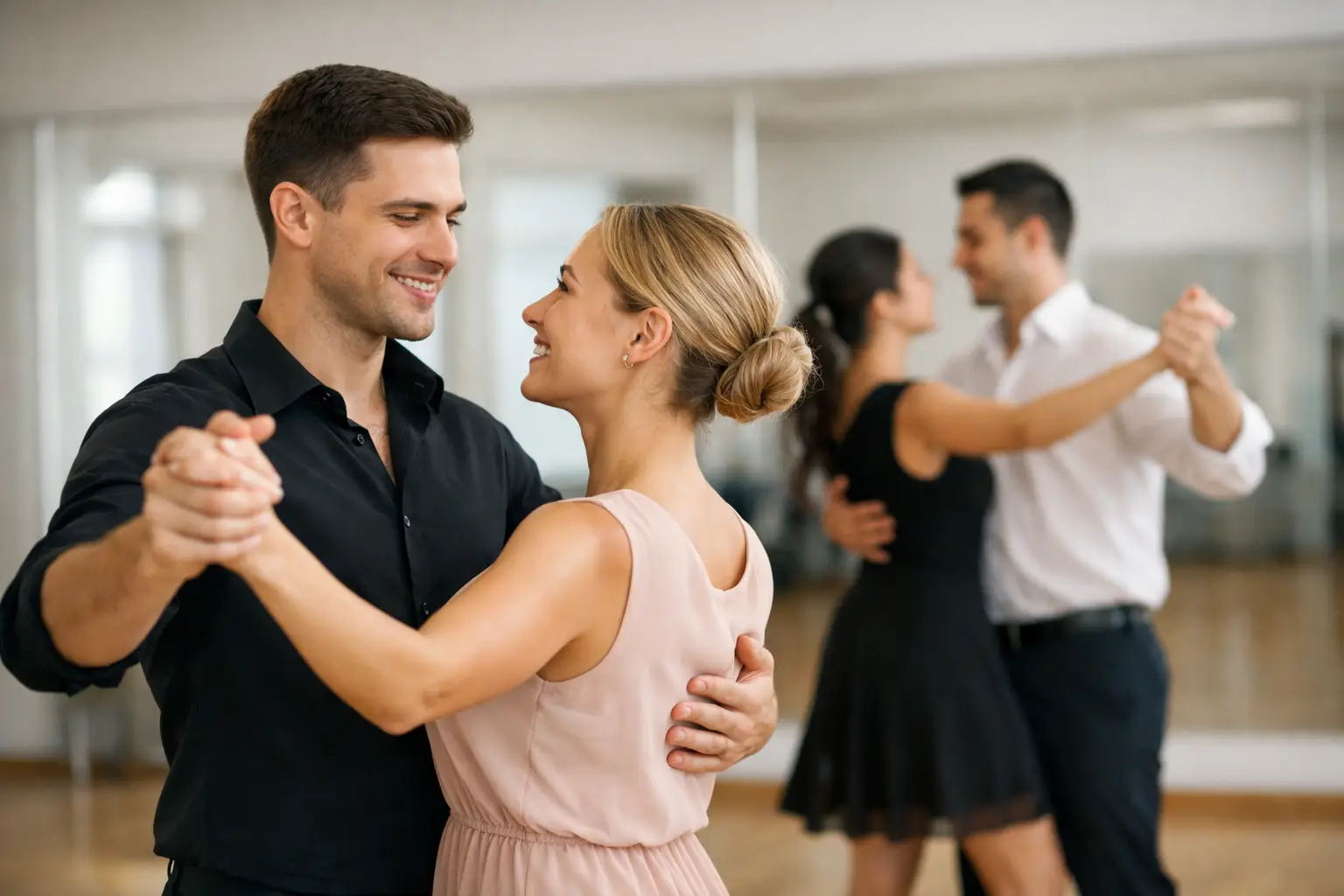
Walking into your first beginner ballroom dance classes can feel a little like showing up to a party five minutes late – you assume everyone else already knows the steps, the rules, and where to put their hands. The good news? That almost never happens. Most new dancers are thinking the exact same thing, and once the music starts, everyone is just trying to find the beat, loosen their shoulders, and have a good time.
That is why the best first class is not about looking polished. It is about getting comfortable enough to move, laugh off a missed turn, and realize social dancing is a lot more welcoming than people expect. If you have been curious about ballroom but worried you will feel awkward, out of place, or behind, you are exactly the kind of person these classes are built for.
What beginner ballroom dance classes should actually feel like
A beginner class should feel structured, but never stiff. You want enough guidance that you are not guessing your way across the floor, and enough breathing room that you can learn without pressure. Good instructors break things down clearly, repeat patterns in a way that makes sense, and focus on practical skills you can use with real people in real social settings.
That last part matters. There is a big difference between teaching dance as performance and teaching dance as a social skill. For most adults starting out, the goal is not competition. It is being able to dance at a wedding, enjoy a night out, join a community event, or finally say yes when someone asks, “Want to dance?”
A strong beginner program usually starts with the basics of connection, rhythm, posture, and timing. Then it layers in a few simple patterns that help you move around the floor without feeling like your feet are negotiating against each other. You do not need a huge move list. You need a handful of useful patterns you can remember under pressure.
The biggest myths that stop people from starting
Plenty of adults talk themselves out of dancing before they ever step into a studio. Usually, it comes down to a few very common assumptions.
The first is, “I need a partner.” In many social studios, you do not. No-partner-required classes are one of the best ways to make ballroom more approachable because they remove the biggest barrier right away. Couples are welcome, of course, but singles can join too, rotate, and learn how to dance with different people instead of getting locked into one habit.
The second myth is, “I have no rhythm.” Rhythm is not a personality trait that some people were handed at birth while others were skipped over. It is a skill. Some people pick it up quickly, others need more repetition, and both are normal. Patient teaching matters more than natural flair.
The third is, “I will be the worst one there.” Maybe for one class. Maybe not at all. Either way, beginner means beginner. Everyone starts with two left feet for a while. Then one day, almost by surprise, the music clicks and your feet stop arguing.
Why group classes work so well for adults
Private lessons have their place, but group classes are often the sweet spot for new social dancers. They are more affordable, more relaxed, and better for building comfort with different partners and personalities. You are not just learning steps. You are learning how social dancing actually works.
That social side is a bigger benefit than many people expect. In a well-run group class, the room feels encouraging instead of intimidating. You meet other beginners, laugh at the same mistakes, and realize progress is a lot more fun when it happens with other people. For adults looking to get out more, try something active, and meet people without the weirdness of forced networking, dance class is a pretty smooth move.
There is also a practical advantage to multi-week group series. Instead of cramming everything into one night, you get time to repeat, forget, remember, and improve. That space matters. Learning to dance is not about one perfect class. It is about steady progress that builds confidence week by week.
What you will likely learn first
Not every studio teaches ballroom in the same order, but most beginner-friendly programs start with dances and patterns that are useful, recognizable, and manageable for new students. You might begin with a smooth style like waltz or foxtrot, or with social favorites that show up often at parties and events.
The right starting point depends on the program. Some classes focus on classic ballroom frame and movement. Others blend ballroom with Latin, swing, country, or club styles so students can get comfortable in a wider range of social settings. That can be a smart approach, especially if your real goal is not formal ballroom etiquette but being able to walk into a dance hall, club, community event, or wedding reception and actually use what you learned.
This is where practical teaching shines. Beginners do best when instructors explain not just what step to do, but why it works, when to use it, and how to recover if you miss it. Because yes, recovery is a dance skill too. Sometimes the most valuable thing you learn is how to keep smiling and keep moving.
How to choose beginner ballroom dance classes that fit real life
The best class for you is not automatically the fanciest one or the one with the longest syllabus. It is the one you will actually attend, enjoy, and stick with.
Look for a class that clearly welcomes beginners and spells out what to expect. If the description feels like it was written for experienced dancers, that may not be your easiest entry point. You also want instructors who are known for patience and clarity, not just skill. Being a great dancer and being a great beginner teacher are not always the same thing.
Format matters too. A multi-week series often works better than a drop-in for true beginners because it builds in progression. Week one gives you the basics. Week two makes them less wobbly. By week three, you are not introducing yourself to the material anymore. You are starting to own it.
Price and atmosphere count as well. Affordable classes remove pressure and make it easier to keep going. A welcoming studio culture matters just as much. If the room feels friendly, if rotation is handled respectfully, and if the focus is on learning real social dancing rather than showing off, beginners tend to relax faster.
In Saskatoon, that mix of structure, affordability, and no-partner-required accessibility is exactly why many adults gravitate toward Dance Class Saskatoon when they are ready to get started.
What to wear and what not to worry about
You do not need sparkles, tails, or shoes that cost more than your monthly coffee budget. For a first class, wear comfortable clothes that let you move and shoes that stay secure on your feet. You want to feel neat, relaxed, and able to turn without fighting your footwear.
Beyond that, do not overthink it. You are not auditioning. You are learning. Most beginners are far more worried about whether they will remember the pattern than whether they look like ballroom royalty.
It also helps to arrive expecting a little mental overload. That is normal. Your brain is tracking timing, feet, posture, direction, and another person all at once. The first few classes can feel delightfully chaotic. Then the fog starts to lift.
The confidence shift most beginners do not expect
At first, people sign up because dancing looks fun, or because they have a specific event coming up. Then something else happens. They start feeling more comfortable in their body. They become less self-conscious. They stop freezing when music comes on in public.
That confidence does not usually arrive with fireworks. It shows up quietly. You notice you are standing taller. You are less hesitant to join in. You can lead or follow a basic pattern without apologizing every five seconds. That is real progress, and it carries outside the studio too.
For some people, beginner ballroom becomes a hobby. For others, it opens the door to swing, Latin, country, or club dance. Once the fear barrier is gone, the dance floor gets a whole lot bigger.
Why starting now usually beats waiting until you feel ready
Here is the funny part: most people do not feel ready before their first class. They feel curious, nervous, hopeful, skeptical, and maybe a little convinced they will step on someone. Readiness usually shows up after you begin, not before.
So if ballroom has been sitting on your maybe-one-day list, this is your nudge to stop side-stepping around it. Beginner classes are supposed to meet you where you are, not where you think you should be. Show up, learn a few steps, meet some people, and let yourself be new at something. That is often where the real fun starts.