
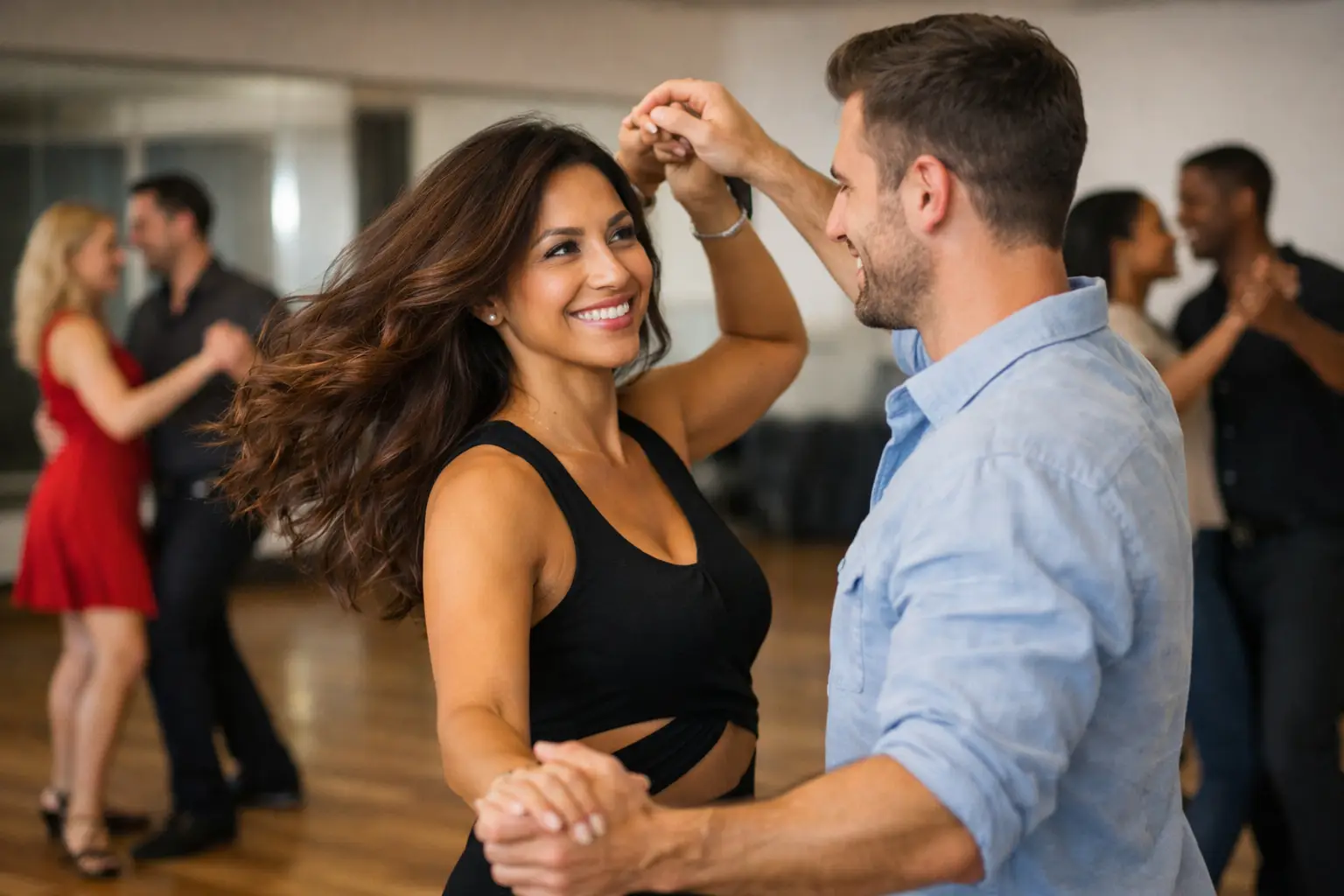
That first Hustle song comes on, the beat is clean, the energy is high, and suddenly standing on the sidelines feels like the wrong move. Hustle dance lessons are built for exactly that moment – when you want steps you can actually use, confidence you can feel, and a partner dance that looks lively without feeling impossible.
Hustle has a way of turning nervous beginners into smiling regulars. It is social, upbeat, and practical. You do not need a dance background, a sequined jumpsuit, or a perfect sense of rhythm on day one. You just need the willingness to step onto the floor and give it a go.
Why hustle dance lessons click with beginners
Some dances feel formal right away. Hustle feels friendly. The music has momentum, the patterns are fun, and even the basics can make you feel like you are really dancing instead of just practicing. That matters when you are new, because early wins keep people coming back.
Hustle also gives you a nice balance of structure and freedom. There are clear lead and follow roles, recognizable patterns, and timing you can build over time. At the same time, it is not stiff. Once the basics settle in, the dance starts to feel playful, smooth, and social in the best way.
For adults who want to get comfortable dancing at parties, clubs, weddings, or local social events, Hustle checks a lot of boxes. It is energetic without being overwhelming. Stylish without being fussy. And yes, it is a pretty great way to meet people without awkward small talk carrying the whole evening.
What you actually learn in hustle dance lessons
A good class does not throw fancy turns at you and hope for the best. It builds your dancing one layer at a time so the floor never feels like a panic zone.
Most beginners start with timing, posture, connection, and a basic step pattern. From there, you learn how to move with a partner, how to lead or follow simple turns, and how to stay relaxed while the music keeps rolling. Those details may sound small, but they are the secret sauce. Social dancing feels better when both people know how to connect clearly and move comfortably.
As classes progress, students usually add turns, traveling patterns, changes of direction, and a little more musical expression. The goal is not to memorize a hundred flashy moves. The goal is to understand how the dance works so you can use what you know with different partners in real social settings.
That practical focus makes a huge difference. Plenty of people do not want performance choreography. They want to walk into a dance night and actually dance. That is where well-structured Hustle training shines.
Timing matters, but perfection does not
A lot of beginners worry that they are not musical enough. Fair concern, but usually overstated. You do not need flawless timing to start. You need repetition, clear instruction, and a little patience with yourself.
Hustle has a distinct groove, and once you start stepping to it consistently, your confidence tends to rise quickly. Some students catch timing right away. Others need a few classes before it clicks. Both are normal. The trick is sticking with it long enough to let your body recognize the pattern.
Partner skills are the real game-changer
Footwork is helpful, but partner communication is what makes social dancing feel smooth instead of stressful. In quality Hustle dance lessons, you learn how to send and receive signals clearly, keep your frame comfortable, and avoid the dreaded tug-of-war effect.
This is especially helpful for adults who are brand new to partner dancing. It takes the mystery out of the process. Instead of guessing what your partner wants, you learn the mechanics that make dancing together work.
Who hustle dance lessons are best for
Hustle attracts a wide mix of people, and that is part of the fun. Couples enjoy it because they can share a new hobby that feels social rather than overly serious. Singles like it because partner rotation and group classes make it easier to learn in a relaxed community setting. Hobby dancers enjoy adding a style that feels fresh and versatile.
It is also a strong choice for people who want exercise but do not want the gym to be the whole story. You move, think, listen, laugh, and interact. It is active without feeling like a chore. That alone gives it staying power.
If you are deciding between dance styles, the right fit depends on what you want. If you love grounded rhythm and a casual club feel, Hustle may be your lane. If you want dramatic shaping or a more formal ballroom look, another style might speak to you more. No dance wins for everyone. The best one is the one that gets you excited to show up next week.
What to expect in a beginner class
The biggest surprise for many new students is how normal everything feels once class starts. No one expects you to know the steps. No one expects you to be polished. A beginner class should feel welcoming, organized, and low-pressure from the first few minutes.
You will usually warm up with the basic rhythm and movement pattern, then work through one or two practical figures with instructor guidance. Good instructors break things down clearly, repeat key points, and keep the room moving so no one gets stuck in their own head for too long.
If the class is designed for social dancers, you can also expect a strong emphasis on usable skills. That means lead and follow clarity, rhythm you can repeat, and combinations that make sense outside the classroom. Fancy for the sake of fancy is fun in small doses, but most adults want something they can take straight to the dance floor.
Do you need a partner?
Not always, and honestly, it helps when you do not have to bring one. A no-partner-required class removes one of the biggest barriers for beginners. It makes it easier for singles to join, for couples to avoid feeling isolated, and for everyone to build adaptability by dancing with different people.
Rotating partners is not mandatory in every setting, but it can speed up learning. You get experience with different connections, timing habits, and movement styles. That makes you a stronger social dancer in the long run.
How to get more from your hustle dance lessons
The students who improve fastest are not always the ones with natural talent. Usually, they are the ones who practice a little between classes, stay curious, and let themselves be beginners without apologizing for it.
If you want faster progress, focus on consistency over intensity. One class and a small amount of review can do more for your dancing than cramming once a month. Pay attention to rhythm first, then connection, then styling. A clean basic beats a messy spin every time.
It also helps to practice socially when you can. Real dancing with real people reveals what you remember, what still feels shaky, and what is starting to become automatic. That is where confidence grows. Not in theory, but in motion.
For many adults in Saskatoon, that social side is what keeps dance classes fun long after the first session. You are not just collecting steps. You are becoming someone who can hear a song, find a partner, and join the action.
Choosing the right studio for hustle dance lessons
Not every class teaches with the same goal. Some focus heavily on performance, others on technique detail, and others on social usability. None of those approaches are wrong, but they create very different experiences.
If your goal is to feel comfortable at social dances, look for a studio that teaches in a practical, welcoming way. You want experienced instructors who can break patterns down without making beginners feel behind. You want a class structure that builds skills progressively. And you want an atmosphere where people feel relaxed enough to actually learn.
Affordable pricing matters too. So does a friendly room. So does having opportunities to keep dancing outside class, whether that means practice events, social nights, or simply a community that cheers you on while you find your groove. At Dance Class Saskatoon, that real-world social focus is a big part of what makes learning feel approachable.
Hustle is one of those dances that gives back quickly. You put in a little effort, and soon enough the music feels less intimidating, the floor feels more open, and your feet stop arguing with the beat. If you have been waiting for a sign to stop watching and start moving, this might be your cue to step in, smile, and let the rhythm do the rest.