
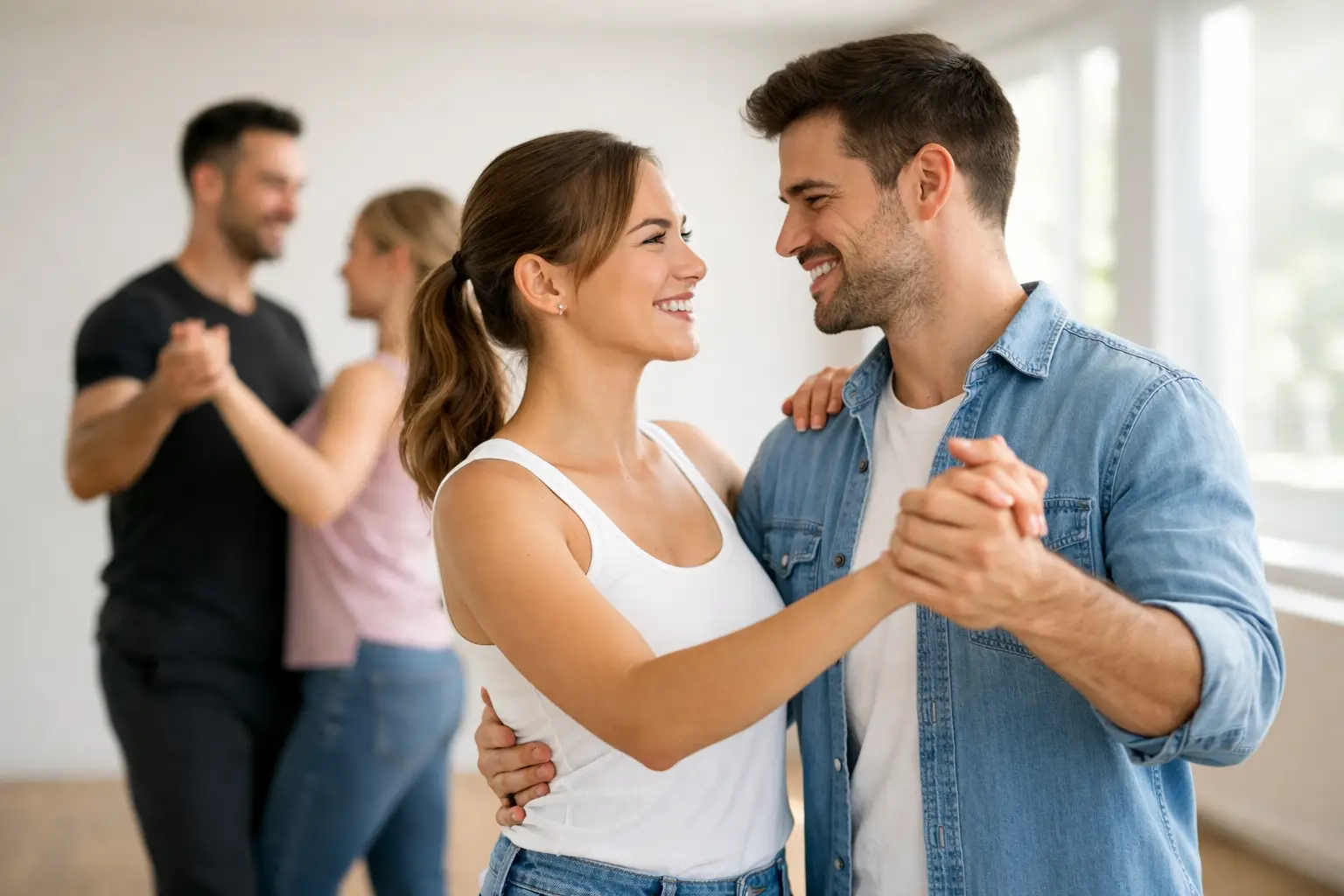
Most beginners do not struggle with rhythm first. They struggle with the moment right before class starts – standing at the door, wondering if everyone else already knows what they’re doing. If you want to learn to dance for beginners, that’s the real first step: getting past the idea that you need natural talent, the right partner, or perfect timing before you begin. You don’t. You just need a place to start and a little willingness to look awkward for a week or two while your feet catch up.
The good news is social dance is far more learnable than people think. You are not training for a competition. You are learning how to move with music, connect with another person, and feel comfortable enough to say yes when the next song comes on. That is a very different goal, and it makes the path much more friendly.
Why learning to dance feels hard at first
Beginners often assume dancing is one skill. It isn’t. It’s really a bundle of smaller skills happening at once: hearing the beat, shifting your weight, remembering a pattern, leading or following, and staying relaxed enough to smile through it. When all of those show up on day one, it can feel like trying to pat your head and rub your stomach while walking backward.
That early overload is normal. In fact, if your brain feels busy during your first few classes, you are probably right on track. Social dancing gets easier when those small pieces start working together automatically. That only happens with repetition, not pressure.
This is why patient instruction matters so much. A good beginner class does not throw flashy patterns at you and hope for the best. It gives you a clear framework, a simple rhythm, and enough guided practice that your body starts recognizing what to do before you have to think so hard about it.
Learn to dance for beginners by choosing the right goal
A lot of people quit too early because they pick the wrong target. If your goal is to look polished after one lesson, you are setting yourself up for frustration. If your goal is to feel more comfortable each week, now you’ve got a dance partner called momentum.
For most adults, the best beginner goal is practical: learn enough to enjoy a social setting. Maybe that means feeling confident at a wedding, trying country dancing on a night out, joining a swing social, or finally saying yes when a friend asks you onto the floor. Those goals create steady motivation because they connect your class time to real life.
There is also a trade-off between speed and comfort. Some people want quick results and are happy with a fast-paced course. Others do better in a multi-week series where each class builds on the last. Neither option is wrong, but beginners usually benefit more from structure than from cramming. A steady weekly rhythm gives your brain time to hold onto what you learned.
What dance style should a beginner start with?
It depends on where you want to use it. That answer is less glamorous than saying there is one perfect beginner dance, but it is more honest.
If you want something playful and social, swing is a great fit. If you picture country bars or community dance halls, country styles make more sense. If you love connection, timing, and a smoother partnership feel, ballroom can be a lovely entry point. If you want energy and personality, Latin styles bring plenty of spark.
The best first style is usually the one you are excited to practice. Interest matters because beginners improve through repetition, and repetition is much easier when the music makes you want to move. A style that fits your social life also helps. You will learn faster if you can actually use what you practice.
That said, some styles feel easier in the first hour than others. Simpler basic patterns can give beginners a quick win, while dances with more timing variations may take longer to feel natural. Fast progress feels great, but long-term enjoyment matters more. Pick the style that makes you want to come back next week.
What to expect in your first dance class
Your first class should feel welcoming, not like an audition. You should expect a warm introduction, a breakdown of the basic step, some explanation of timing, and partner rotation if the class uses it. For beginners, rotation is often a good thing. It helps you learn to adapt, improves leading and following, and takes the pressure off couples who think they need to get everything right together.
If you come solo, that is completely normal in social dance. No-partner-required classes remove one of the biggest barriers for beginners. You do not need to wait until a friend, spouse, or date is ready. You can simply show up and start.
You should also expect to make mistakes right away. That is not a warning – it is a promise. Everyone misses a beat, turns the wrong way, or forgets the pattern at first. The goal of a good class is not to eliminate mistakes. It is to make them feel manageable, fixable, and honestly kind of funny.
The fastest way to build confidence
Confidence in dance does not come from memorizing more moves. It comes from feeling steady in the basics. Fancy patterns are fun, but the basics are what keep you on the floor when the music changes, your partner is new, or your brain briefly clocks out.
A beginner who can keep time, shift weight cleanly, and recover after a mistake is already doing something valuable. Social dancing is not about performing a perfect routine. It is about sharing a good dance with another person. That means comfort, connection, and clarity usually matter more than complexity.
One of the smartest things you can do is repeat the same basic step at home for a few minutes between classes. Not for an hour. Not until your kitchen becomes a ballroom. Just enough to remind your body what the rhythm feels like. Small, consistent practice beats one giant cram session every time.
How beginners actually improve
Progress in dance is rarely dramatic from one class to the next. It sneaks up on you. One week you are counting every step out loud. A few classes later, you realize you had a whole song where you did not panic. That is progress, and it counts.
Most beginners improve fastest when they learn in a structured series instead of random drop-ins alone. Progressive classes give you a chance to revisit skills, ask questions, and add the next layer only after the first one starts to feel familiar. That structure is especially helpful in partner dancing, where timing and communication build over time.
Practice events help too. A class teaches the material, but a social practice lets you use it in a real setting. That bridge matters. Dancing in the wild is where many beginners go from “I think I know this” to “Hey, I’m actually dancing.”
Common beginner worries, answered honestly
A lot of adults worry they have two left feet. Usually, that really means they have not been taught how dance timing and weight transfer work. Those are teachable skills. Rhythm can improve. Coordination can improve. Comfort can definitely improve.
Some worry they are too old to start. Social dancing is wonderfully stubborn about that myth. Adults begin at all ages and do just fine, especially when classes focus on practical dancing instead of performance perfection.
Others worry about fitness. Yes, dancing can be active, but beginner classes are designed to teach first. You do not need athlete-level endurance to get started. You need curiosity and shoes that let you move.
And then there is the big one: fear of embarrassment. Fair enough. But beginner classes are full of people in the exact same boat, all trying not to step on their own confidence. Once the music starts, that self-consciousness tends to loosen its grip.
Choosing a class that helps you stick with it
Not every class is right for every beginner. The best fit is one that feels approachable, organized, and social without being chaotic. Look for a program with experienced instructors, a clear beginner path, and enough repetition that you are not learning a totally different universe every week.
Affordability matters too. If lessons feel financially stressful, it becomes harder to stay consistent. Beginner-friendly pricing makes it easier to commit long enough to see real progress. So does a welcoming environment where singles, couples, and absolute first-timers all feel like they belong.
That is one reason studios like Dance Class Saskatoon resonate with new dancers. The format lowers the pressure, the teaching stays practical, and the focus stays on helping real people enjoy real social dancing – not just survive one lesson and disappear in a puff of shuffle-step dust.
If you have been waiting until you feel less nervous, more coordinated, or more prepared, here’s your cue to step on the floor anyway. The first class is not about being good. It is about getting moving, meeting the music halfway, and giving yourself the chance to surprise yourself.