
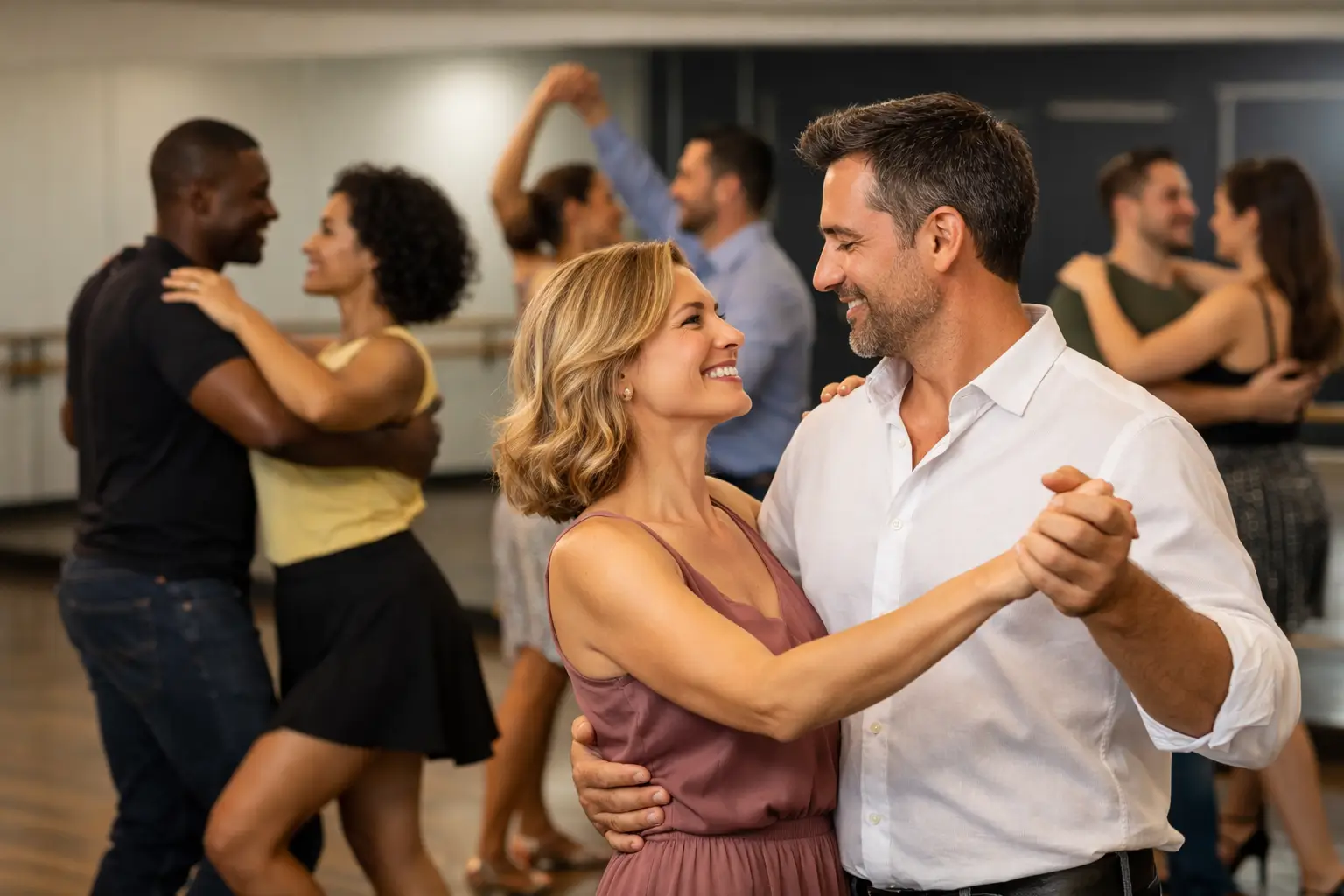
The best top social dances for adults are not the ones that look hardest from across the room. They are the dances that get you off your chair, smiling at another person, and ready to say yes when a great song comes on. Whether your goal is date-night confidence, a new hobby, more movement, or a bigger social circle, there is a dance floor with your name on it.
The good news? You do not need experience, fancy shoes, or even a partner to start. Social dancing is built around connection, repeatable patterns, and having a good time. A few lessons can turn “I have two left feet” into “Want to dance?”
10 top social dances for adults
1. Salsa
Salsa is lively, musical, and wonderfully social. Its quick rhythm and turns make it a favorite at Latin nights, restaurants, clubs, and community dance events. Beginners usually start with a basic forward-and-back step, then add turns and partner connection as they go.
Salsa is a terrific choice if you like upbeat music and a little sparkle in your evening. It can feel fast at first, but that is part of the fun. You do not need to spin like a pro on day one. A solid basic step and a relaxed frame will take you farther than trying to memorize flashy moves.
2. Bachata
Bachata has an easy side-to-side rhythm that many new dancers pick up quickly. The music can be romantic, playful, or energetic, and the dance works beautifully in close social settings. Its simple basic gives beginners room to focus on timing, connection, and feeling comfortable with a partner.
This is often a great first Latin dance for adults who want something approachable without losing that date-night magic. As you improve, bachata can become more detailed and expressive. Start simple, keep your steps small, and let the music do some of the work.
3. East Coast Swing
If a rock-and-roll song makes your shoulders start bouncing, East Coast Swing may be your happy place. It is playful, upbeat, and adaptable to plenty of music, from classic swing to modern tunes with a strong beat. The basic rhythm has a cheerful bounce that makes every turn feel like a tiny celebration.
East Coast Swing is especially friendly for social dancers because it can be danced in smaller spaces. It is less formal than some ballroom styles and gives both partners plenty of room for personality. Expect laughs, spins, and the occasional joyful tangle while you learn. That is all part of the groove.
4. West Coast Swing
West Coast Swing has a smooth, cool feel and a remarkable range of music. You might dance it to blues, pop, R&B, country, or a favorite radio hit. Instead of moving around the room in a circle, partners dance along a “slot,” which gives the style its distinctive look.
It takes a little more patience than some beginner dances because it rewards good timing and connection. But for adults who enjoy improvising and responding to the music, it is hard to beat. Think less memorized routine, more conversation with your feet.
5. Country Two-Step
Country Two-Step is made for dance halls, live bands, and songs that make you want to travel around the floor. It has a smooth walking pattern that feels natural once you find the rhythm. As confidence grows, turns and simple combinations add plenty of variety.
This dance is a smart pick if you enjoy country music or want a practical style for local social events. Floorcraft matters here: you share the room with other couples, keep moving, and learn to navigate without bumper-car collisions. A good class teaches those real-world skills right alongside the steps.
6. Cha Cha
Cha Cha brings bright Latin energy with a crisp, recognizable rhythm. That famous “cha-cha-cha” count gives the dance its bounce, and the patterns are often compact enough for social settings. It is lively without requiring you to sprint across the floor.
Adults who like clear rhythms often enjoy Cha Cha because the music practically tells you what to do. It also builds useful skills for other Latin dances, including weight changes, timing, and confident partner connection. Bring a little attitude if you like, but leave the pressure at the door.
7. Rumba
Rumba is slower, smoother, and more relaxed than the high-energy Latin styles. It gives dancers time to hear the beat, place their feet, and create comfortable connection. That makes it an excellent choice for beginners who want to build confidence without feeling rushed.
Do not mistake slow for boring. Rumba can be expressive, elegant, and surprisingly fun once you stop overthinking every step. It is also useful for couples who want a dance that feels polished for weddings, parties, and slower songs.
8. Foxtrot
Foxtrot is one of the most useful ballroom dances for adults because it works with a wide range of smooth, mid-tempo music. Its walking-based steps make it feel graceful without being overly complicated. You can use it at formal events, casual parties, and anywhere a classic standard song is playing.
The trade-off is that Foxtrot needs some awareness of how you move around the room. It is a traveling dance, so learning to steer, pass other couples, and stay relaxed makes a big difference. Once it clicks, it feels like gliding rather than counting.
9. Waltz
Waltz has a flowing three-count rhythm that instantly feels special. It is a lovely option for weddings, formal occasions, and anyone who enjoys music with a sweeping, romantic quality. The rise and fall may look fancy, but beginners can start with simple box steps and build from there.
Waltz is not always the most common club dance, so it depends on where you plan to go dancing. Still, it teaches posture, balance, and smooth movement that carry over into nearly every partner style. Plus, few things beat the feeling of turning gently around a floor to a beautiful song.
10. Club Two-Step
Club Two-Step is a practical, relaxed dance for slower pop, country, and contemporary music. It is often more compact and easygoing than Country Two-Step, making it handy for weddings, lounges, and crowded social floors. The rhythm is simple enough to learn quickly, yet flexible enough to keep interesting.
For adults who want a useful dance right away, this is a strong contender. It helps you look comfortable on the floor without needing big tricks or endless patterns. A few basics can carry you through a surprising number of songs.
How to choose the right dance for you
Start with the music you already love. If Latin beats get your attention, try salsa, bachata, or Cha Cha. If country songs are your go-to, choose Country Two-Step or Club Two-Step. If you prefer classic elegance, Foxtrot and Waltz are a natural fit. The dance you are most likely to practice is usually the dance you will enjoy most.
Also consider where you want to use it. A dance that works brilliantly at a country bar may not fit a packed Latin night, and a formal ballroom dance may not be your first choice for a casual party. There is no wrong answer, though. Many social dancers learn one style for immediate use, then add another simply because the music makes them grin.
Your first class is allowed to feel new
Everyone starts somewhere, and nearly every confident social dancer remembers being nervous before their first lesson. A welcoming group class gives you structure, practice, and a chance to meet people who are learning right alongside you. No partner? No problem. Rotating partners, when offered, helps you learn to lead or follow clearly while making the room feel more social.
At Dance Class Saskatoon, the goal is not to turn every beginner into a competition dancer. It is to help real people feel at home at real social events. Wear comfortable clothes, choose shoes that let you move safely, and arrive ready to laugh at the occasional missed step.
Pick the style that makes you want to hear one more song, then give yourself a few weeks to let the rhythm settle in. The floor is waiting, and your next favorite night out may begin with one simple step.