
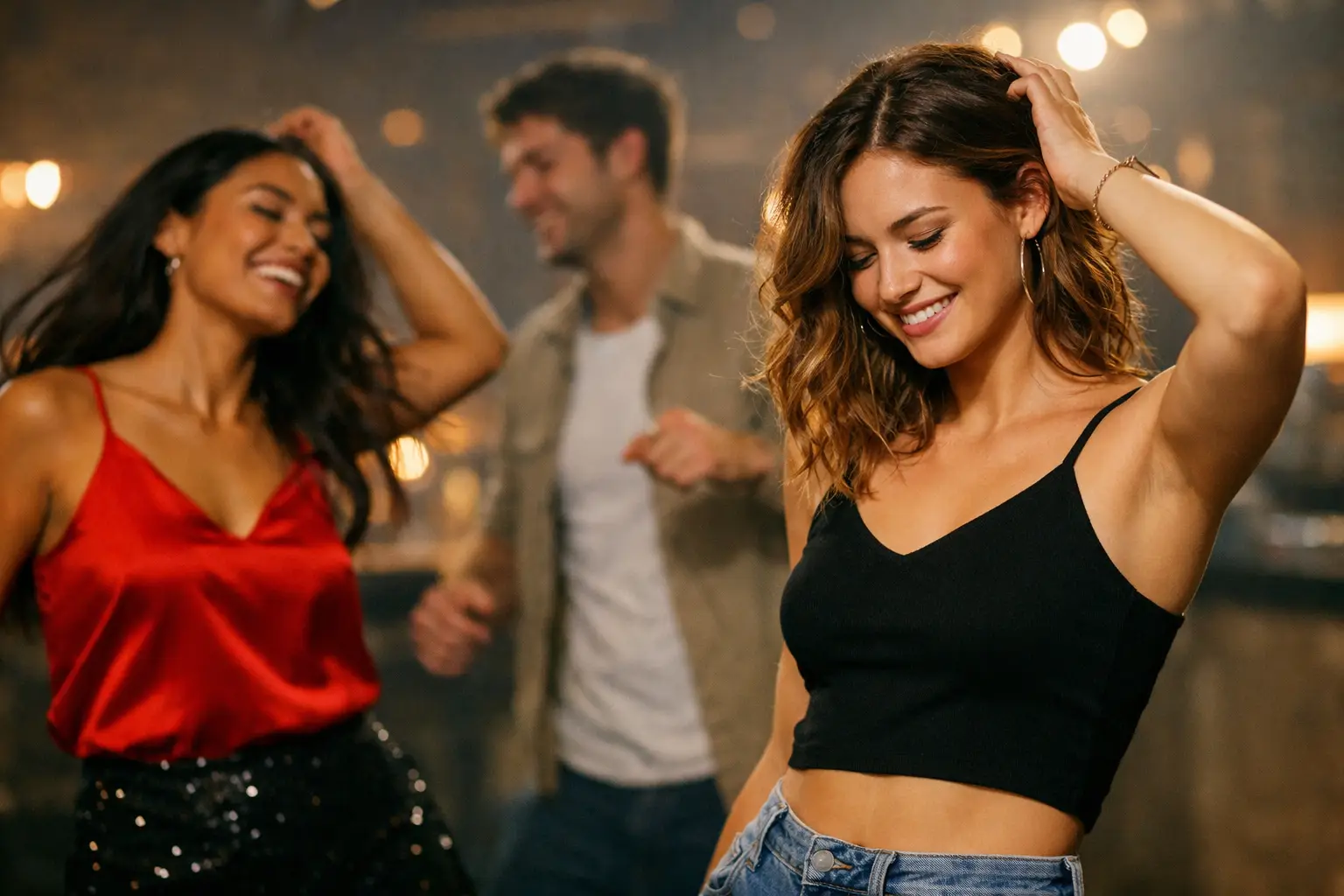
You can tell who is having the most fun on the dance floor pretty quickly – it is usually not the person tugging at a too-tight shirt, wobbling in brand-new shoes, or sweating through a heavy outfit by song two. If you are wondering what to wear dancing, the good news is that you do not need a flashy costume or a closet full of special gear. You just need clothes that let you move, breathe, and feel like yourself.
That last part matters more than people think. When your outfit feels right, you stop fussing and start dancing. For beginners especially, comfort builds confidence, and confidence is what gets your feet moving.
What to wear dancing really comes down to three things
The best dancing outfit checks three boxes. It should let you move freely, keep you reasonably cool, and stay secure while you turn, step, and shift weight. If an outfit looks amazing but fights you every time you raise an arm or take a larger step, it is not doing you any favors.
Social dancing is different from posing for photos or dressing for a formal dinner. You may be walking, pivoting, spinning, and dancing close to other people for an hour or more. That means breathable fabric usually beats heavy fabric, a secure fit beats fussy styling, and practical shoes beat dramatic ones almost every time.
There is also a style-by-style factor. What works for country two-step may not feel quite right for salsa, and what feels great for a swing class may not be your first pick for a ballroom event. Still, the same basic rule applies across the board – wear something you can move in without thinking about it every eight seconds.
Start with the outfit, not the costume
For most classes and social dance nights, everyday clothes are perfectly fine. A fitted T-shirt, a breathable blouse, a casual button-up, or a top with some stretch can all work well. On the bottom, many dancers do best in pants, jeans with flexibility, leggings, or a skirt that allows easy movement.
The keyword here is movement. If your jeans are so stiff that stepping backward feels like a negotiation, save them for coffee. If your top slides off one shoulder every time you turn, it is going to become part of the choreography in a bad way.
You also do not need to dress overly formal unless the event calls for it. Social dance classes are usually much more relaxed than people expect. Looking neat is great. Feeling trapped in your clothes is not.
For anyone new to partner dancing, this can be a relief. You do not have to show up looking like you stepped out of a movie musical. You just need to be ready to move and have a good time.
Shoes can make or break your night
If there is one part of what to wear dancing that deserves extra attention, it is shoes. A decent outfit can survive a small fashion misstep. Bad footwear will remind you of its existence all night long.
The right shoe depends on where you are dancing and what style you are doing, but most dancers want something lightweight, secure on the foot, and easy to move in. Shoes that are too grippy can make turning harder. Shoes that are too slippery can make you feel unstable. Super chunky soles often feel clunky during quick weight changes.
For many beginners, a simple closed-toe shoe with a flexible sole works well. Low-profile sneakers can be okay in some class settings, especially when they are clean and not overly sticky. Dress shoes can work too, as long as they are comfortable and not too stiff. For social styles like ballroom, Latin, swing, and country, many dancers eventually choose dance-specific shoes, but they are not usually required on day one.
High heels are a depends situation. Some dancers love them and feel great in them, especially in certain Latin or ballroom settings. But if you are new, very high or unstable heels can make learning harder. A lower, more secure heel is usually the friendlier choice.
And yes, brand-new shoes are risky. Dancing in untested footwear is a bold move, and not always in the fun way.
What to wear dancing for different styles
Different dance styles have different vibes, but they still reward comfort and common sense.
For ballroom, think polished but movable. A nice top or shirt with trousers, flexible slacks, or a comfortable dress can work beautifully. Clothing that hangs well and moves with you tends to feel elegant without trying too hard.
For Latin styles like salsa, bachata, or cha-cha, many dancers prefer lighter clothing because these dances can get warm fast. Outfits that allow hip movement and easy turns are a smart pick. If you are choosing a dress or skirt, make sure it stays where you want it to.
For swing, vintage flair is fun if you enjoy it, but it is not required. Plenty of dancers wear casual tops and pants. The real priority is freedom of movement, especially if the class includes faster footwork.
For country dancing, jeans are common, but stretch helps. Boots can work if they are comfortable and dance-friendly, though not every boot is. Some are great for style and less great for pivoting.
For club dancing, you have more room to play with personal style, but the same rules still apply. If you cannot lift your arms, bend your knees, or dance for more than twenty minutes without readjusting everything, the outfit is not as dance-floor ready as it looked in the mirror.
Fabrics and fit matter more than trends
This is where a lot of people get tripped up. They focus on what looks dancey instead of what actually feels good while dancing.
Stretch fabrics, soft woven materials, and breathable blends tend to perform well. Heavy sweaters, stiff jackets, and anything that traps heat can get uncomfortable fast. Layers are often a better idea than one bulky piece, especially if you are heading to class in cooler weather but know you will warm up once the music starts.
Fit is just as important. Clothing does not need to be skin-tight to work for dancing, but it should stay in place and allow your body to move naturally. Very baggy clothing can sometimes make partner connection harder, while very restrictive clothing can limit steps and turns.
A good test is simple. Before you leave home, try walking, reaching, turning, and taking a few larger steps. If something pinches, shifts, rides up, or feels awkward, it will probably feel even more awkward under disco lights.
What beginners usually worry about – and what actually matters
A lot of first-time dancers worry they will be underdressed, overdressed, or somehow obviously new. That fear is completely normal, but on a real social floor, people notice attitude and energy far more than brand names or perfect styling.
Most experienced dancers would rather dance with someone comfortable, friendly, and ready to learn than someone dressed to the nines and miserable. Social dancing is meant to be social. Your outfit should help you join in, not make you feel like you have to perform before you even take a step.
This is one reason beginner-friendly studios put so much emphasis on practical dress advice. The goal is to get you dancing in real life, not just looking the part. At Dance Class Saskatoon, that welcoming, no-fuss approach is a big reason adults feel comfortable showing up for their first class.
A few things worth avoiding
Some outfit choices create problems that are easy to skip once you know better. Extremely slippery shoes can leave you feeling unstable, while shoes with too much traction can grab the floor at the wrong moment. Clothes that need constant adjusting are distracting for you and sometimes awkward in partner work.
Very long pants, floor-length skirts without enough room to move, heavy jewelry, and anything sharp or snag-prone can also be more hassle than sparkle. Strong fragrances are another good thing to keep light, especially in close partner dancing.
None of this means your outfit has to be boring. It just means comfort and courtesy are part of good dance-floor style.
The best outfit is the one that lets you forget about it
That is really the sweet spot. When you are dressed well for dancing, you stop thinking about your clothes and start noticing the music, your timing, your partner, and your own progress. That is when things click.
So if you are deciding what to wear dancing, keep it simple. Choose clothes that move with you, shoes that support you, and an outfit that makes you feel confident without needing constant maintenance. You do not need perfection to get started. You just need to be comfortable enough to say yes to the next song.