
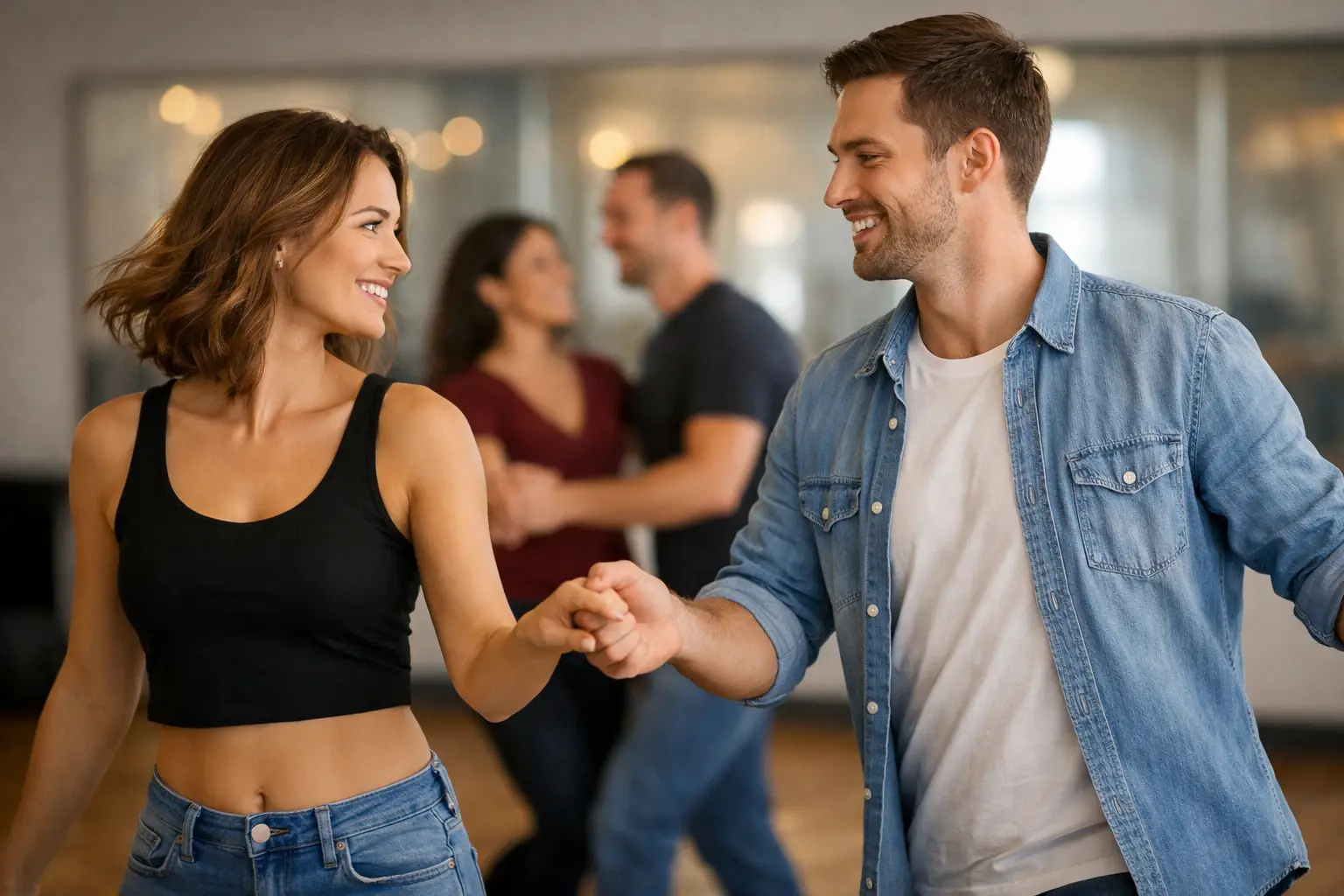
Some dances feel like a script. West coast swing feels like a conversation. That is exactly why west coast swing classes are such a hit with adults who want something social, musical, and actually useful on a real dance floor.
If you have ever watched two people dance and thought, “That looks smooth, fun, and way less stiff than I expected,” chances are you were looking at West Coast Swing. It has style without being showy, structure without feeling rigid, and enough room for personality that no two dancers look exactly the same. For beginners, that makes it exciting. For experienced social dancers, that is what keeps it fresh.
Why west coast swing classes feel different
West Coast Swing has a cool factor, sure, but the bigger draw is how practical it is. This dance works with a huge range of music, from blues and pop to R&B and contemporary tracks. You are not locked into one narrow sound or one old-school vibe. That means what you learn in class can actually follow you out into social dancing.
It also has a more relaxed look than some partner dances, which can make it feel less intimidating at first. The technique still matters – timing, connection, footwork, and lead-follow skills all count – but the dance does not ask you to become a performer overnight. You can start simple, get comfortable, and build your confidence one pattern at a time.
That said, West Coast Swing is not always the easiest first dance for every student. If you want something very straightforward and repetitive right away, another style might feel simpler in week one. West Coast Swing has a stretchy connection and a musical feel that takes a little time to click. The good news is that when it does click, it is incredibly satisfying.
Who should take west coast swing classes
These classes are a great fit for adults who want more than memorized steps. If you like the idea of learning how to respond to music, dance with different partners, and look comfortable without having to go full ballroom glam, West Coast Swing might be your perfect match.
It is especially appealing for beginners who want a welcoming social hobby. You do not need prior dance experience. You do not need fancy shoes. And in a no-partner-required class, you do not need to arrive with your own plus-one either. That takes a lot of pressure off, especially for singles or anyone who has been putting off lessons because they thought partner dancing was only for couples.
Couples enjoy it too, of course. It gives you something fun to do together, and it is a lot more interactive than just standing side by side at an event. But one of the best things about social partner dancing is that it creates community. You are not just learning steps. You are getting comfortable moving, laughing, and connecting with people in a low-pressure setting.
What you actually learn in class
A good class does not throw random moves at you and hope for the best. It builds your skills in a way that makes sense.
At the beginning, that usually means getting the basic rhythm in your body and learning how the partnership works. You start to understand where to move, when to anchor, how to travel, and how to create connection without yanking or guessing. Those details sound small, but they are the difference between “I survived that song” and “I actually danced.”
From there, students usually add foundational patterns, better timing, cleaner footwork, and more confidence in leading or following. You also start developing the social side of the dance – how to adapt to different partners, how to recover if something goes sideways, and how to keep dancing without freezing when the music changes.
That real-world focus matters. Plenty of people do not want a dance class just to memorize a sequence and forget it two days later. They want to be able to step onto a social floor and have fun. That means practical instruction wins every time.
The beginner nerves are real – and normal
Let’s be honest. Walking into your first dance class can feel like showing up to a party where everyone somehow already knows the steps. Most beginners worry about the same things. What if I mess up? What if I cannot keep up? What if everyone else is better than me?
Here is the good news: beginners are supposed to be beginners. No one starts with polished timing and buttery-smooth turns. The right class environment makes a huge difference here. Patient instructors, a clear class structure, and a friendly group can turn first-day nerves into first-day wins pretty quickly.
That is one reason group series work so well. Instead of dropping into a random lesson and hoping it all makes sense, you build week by week. Your body gets time to remember. Your confidence gets time to grow. And the people around you are learning too, so you are all in the same boat – or, better yet, on the same beat.
What to look for in a class
Not all west coast swing classes are taught the same way. Some lean heavily into technical detail. Others focus more on getting students moving fast. Neither approach is automatically wrong, but the best fit depends on your goals.
If you want social dancing skills you can actually use, look for instruction that balances technique with comfort and application. You want enough detail to build good habits, but not so much that every class feels like a lecture with music. A strong beginner program should leave you feeling challenged in a good way, not scrambled.
It also helps when classes are affordable and structured as a progressive series. That gives you continuity. One-off lessons can be fun, but real improvement tends to happen when lessons build on each other. Add in practice opportunities, and now you are cooking with dance-floor gas.
A welcoming studio culture matters just as much. If the room feels cliquey or intimidating, beginners notice right away. If the atmosphere is cheerful, encouraging, and social, people relax faster and learn better. That is not fluff. It is part of what gets adults to come back.
Why social dancing beats just watching videos
Could you learn a few West Coast Swing basics online? Sure. Could you become a confident social dancer that way? Maybe, but it is a tougher road.
Partner dancing depends on timing, connection, and feedback. You can watch a pattern ten times and still miss how it is supposed to feel. In a class, an experienced instructor can spot small issues before they become stubborn habits. Even more importantly, you get to dance with real people. That is where the magic happens.
Social dancing is not about performing a perfect routine. It is about communication. You learn how to listen through movement, adjust in real time, and keep things fun even when a step goes a little sideways. That kind of confidence grows faster in the room than on the screen.
Why adults keep coming back to West Coast Swing
There is a reason this dance tends to hook people. It gives you enough structure to feel progress, but enough freedom to stay interesting. One week you are focused on basics. A little later, you start hearing the music differently. Then suddenly you are not just counting – you are dancing.
It also scratches several itches at once. You are active without feeling like you are grinding through a workout. You are social without needing small talk the entire time. You are learning a skill, but in a way that feels playful instead of academic. That is a pretty sweet step pattern for adult life.
For many students, classes become part of their weekly rhythm. It is the thing they look forward to after work. It is a reason to get out, meet people, and do something that feels both fun and rewarding. In Saskatoon, studios like Dance Class Saskatoon make that easier by keeping the atmosphere approachable and the instruction grounded in real social dancing, not just flashy moves for the mirror.
The best time to start is before you feel ready
A lot of people wait until they feel more coordinated, more confident, or less nervous. That is understandable, but dance confidence usually shows up after you begin, not before. The first class is where the ice breaks. The second is where things start to click. A few weeks in, you may be surprised at how natural it starts to feel.
So if West Coast Swing has been on your mind, take that as your cue. Show up. Learn the basics. Laugh at the little mistakes. Find your groove one song at a time. The dance floor is a lot more fun when you stop watching from the sidelines and step into the music.